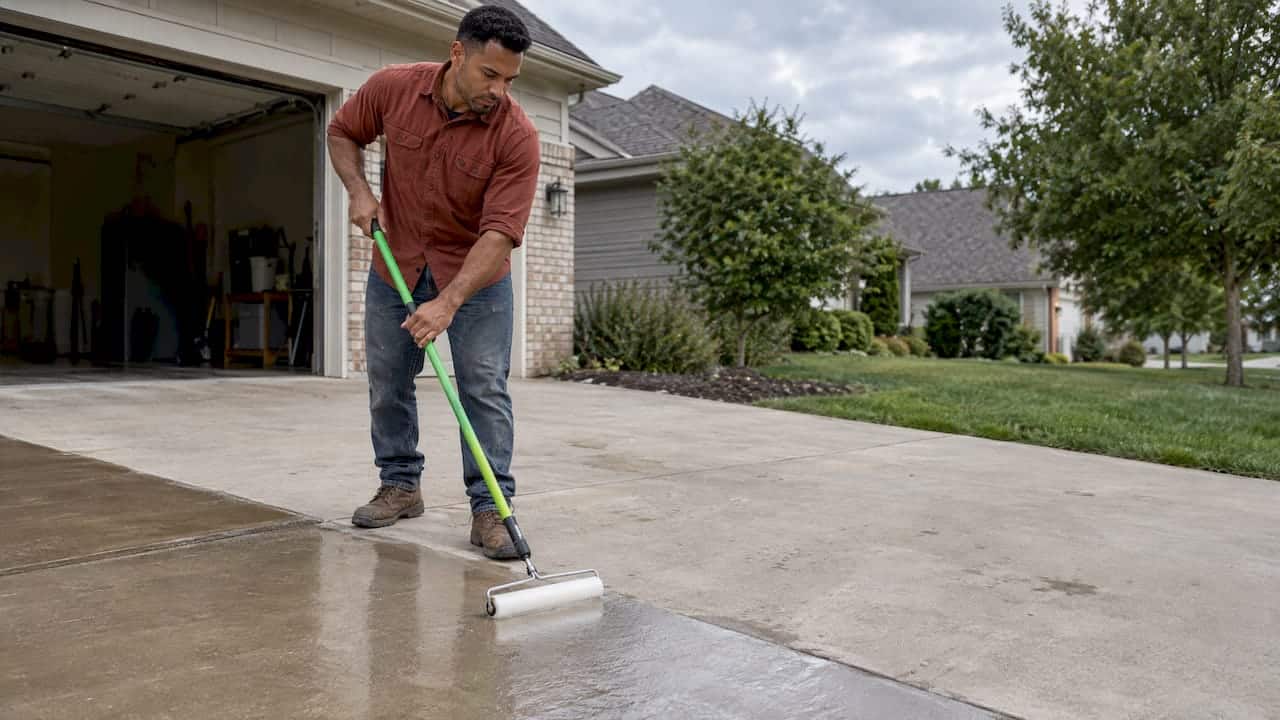
You can extend a concrete patio by pouring a new slab beside the old one. The new slab needs a compacted base, a joint at the old edge, and a slope that sheds water away from the house. Most homeowners pay roughly $6 to $12 per square foot for the concrete itself, and the right base and joint decide whether the addition lasts or cracks. This guide covers how the work is done, what changes the price, and how to make the new section look planned rather than patched.
TL;DR
- A new slab is not glued to the old one. A 1/2-inch isolation joint at the seam lets each slab move on its own.
- Base prep matters more than extra thickness. A compacted, properly graded base is what keeps an addition from cracking or settling.
- Plan on about $6 to $12 per square foot for a concrete slab, plus more for decorative finishes, demolition or hard access.
- Slope the new section about 1/4 inch per foot away from the house, and fix drainage before you pour.
- Match the finish, or choose a deliberate contrast such as pavers or a border, so the addition looks intentional.
Table of Contents
- Can you add on to an existing concrete patio?
- Plan the size, layout and finish first
- How a new slab connects to the old patio
- Step by step: how a patio extension is built
- Grading and drainage for the added section
- What a concrete patio extension costs
- Lower-cost ways to add on
- Make the new section look planned
- Our perspective
- Plan your patio extension with Precision Outdoor Solutions
- FAQ
- Sources
Can you add on to an existing concrete patio?
Yes. Extending a patio is common, and it works when the old slab is in sound shape and the new one is built as its own slab beside it. If the old patio is heavily cracked, sunken or tilting toward the house, fix that first or replace the worn section. Building new concrete next to a failing slab only moves the problem.
There are three typical ways to do it:
- Pour a new concrete slab against the old edge. This gives the most uniform look and the longest service life.
- Add pavers or flagstone next to the slab. This is a good choice when you want a visible change in texture or color.
- Add a gravel area. This costs the least, but it is a different kind of surface that needs regular raking and topping up.
The rest of this guide focuses on the first option, with notes on where the others fit.
Plan the size, layout and finish first
Start with how you will use the space. A bigger patio is only better if the extra square footage has a job: a dining set, a grill zone, a fire pit or a clear walkway.
A landscape architect quoted by This Old House suggests allowing about 25 square feet per person when you plan for seating or dining. A table for six, for example, wants around 150 square feet before you count the grill or walkway. For table dimensions and chair pull-back space, our guide to patio size for dining and the 36 inches of clearance walks through the math.
Before you settle on a footprint, check these:
- Where the water goes. The addition should not trap runoff against the house or send it toward a neighbor.
- Utilities and grade changes. Hose bibs, vents, electrical lines, downspouts and steps all affect the layout.
- Property lines and easements. Know your setbacks before you stake anything out.
- Permits. Rules differ by city. St. Charles County lists several outdoor projects, such as patio covers and decks, on its residential building permit page. A flat slab is not named there, so call your city or the county building division before you start, especially if you plan to add a roof or cover later.
Choose a finish that is safe and fits the old surface
For an outdoor slab, the Portland Cement Association advises avoiding a smooth troweled finish because it can be slippery when wet. A broom finish is the usual answer: it grips under foot and hides small surface variations. Stamped patterns, exposed aggregate and integral color are all possible, but they raise the price per square foot.
How a new slab connects to the old patio
The joint is where most extensions succeed or fail. The instinct is to bond the new concrete to the old, but side-by-side slabs move differently. They expand, contract and settle at their own pace.
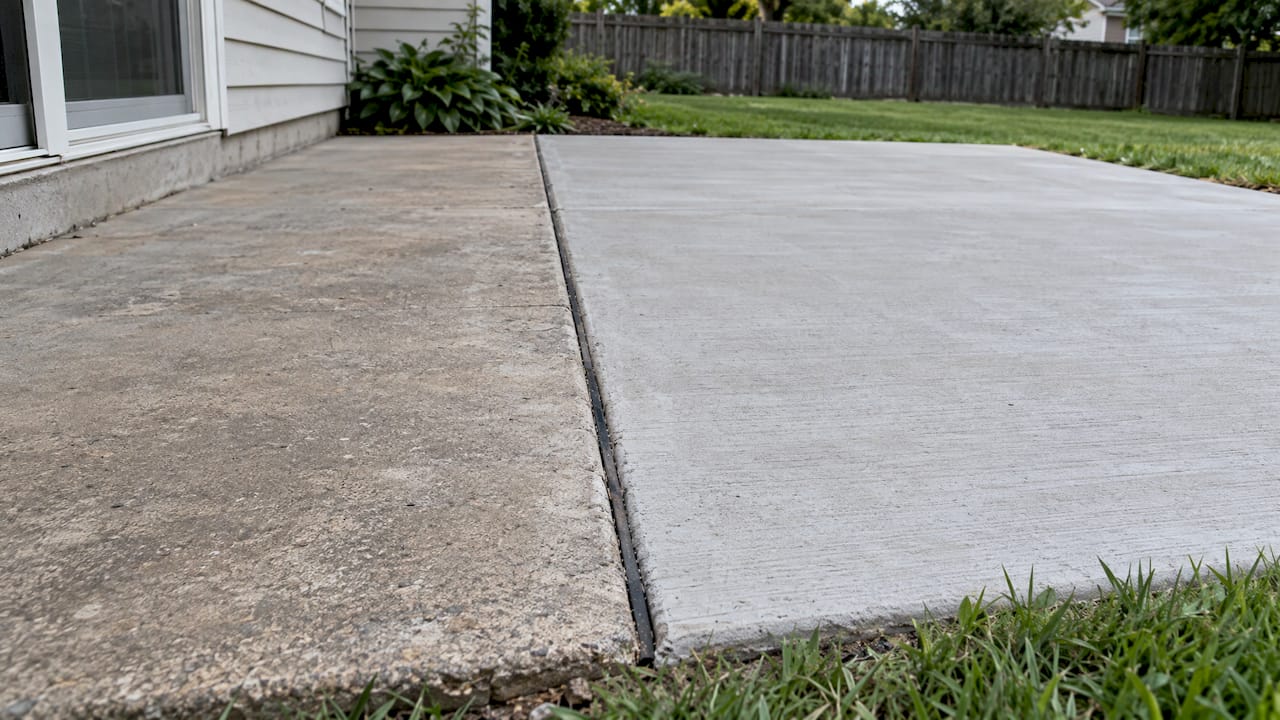
The standard approach is an isolation joint. QUIKRETE describes placing 1/2-inch asphalt-impregnated fiber board between concrete and an adjoining structure so each piece can move independently and the risk of damage drops. The same detail is used when a new slab meets an old one. A guide on pouring beside existing slabs gives the same 1/2-inch full-depth joint and adds that the new slab should match the old one’s thickness and height.
In practice that means:
- The old edge is cleaned and checked for soundness.
- Joint material is set along the full depth of the old edge.
- The new slab’s surface is set flush with the old one, or slightly lower where water needs to drain away.
- Where the seam carries vehicle or heavy loads, smooth dowels may be drilled into the old slab so the two stay level. A patio rarely needs this, but ask your contractor what they recommend for your site.
Expect the seam to remain visible. A clean, straight joint line looks intentional. Trying to hide it usually fails.
Step by step: how a patio extension is built
This is the sequence a professional crew follows. It helps you know what to expect and what to ask about.
1. Layout and excavation
The crew marks the new footprint, removes sod and topsoil, and excavates to the depth needed for the base plus the slab. Any soft, organic or wet soil comes out.
2. Base and compaction
A compacted aggregate base gives the slab even support. We cover the details in our patio base preparation guide, including the 4 to 6 inch base. If the excavation needs fill, it should be placed in layers and compacted. For readers who want to see how compaction targets are specified, this write-up on backfill and compaction specs explains the logic behind hitting a high percentage of maximum dry density.
A thin or poorly compacted base is the quiet cause of many failures. One cost guide notes that cracking can appear 2 to 5 years later when subgrade work is cut short. That is why we put base prep ahead of simply making the slab thicker. Our article on base prep and targeted reinforcement versus thicker concrete explains the trade-off.
3. Forms, joint material and reinforcement
Forms set the edges and the height. The isolation joint goes against the old slab. Reinforcement, such as wire mesh or rebar, is placed according to the design and held off the ground on chairs so it ends up in the slab and not on the dirt. ACI 332.1R-18 is a guide to residential concrete construction that covers slab placement, reinforcement, consolidation, finishing and curing.
4. Pour and consolidate
Concrete is placed, screeded level and worked so there are no voids. The ACI residential manual notes that proper consolidation, by vibration or tamping, is a critical step for slab strength and finish quality.
Ordering the right volume matters too. Small orders can trigger fees, so see our tips on avoiding short load fees on concrete orders.
5. Finish, joints and cure
The surface is broomed or textured, control joints are cut or tooled, and the slab is protected while it cures. Keep foot traffic off for the time your contractor gives you, and keep heavy furniture and grills off longer. Our patio installation timeline shows how long each phase usually takes.
6. Seal
Sealing protects the surface from moisture and winter wear. In Missouri, freeze and thaw cycles make this worth planning for. See our concrete sealing schedule for Missouri homeowners.
Grading and drainage for the added section
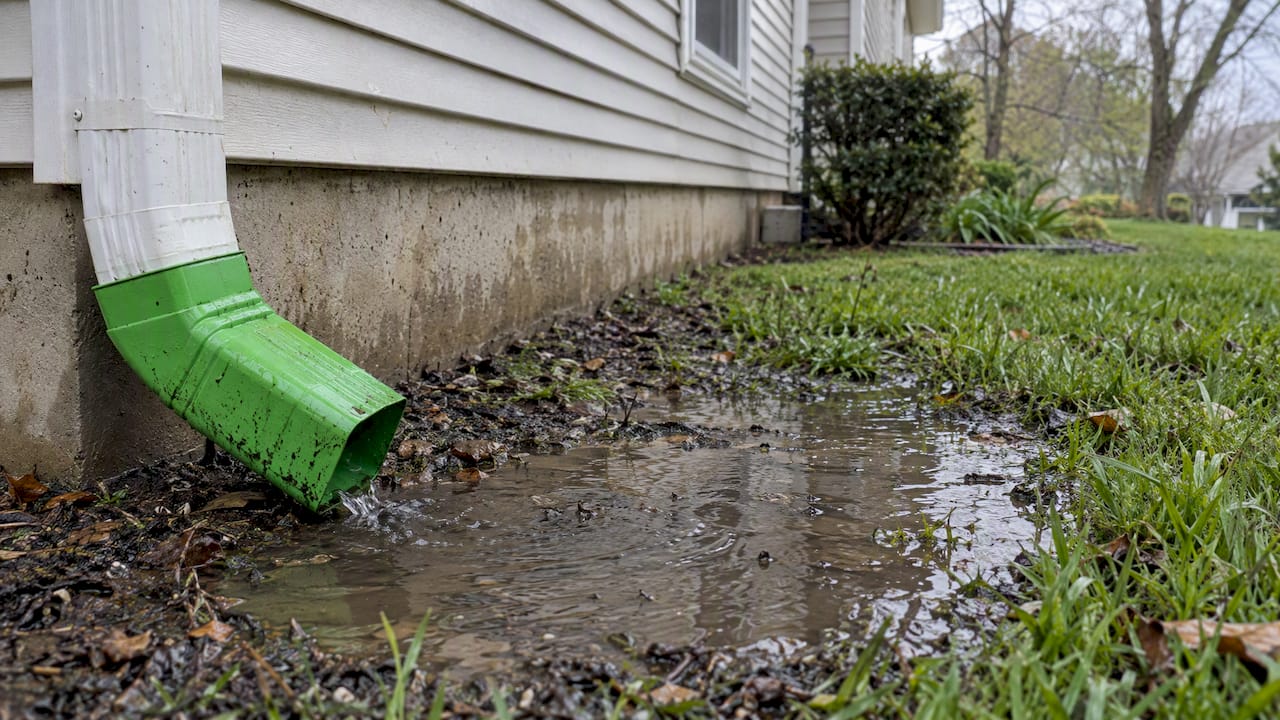
A patio that holds water gets slippery, stains, and can push moisture toward your foundation. This Old House says to slope the patio about 1/4 inch per foot away from the house and to consider a French drain if the yard does not drain well.
A few practical points:
- Check the existing patio’s slope first. If it already pitches toward the house, the extension cannot fix that alone.
- Keep downspouts from discharging onto the new slab.
- Where the yard is flat or low, plan an outlet for the water before you pour, not after.
For design targets and soil considerations, see our guides on patio drainage design with a 1.5% slope and a soil test, patio drainage channels and solutions that stop water pooling. If water is already a problem in your yard, our yard drainage solutions in Wentzville service handles it as part of the project.
What a concrete patio extension costs
Price depends on size, finish and site conditions. One 2026 cost guide puts a concrete slab at $6 to $12 per square foot installed for most residential projects. The same guide says decorative finishes can add $4 to $12 per square foot, and site conditions such as soil, access limits and demolition can add $500 to $5,000.
Here is what those ranges mean for a few sizes, using the $6 to $12 base range only:
| Extension size | Square feet | Base concrete range |
|---|---|---|
| 10 x 10 ft | 100 | $600 to $1,200 |
| 12 x 15 ft | 180 | $1,080 to $2,160 |
| 20 x 20 ft | 400 | $2,400 to $4,800 |
That last row answers a common question about a 20×20 patio. Add finish upgrades, demolition, tricky access or drainage work on top.
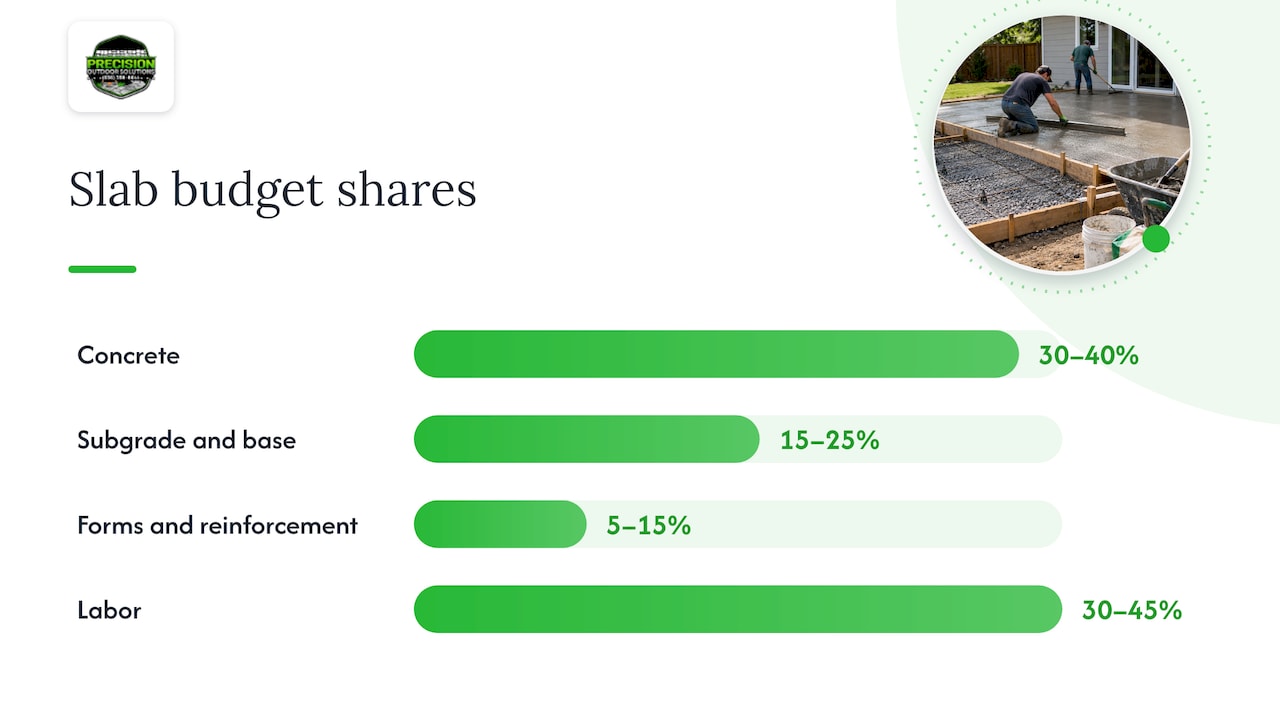
The same guide breaks a typical slab budget into roughly 30 to 40% concrete, 15 to 25% subgrade and base, 5 to 15% forms and reinforcement, and 30 to 45% labor. So labor and base work together make up more than half the job. Our Missouri concrete patio cost guide covers local factors in more detail.
Reading quotes side by side
When estimates differ a lot, compare what each one includes: excavation depth, base material and thickness, reinforcement, joint details, finish, drainage and cleanup. A quote far below the others often means a shortcut in base prep, reinforcement or thickness. Our guide on how to choose the right hardscape contractor lists what to ask for.
Lower-cost ways to add on
If the budget is tight, concrete and gravel are the cheapest materials. Today’s Homeowner estimates about $333 for 100 square feet of concrete and about $275 for the same area in gravel, based on bagged materials. Those figures cover materials only, and a larger or professionally poured slab is priced differently.
A comparison of per-square-foot figures and upkeep from a patio extension materials guide is summarized here:
| Material | Cost per sq ft | Durability | Upkeep |
|---|---|---|---|
| Concrete | $6 to $12 | High | Seal every few years |
| Gravel | $2 to $5 | Medium | Rake and top up |
| Flagstone | $15 to $30 | High | Re-sand joints |
When price is the main concern, a smaller concrete slab done right usually serves better than a larger one done thin. You can also phase the work: pour the slab now and add a border, planting bed or seat wall later.
Make the new section look planned
The most common complaint about extensions is a visible patch. Color and texture rarely match exactly, because the old concrete has weathered. Instead of fighting that, design around it.
- Match the texture. Use the same broom direction and joint spacing so the layout reads as one pattern.
- Use a border. A soldier course of pavers or a contrasting band between old and new turns the seam into a feature.
- Change the surface on purpose. Pavers or flagstone beside the slab look like a designed second zone, such as a lounge area.
- Add structure. A seat wall, planter or fire pit gives the eye something to land on besides the seam.
- Clean or reseal the old slab. Washing the old surface narrows the visual gap before you compare colors.
A landscape design plan helps you see how the patio, plantings, lighting and drainage fit together before any concrete is poured.
Our perspective
We see the same pattern on extension projects. The slab you can see is rarely the part that fails. The base under it, the joint at the seam and the way water leaves the area are what decide the result.
That is why we start with the ground and the drainage, then design the surface. At Precision Outdoor Solutions, we focus on durable outdoor spaces, clear timelines and clear communication, so you know what is happening at each phase and why.
With more than 25 years of experience serving Wentzville and St. Charles County, we like to walk the site with you, talk through how you want to use the space, and recommend materials that suit the property. If an extension also needs a drainage fix, we plan it together so the work is done once.
Precision Outdoor Solutions
Plan your patio extension with Precision Outdoor Solutions
If you own a home in Wentzville, St. Peters, O’Fallon, Troy or elsewhere in St. Charles County, our team handles the whole extension: site consultation, design planning, material selection and professional installation. We also pour and repair flatwork through our concrete services.

To talk through size, finish and drainage for your yard, see our hardscape and patio installation page or reach us through Precision Outdoor Solutions and ask for a free estimate.
FAQ
How much does it cost to extend a concrete patio?
For most residential projects, a concrete slab runs about $6 to $12 per square foot installed, according to a 2026 cost guide. Decorative finishes, demolition, access and soil conditions can add to that. A written estimate for your yard is the only way to get a firm number.
What is the cheapest way to extend my patio?
Gravel and concrete are the lowest-cost materials, at about $2 to $5 and $6 to $12 per square foot respectively, per a materials comparison. Concrete lasts longer with less upkeep, so many homeowners choose a smaller concrete slab over a larger gravel area.
Can new concrete bond to an old patio?
It is better not to rely on a bond. Side-by-side slabs move independently, so builders set a 1/2-inch isolation joint at the seam. This lets each slab expand and contract without cracking the other.
How much slope should an extended patio have?
About 1/4 inch per foot away from the house is the commonly cited target, as This Old House notes. If water still collects, a French drain or other drainage work can help.
How do I extend an existing covered patio?
The cover and its posts need to be reviewed before any slab work, since roofs and patio covers can require a permit. Check with your city or the St. Charles County permit office first, then plan the new slab around the existing footings.
Sources
- How To Extend a Patio, This Old House
- Finishing Concrete with Color and Texture, Portland Cement Association
- QUIKRETE: Building a Concrete Patio
- Pouring Concrete Next to Existing Concrete: Joints, Bonding and Matching
- ACI 332.1R-18: Guide to Residential Concrete Construction
- ACI Residential Concrete Construction manual preview
- Concrete Slab Cost: What You’ll Actually Pay in 2026
- How To Extend a Patio with Concrete & Pavers, Today’s Homeowner
- Patio Extension Ideas: Materials, Planning, and Installation Steps
Recommended
- Concrete Control Joints: Spacing, Timing, And DIY Steps
- Homeowners: Base Prep And Targeted Reinforcement Beat Thicker Concrete
- Patio Installation Timeline: How Long Each Phase Takes
- Concrete Patio Cost In Missouri: 2026 Price Guide
This article was prepared with AI assistance for general information. For recommendations specific to your property, contact Precision Outdoor Solutions. Call or text us at (636) 358-8644.