A privacy berm is a low, planted mound of soil that raises your screen above ground level, so shrubs and trees block a view sooner than the same plants on flat ground. It works best when the ridge sits on the sightline you want to block, the slopes are gentle, the water has somewhere to go, and the plants are chosen for their mature height plus the mound under them. Here is how to plan one that looks natural and lasts, and what to check before anything gets dug.
TL;DR
- A berm adds height at the base, so planting on top screens sooner than the same plants on flat ground.
- Keep slopes gentle and the shape asymmetrical. Extension guidance suggests a berm about four to six times longer than it is wide.
- Plan drainage first. A berm that traps water or sends it toward a neighbor creates new problems.
- Before moving earth, locate underground utilities and check setbacks and HOA rules.
- Plant in layers, mulch, and water through the first dry spells so roots can lock the soil in place.
Table of Contents
- How a berm creates privacy
- Read your site before you design
- Shape and size: how high, how long, how wide
- Soil, fill and slope: building it to hold
- Managing drainage without sending water next door
- What to plant on a privacy berm
- Check the rules before you move dirt
- Finishing and caring for the berm
- Our perspective
- Let us design your privacy screen
- FAQ
- Sources
How a berm creates privacy
A berm does two jobs at once. The mound itself lifts the planting, and the plants on it add their own height. According to the N.C. Cooperative Extension, a berm planted with a mix of woody ornamentals gains height, and with it more ability to block sight, sound and wind.
That is why a berm suits some yards better than a fence. In many suburban neighborhoods, codes regulate fences, which can make a plant screen the practical option. If you are weighing both, our guides on fence and plant screen ideas and privacy fence height lay out how permits can affect the choice.
A berm can also hide things you would rather not see. Gardeners use raised berms to disguise a road or an air conditioning unit, and a lower berm can soften street noise and cut wind.
Read your site before you design
The best berm plans start with a walk around the yard, not a pile of fill. Take notes on these before you sketch.
Sightlines
Stand where you sit most: the patio, the kitchen window, the deck. Mark exactly where the view you want to block crosses your property. The ridge of the berm should intercept that sightline, so a berm that is simply long but not placed where your eye line crosses it does very little. Our guide to targeting sightlines for backyard privacy walks through this step in more detail.
Water
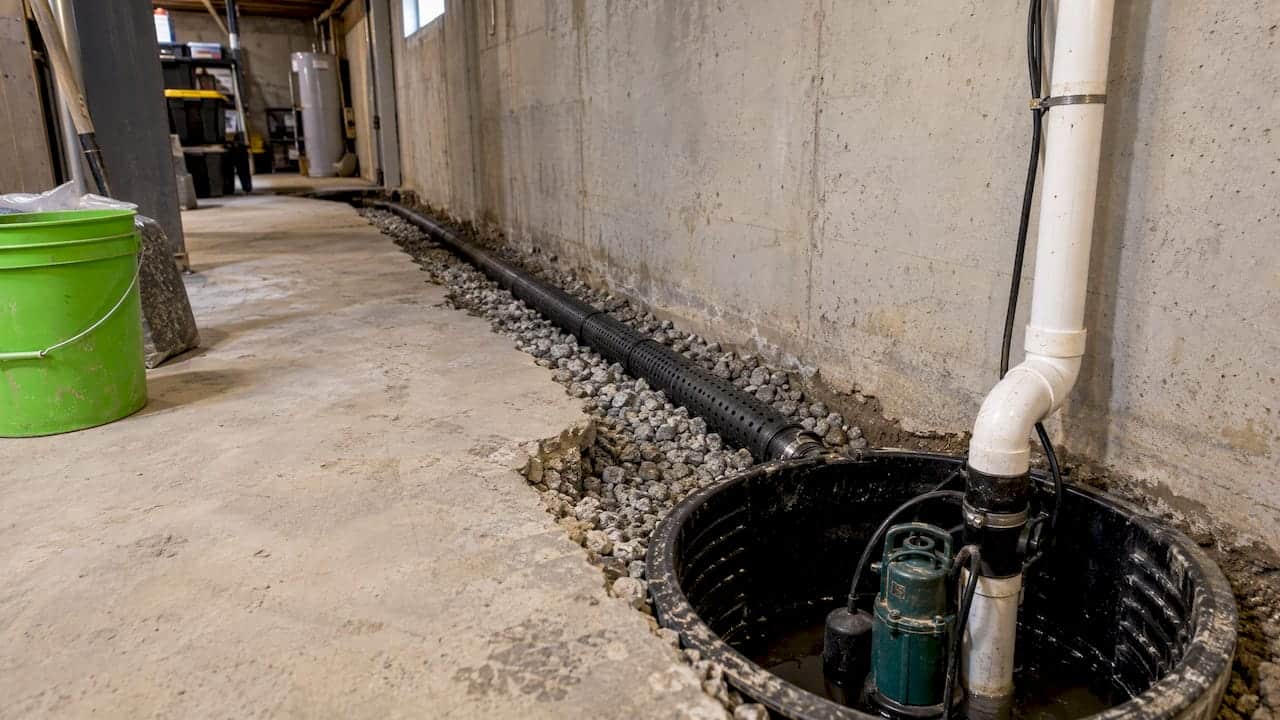
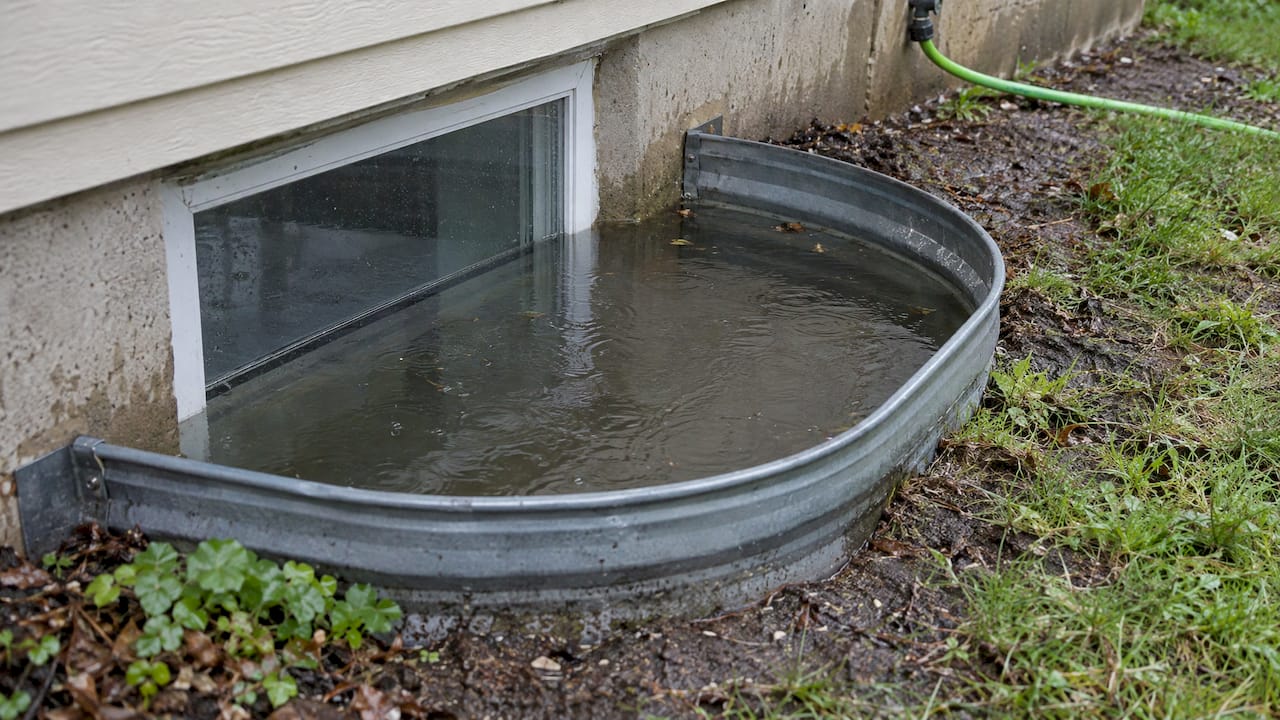
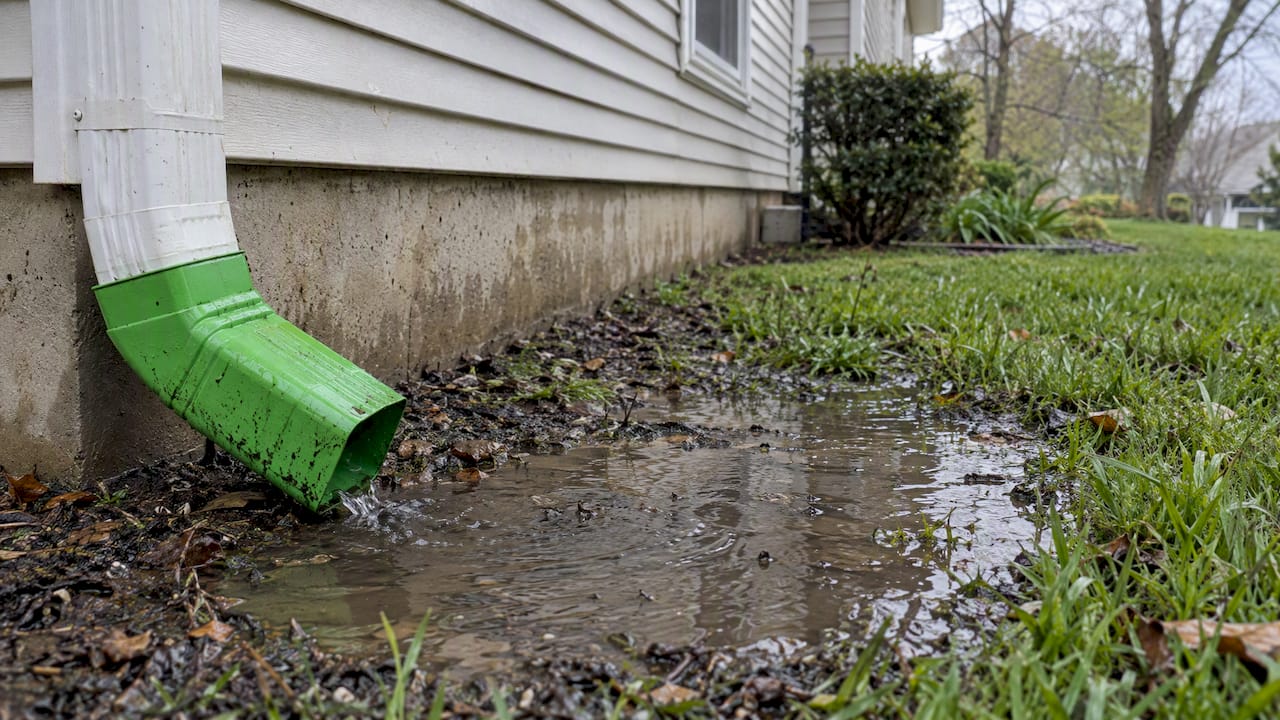
Watch where rain flows during a storm. Working with the way water naturally wants to drain can save a lot of effort and frustration. Many yards in St. Charles County have clay-heavy soil, and clay-heavy soils need more structural fill and drainage design to avoid compaction problems. If your yard already holds water, solve that first. Our drainage solutions team looks at the whole lot before any landscape feature goes in.
Sun, wind and soil
Record sun hours, prevailing wind and frost pockets. The MAWEB guide notes that microclimates on the sunny and shady sides of a berm dictate which plants will do well where. It also suggests a basic soil test: a pH strip, a squeeze test for texture and a rough check of organic matter.
Shape and size: how high, how long, how wide
You will see very different height numbers online, and they are all correct for different goals.
| Source | Height guidance | What it is for |
|---|---|---|
| UC ANR, The Real Dirt | No more than 18 to 24 inches | Garden berms, where taller mounds risk erosion |
| Live to Plant | Typically 2 to 5 feet | Water management berms |
| Portland Tree and Landscaping Manual | 4 to 6 feet for its L5 screening standard | A city code standard, with low shrubs added if under 6 feet |
For a privacy screen, the practical lesson is that the mound and the plants work together. A modest berm of a couple of feet with evergreens on top can reach screen height without a steep, erosion-prone mound. A 3-foot berm planted with evergreen shrubs is a common example of a workable privacy barrier. Taller berms need a wider base so the sides stay gentle.
Shape rules that keep it looking natural
- Make it longer than it is wide. A good rule of thumb is four to six times longer than wide.
- Avoid a perfect circle or a straight wall. Berms are generally more pleasing asymmetrical, with a gentle curve.
- Keep the slopes gentle. Gentle side slopes look better and erode less than steep mounds.
- Blend the ends. The toe of the mound should melt into surrounding grades, with no abrupt edge.
Soil, fill and slope: building it to hold
Erosion and slumping are the main risks until planting roots knit the surface. Bare mounds wash in heavy rain, so the build matters as much as the planting.
- Mark the footprint with a hose or marking paint and check it from your sightline spots.
- Build the core with fill. UC ANR advises fill dirt or inorganic fill for the base and topsoil for the top, keeping base fill 18 inches in from the outer edge.
- Add soil in layers. Adding it in layers rather than dumping it all at once gives better compaction and stability.
- Tamp as you go. Tamping the surface frequently helps prevent erosion and slumping.
- Choose soil that drains. Soil used to form a berm should drain well, and raised soil can dry out quickly unless covered with organic mulch such as wood chips.
- Test and amend. Once the contours are final, consider a soil test and decide between spot amending and amending the whole berm.
If your yard already slopes, a berm is only one of several tools. See our guides to slope erosion control, erosion control for a Missouri backyard and retaining walls for slopes to see where a wall or terrace makes more sense than a mound.
Managing drainage without sending water next door
A berm is a small dam. Placed across a flow of water, it can pond water on one side or push it somewhere you did not intend. Plan the water path before the plant list.
- Match the shape to the problem. Concave berms suit a soggy spot, and one-direction sloping berms can direct water away from a foundation toward a curb drain.
- Keep the goal clear. Height and width depend on the goal, and erosion control and flood mitigation call for different designs.
The property line matters here. Never design a berm so that its outlet points at a neighbor’s yard. If your lot has a drainage problem that a berm would only shuffle around, a drain or regrading solution is the right first step. Our landscape design process is built around solving drainage first for exactly this reason.
What to plant on a privacy berm
Arrange by height
Put taller plants at the back, especially when screening an undesirable view, with shorter plants on top and down the sides. Ornamental grasses work well because their long roots resist erosion and hold soil in place. Low shrubs and herbaceous groundcovers add erosion control on the slopes.
Do the height math
Extension guidance says to choose plants that will not outgrow your target: for a 10-foot screen, avoid plants that will grow taller, and count the height of the mound in your calculations. A 3-foot berm plus a 7-foot evergreen is already a 10-foot screen.
Evergreens for year-round cover
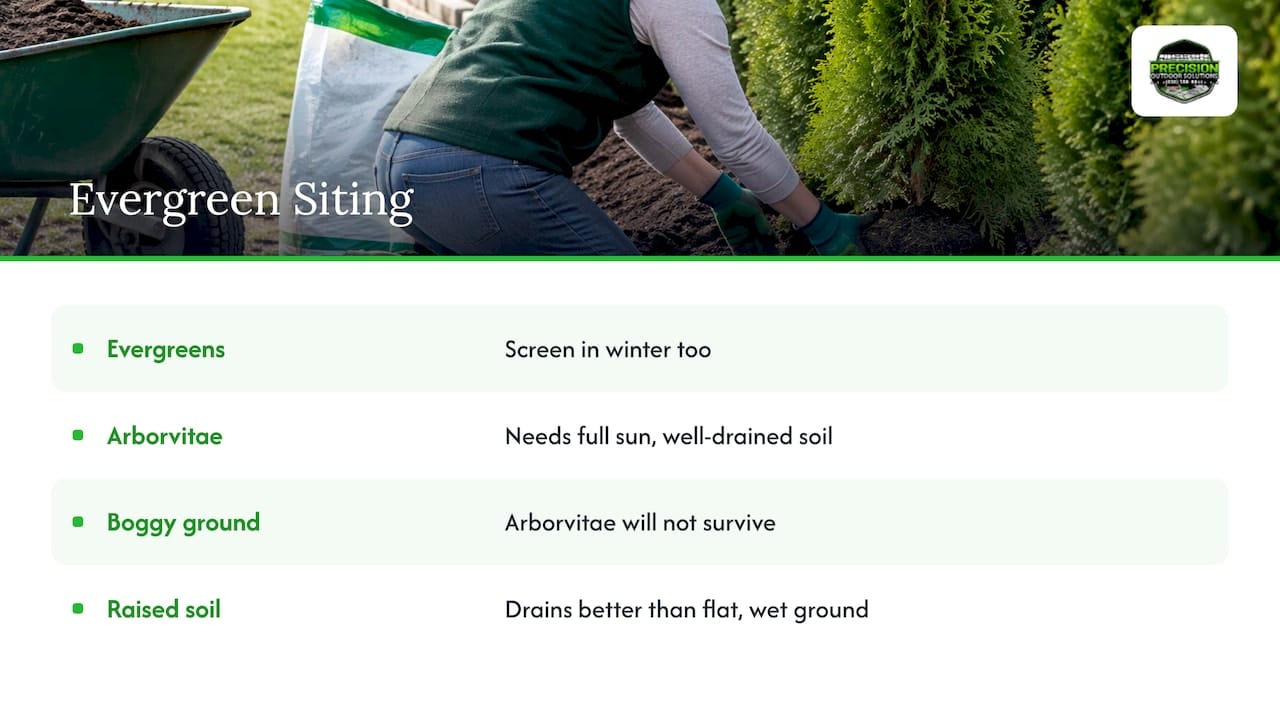
Evergreens are the usual backbone because they screen in winter too. Arborvitae is a common choice. OSU Extension notes that it needs full sun and well-drained soil and will not survive in boggy ground, so correct drainage before planting. Sited well, it is described as about as low maintenance as a plant you can buy. A berm helps here, since raised soil drains better than flat, wet ground.
A mixed layout
A mix of conifers and deciduous shrubs, with grasses and groundcover below, looks more natural than a single row. It is also more forgiving: if one plant struggles, the screen stays intact. For species suited to Missouri’s heat, cold and clay, we choose plants to fit your soil and sun during design.
Check the rules before you move dirt
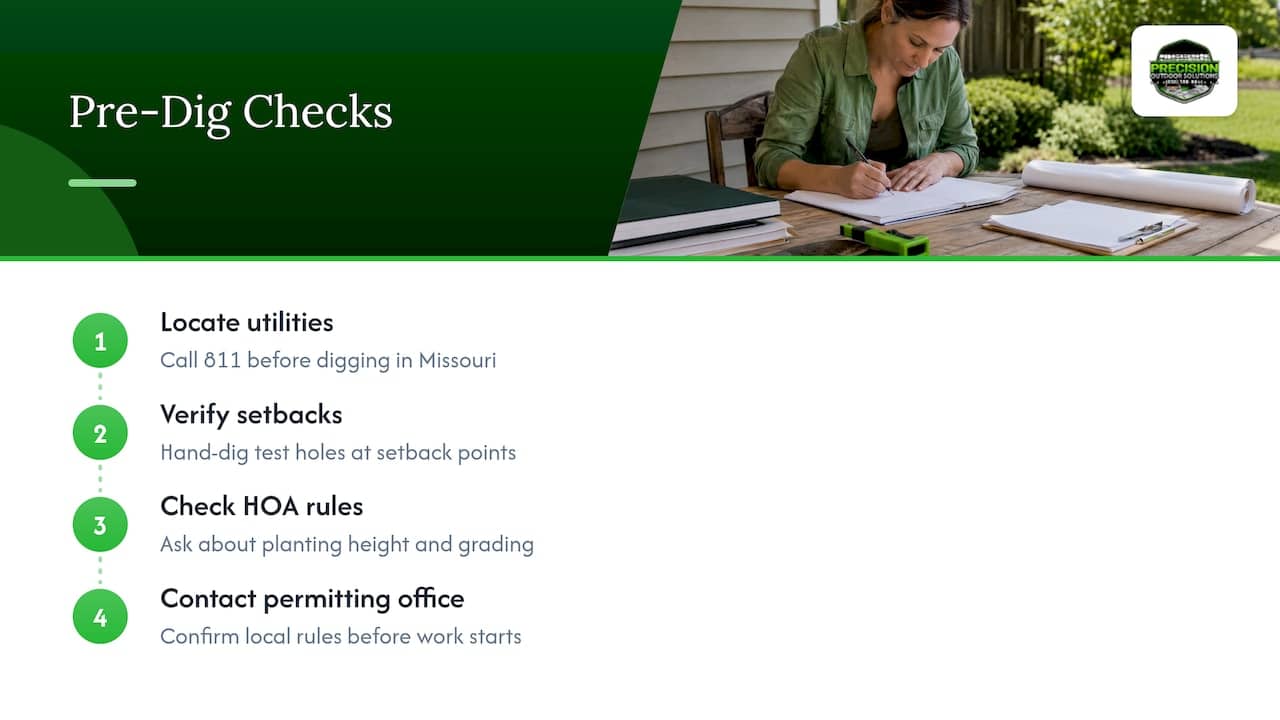
Before any earth is moved, locate underground utilities and verify property setbacks and HOA rules. In Missouri, call 811 before digging so lines are marked. The same source suggests hand-digging test holes at setback points.
If you live in an HOA, ask about height limits for plantings and any rules on grading. Your city or county may also have rules about grading near property lines, so call the permitting office in Wentzville, St. Peters, O’Fallon or Troy, or your county office, before work starts.
If you also want to watch the edges of your property, this guide to securing a property perimeter with cameras pairs well with a planted screen.
Finishing and caring for the berm
- Mulch. The last step is to cover the areas around the plants with organic or inorganic mulch, which helps control erosion, reduce weeds and keep soil cooler and moister in summer.
- Water. Even established plants need water. OSU Extension recommends soaking arborvitae every two to three weeks in dry spells, and notes damage may not show until fall.
- Inspect after storms. Check for erosion or instability after heavy rain, replace dead plants promptly, and add soil or rock where erosion starts.
If you would rather not handle the upkeep, our lawn and landscape maintenance service covers seasonal care of planted areas.
Our perspective
We have more than 25 years of experience building outdoor spaces in Wentzville and St. Charles County, and the berms that last all start the same way: with water.
Before we talk about plants, we look at where rain comes from and where it needs to go. A berm that is shaped and sited with drainage in mind stays put, and one that is not can slump or send runoff toward a neighbor.
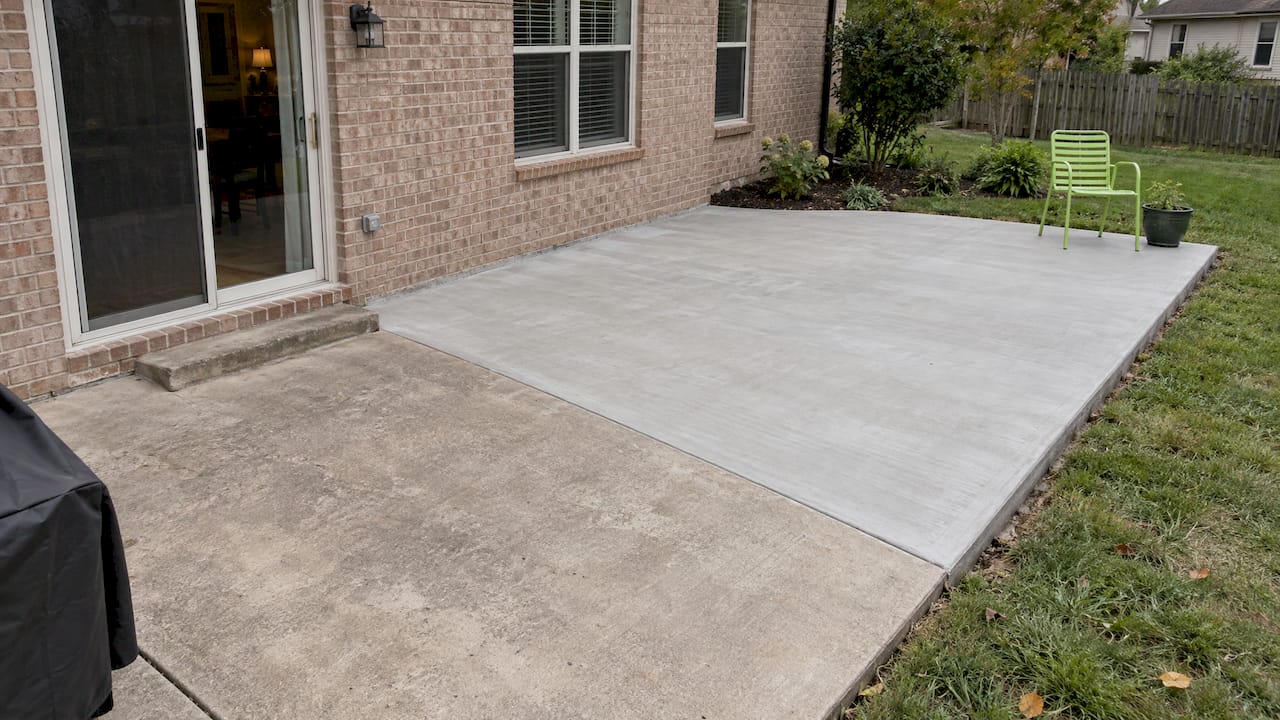
We also think a berm should be designed as part of the whole yard. It can work with a patio, a retaining wall or a fence, and the best privacy often comes from combining them. Our design process is collaborative, with clear timelines and updates, so you know what is happening on your property.
Durability is our focus. That means proper fill, layered compaction, planting that matches your soil and sun, and a clean job site.
Precision Outdoor Solutions
Let us design your privacy screen
Precision Outdoor Solutions designs and installs custom outdoor spaces for homeowners in Wentzville and across St. Charles County. Our landscape design service covers site consultation, planning and material selection, and we can pair a planted berm with drainage work, a patio or fencing.

If you want to know what to expect on budget, read what landscape design costs in 2026. When you are ready, contact Precision Outdoor Solutions for a consultation. If a fence is part of your plan, see our fence installation page.
FAQ
How tall should a privacy berm be?
It depends on how you build the screen. Garden guidance from UC ANR caps berms at 18 to 24 inches to limit erosion, while screening standards such as Portland’s call for 4 to 6 feet. Many homeowners build a modest mound and let evergreens on top supply the remaining height.
How long does a berm take to give real privacy?
The mound gives you height on day one, and plant growth does the rest. The time depends on the species and the size you plant. Choosing plants that reach your target height, counting the mound, tells you what to expect.
Can a berm cause drainage problems for my neighbor?
Yes, if it is placed across a flow of water without a planned outlet. Angle the berm, protect the outlet with rock or stable vegetation, and never point runoff at the property line. Plan drainage before the plants.
Do I need a permit to build a berm?
Requirements vary by city, county and HOA. Call 811 to locate utilities, verify setbacks and HOA rules, and contact your local permitting office before moving earth.
Sources
- Using Berms as Barriers, N.C. Cooperative Extension
- Landscaping with Berms, UC ANR The Real Dirt
- How to plant and care for arborvitae hedges in Oregon, OSU Extension
- The Breakdown on Building Berms, Denver Gardeners
- Planted Privacy Berm, Build Design Hub
- How to Create a Privacy Screen with Garden Berms, Live to Plant
- How to Use Berms for Effective Water Management, Live to Plant
- Use berms for looks, function, Dawson County News
Recommended
- Target Sightlines To Fix Backyard Privacy Landscaping For Homeowners
- Homeowners: Avoid Permit Delays With Fence And Plant Screen Ideas
- Avoid Permit Delays: Privacy Fence Height Checklist For Homeowners
- Terraced Yard Ideas That Turn A Slope Into Usable Space
This article was prepared with AI assistance for general information. For recommendations specific to your property, contact Precision Outdoor Solutions. Call or text us at (636) 358-8644.