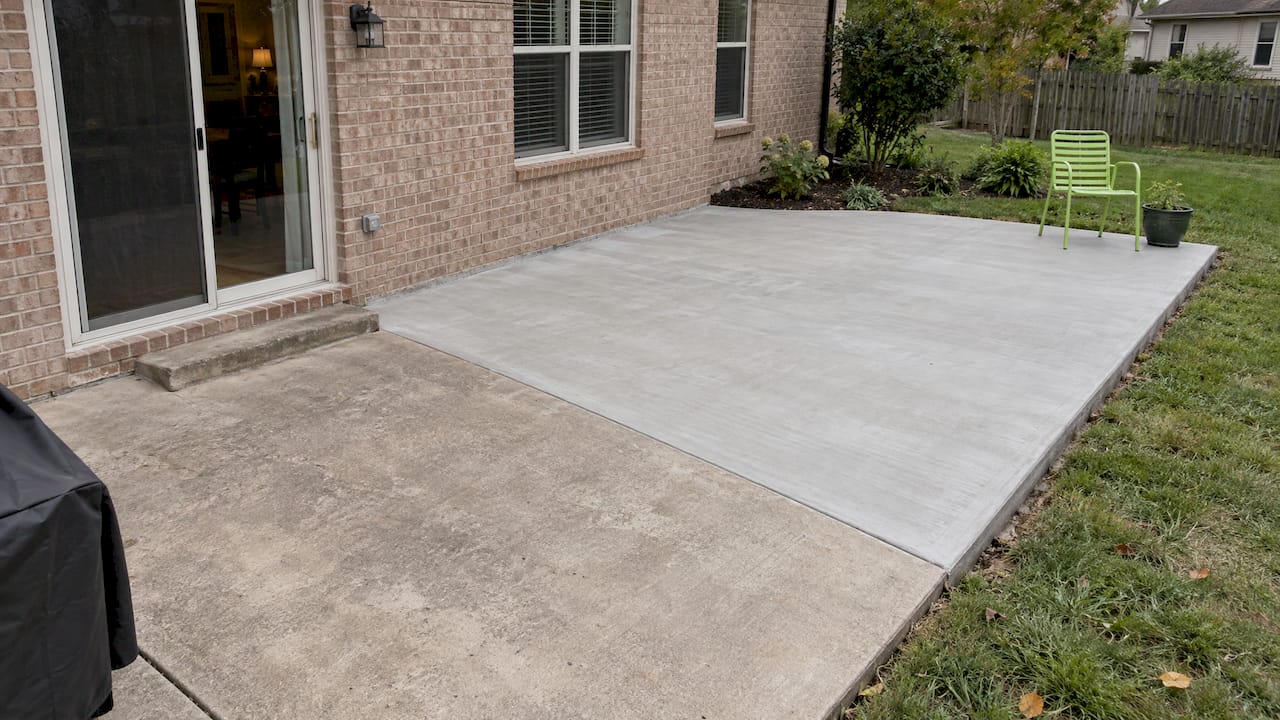
The best time to seal concrete in Missouri is a mild, dry stretch in spring (April and May) or early fall (September and October), when both days and nights stay above the sealer’s minimum temperature and no rain is coming. New slabs wait about 28 days first. After that, plan to reseal every 2 to 5 years, depending on the sealer, the traffic and how much road salt your concrete sees. Below is the full calendar, the weather checks that matter more than the date, and a simple way to decide when your driveway or patio is due.
TL;DR
- Best windows in Missouri: spring and early fall, on days when the concrete is clean, fully dry and nights stay above the product’s minimum temperature.
- Check the forecast, not just the calendar: dry weather before and after, no rain within 12 to 24 hours, and no cold snap for at least 24 hours (some products ask for 72).
- New concrete should cure about 28 days before sealing.
- Reseal roughly every 1 to 5 years. Water that no longer beads on the surface is your sign.
- For freeze-thaw and road salt, penetrating silane or siloxane sealers are the preferred long-term choice.
Table of Contents
- Why Missouri concrete needs a sealing schedule
- The best months to seal concrete in Missouri
- Weather matters more than the date
- Getting the surface ready
- How long new concrete should cure first
- Penetrating or topical: the schedule depends on the sealer
- How often to reseal
- A simple Missouri sealing calendar
- Perspective
- Let us help with your concrete
- FAQ
- Sources
Why Missouri concrete needs a sealing schedule
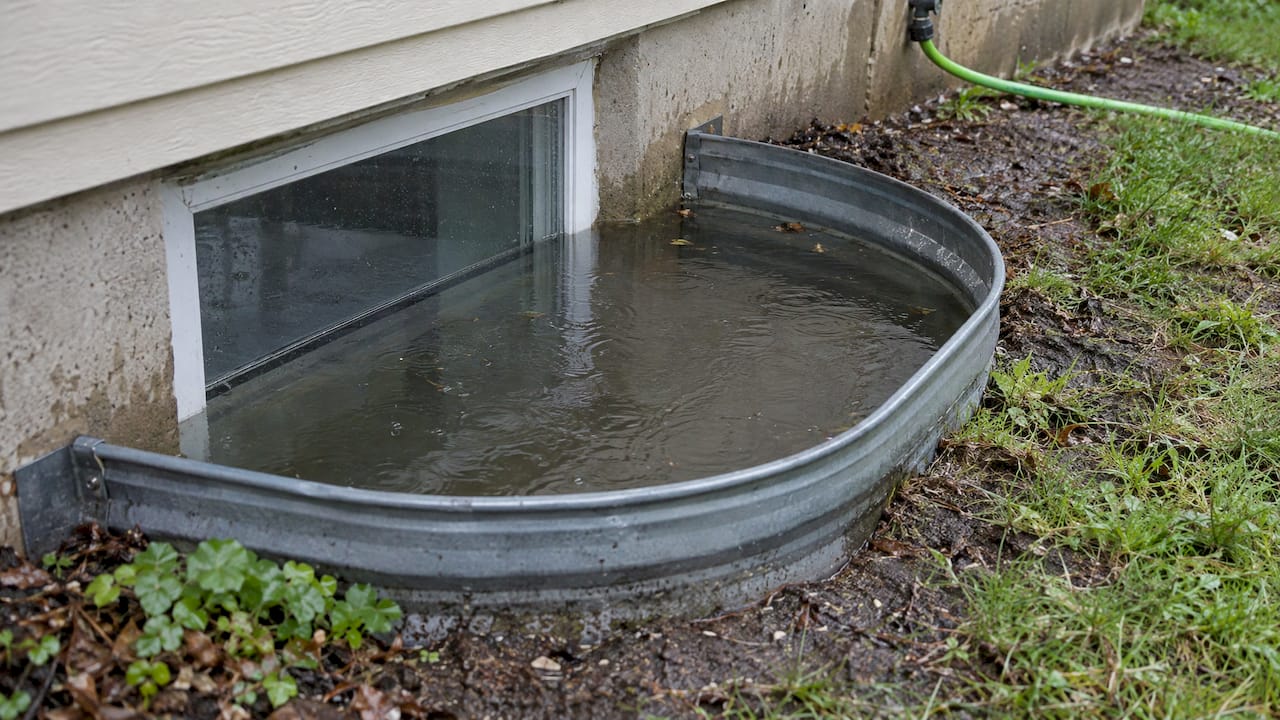
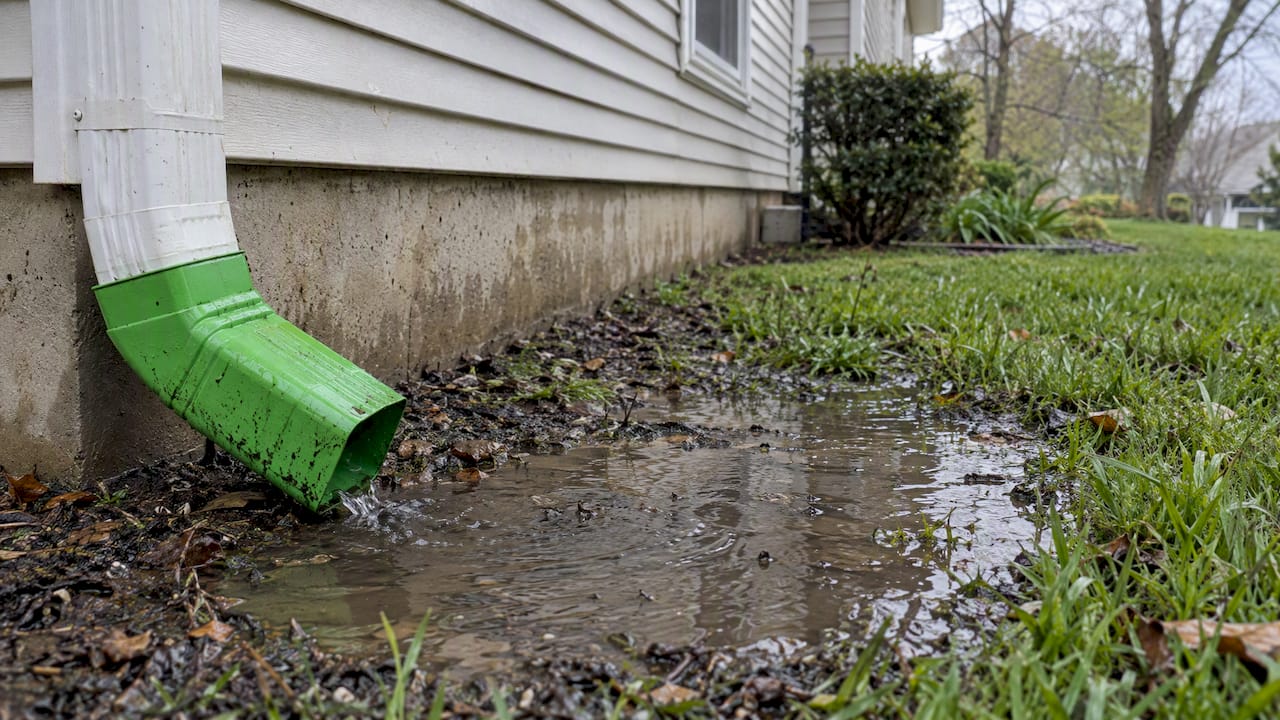
Missouri concrete has a hard life. Rain and snowmelt soak into the surface, temperatures swing above and below freezing many times in a winter, and driveways pick up deicing salt from the street and from our own shovels. Freeze-thaw damage needs two things at once: concrete that is saturated and repeated freezing. Sealers work by reducing water and chloride absorption, so there is less water inside the slab to freeze and expand, and less salt working into the surface.
That is the reason for a schedule rather than a one-time job. Sealer wears away under tires, shovels, sun and weather. A sealed slab that is never refreshed slowly goes back to being an unsealed one. The goal is simple: apply the right product at the right time, then check it every year and renew it before the protection is gone.
The best months to seal concrete in Missouri
The general pattern for our area is late spring through early fall. The easiest windows are usually April to May and September to October, when temperatures are moderate and a sudden hard freeze is less likely. Midsummer can work too, but heat, strong sun and humidity change how sealer dries, so those days take more care.
Here is how the year breaks down for a typical St. Charles County driveway or patio:
| Season | Sealing outlook | What to watch |
|---|---|---|
| Early spring (March) | Often too cold at night | Overnight lows can dip below the product minimum even when afternoons feel mild |
| Late spring (April to May) | Good window | Spring rain: wait for the slab to dry fully after storms |
| Summer (June to August) | Possible, with care | Heat above 90°F, strong sun, wind and humidity |
| Early fall (September to October) | Best window for many homeowners | Falling night temperatures, leaf debris, morning dew |
| Late fall and winter | Usually not recommended | Cold, damp surfaces and low nighttime temperatures |
Because it is now November, many Missouri homeowners are at the end of the fall window. If the forecast does not give you a clean, dry spell with warm enough nights, waiting for spring is a better choice than sealing in marginal weather. A sealer applied in poor conditions can fail to form properly, and then you have paid for a job that does not protect the concrete.
Weather matters more than the date
A calendar can tell you when to start watching. It cannot tell you whether this Saturday is a good day. The American Society of Concrete Contractors explains that temperature, humidity, concrete moisture, wind, sunlight and rain all affect how a sealer dries and forms its film, which is why a date alone is not a sufficient plan.
Temperature
The same ASCC guide says moderate air and surface temperatures of about 50 to 65°F are favorable, and that water-based sealers should be applied at 45°F and rising, but not above 90°F. Products differ, though. One penetrating sealer’s instructions call for air and surface temperatures to stay above 40°F during application and for 72 hours afterward, and a big-box retailer’s how-to says temperatures should stay above 50°F during application and drying. Read the label on the exact product, and follow the strictest number you find.
Nights count
Missouri spring and fall days can feel perfect while nights fall well below the minimum. The National Association of Home Builders notes that air and concrete temperatures need to stay above 45°F for at least 24 hours after a water-based sealer goes down, precisely because nights can be much colder than daytime highs. Look at the overnight low in the forecast for the next two to three nights, not only the high on the day you seal.
Rain and humidity
The ASCC guide says wet concrete can fog or blush and cause adhesion problems, that humidity above 70% lengthens drying time, and that rain or condensation should not be expected within 12 hours. Manufacturer instructions for a penetrating sealer likewise say to avoid rain for 12 hours after application. Many installers prefer a more cautious margin, and it is a good habit to wait for a forecast that is clear for a full day or two.
Wind and sun
Strong wind and direct midday sun make sealer dry too fast, which can leave streaks, bubbles or a weak film. Early morning or late afternoon on a calm day is usually easier on the product. The same penetrating-sealer instructions advise avoiding heat above 90°F, strong wind and excessive humidity.
Getting the surface ready
Most sealer failures start before the sealer is opened. The American Concrete Institute says that proper surface preparation is critical to short- and long-term performance, and that inadequate preparation is a common cause of failure. It also says the concrete’s condition, moisture, contaminants, weather and traffic should be assessed before application.
In practice, that means:
- Clean it. A manufacturer data sheet says the surface must be clean and porous, free of dust, dirt, mildew, oil, grease, old sealers, curing agents and paint. Oil stains from a driveway need to be treated, not sealed over.
- Repair first. Fill cracks and chipped joints before sealing. Sealer protects sound concrete; it does not fix spalling or open cracks.
- Let it dry fully. The same data sheet says pressure-washed or rain-soaked concrete may need one to three days to air-dry and should not be sealed while damp. Another guide recommends allowing a washed surface to dry at least 72 hours before sealing. When in doubt, give it more time.
- Check the old sealer. If a topical sealer is already on the slab and peeling or cloudy, it usually has to come off before a new product will bond.
A quick home test: tape a one-foot square of clear plastic to the slab in the morning. If the concrete underneath looks darker or has condensation by afternoon, there is still moisture in it.
How long new concrete should cure first
If your concrete is new, wait. Exterior concrete should be sealed once it has had adequate time to dry out, approximately 28 days after placement. A penetrating sealer manufacturer’s instructions say new concrete should cure at least 28 days before application, and a retailer’s guide says at least one month.
This changes how you plan a new patio or driveway. A slab poured in late September may not be ready for sealing until late October, and by then the nights may be too cold. In that case, plan to seal the following spring, and keep deicing salt off the new concrete in the meantime. If you are budgeting a new slab, our Missouri concrete patio cost guide and patio installation timeline show how the phases fall across the season.
Penetrating or topical: the schedule depends on the sealer
The type of sealer changes how long it lasts and how you judge it.
- Penetrating sealers (silane or siloxane) soak into the concrete and create a water-repelling barrier without a surface film. For exterior concrete exposed to freeze-thaw cycles and deicers, a manufacturer technical bulletin identifies penetrating silane or siloxane sealers as the preferred long-term approach. The natural look stays, and there is no film to peel or turn slippery.
- Topical sealers (acrylic and similar films) sit on top of the surface and give color enhancement or a glossy finish. The same bulletin says cure-and-seal products are susceptible to abrasion from foot traffic, snow removal and deicing materials, and are not intended for long-term winter protection.
For a Missouri driveway that sees plows, shovels and salt, penetrating protection is usually the better long-term match. For a decorative patio where you want a richer color, a topical product may be chosen for looks, and it will need closer attention and more frequent renewal. Retailers also note that penetrating sealers suit driveways, patios and walkways because they protect against moisture and deicers.
Pavers are a separate case. Joint sand and sealer have their own timing, so see our guide to sealing pavers after polymeric sand before you start.
How often to reseal
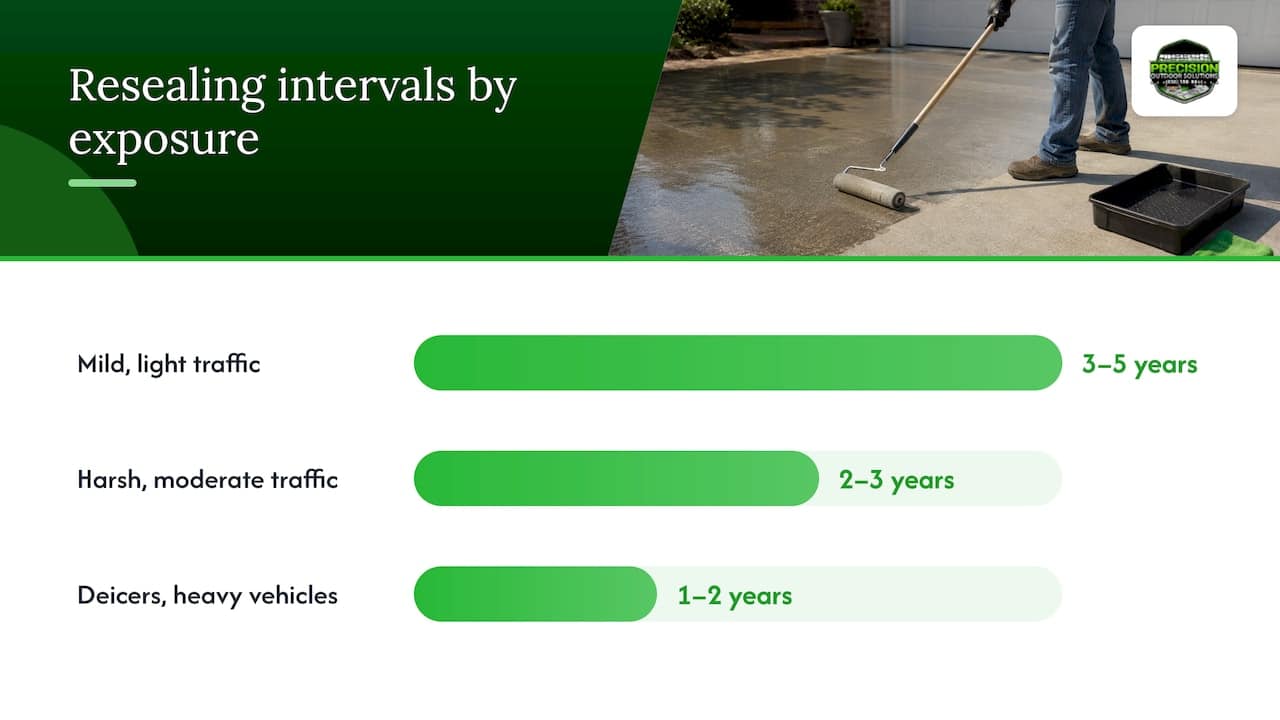
There is no single number. A professional concrete resource suggests resealing every 3 to 5 years in mild climates with light traffic, every 2 to 3 years in harsher climates with moderate traffic, and every 1 to 2 years where deicers and heavy vehicles are involved. It adds that most contractors recommend 2 to 5 years overall, depending on sealer type, traffic and conditions.
Missouri sits in the middle of that range, and a driveway that gets salted every winter sits at the short end. A reasonable starting plan:
| Concrete area | Typical exposure | Starting point for rechecking |
|---|---|---|
| Backyard patio, covered or shaded | Light traffic, little salt | Check yearly; expect the longer end of the range |
| Open patio or walkway | Sun, rain, some deicer | Check yearly; plan for 2 to 3 years |
| Driveway with salt and vehicle traffic | Heavy wear, deicers | Check yearly; plan for 1 to 2 years |
Those are starting points, not promises. The manufacturer’s label for your product has the final say on recoat intervals.
The water bead test
Instead of counting years, test the surface each spring. Sprinkle water on the concrete. If it beads up, the sealer is still working. If it darkens and soaks in, protection is fading. The same professional guide says to reseal when water no longer beads, when wear is visible, or when color or gloss fades. A cement supplier’s guide gives the same practical signal: sealer wears over time and should be reapplied according to the manufacturer’s recommendations.
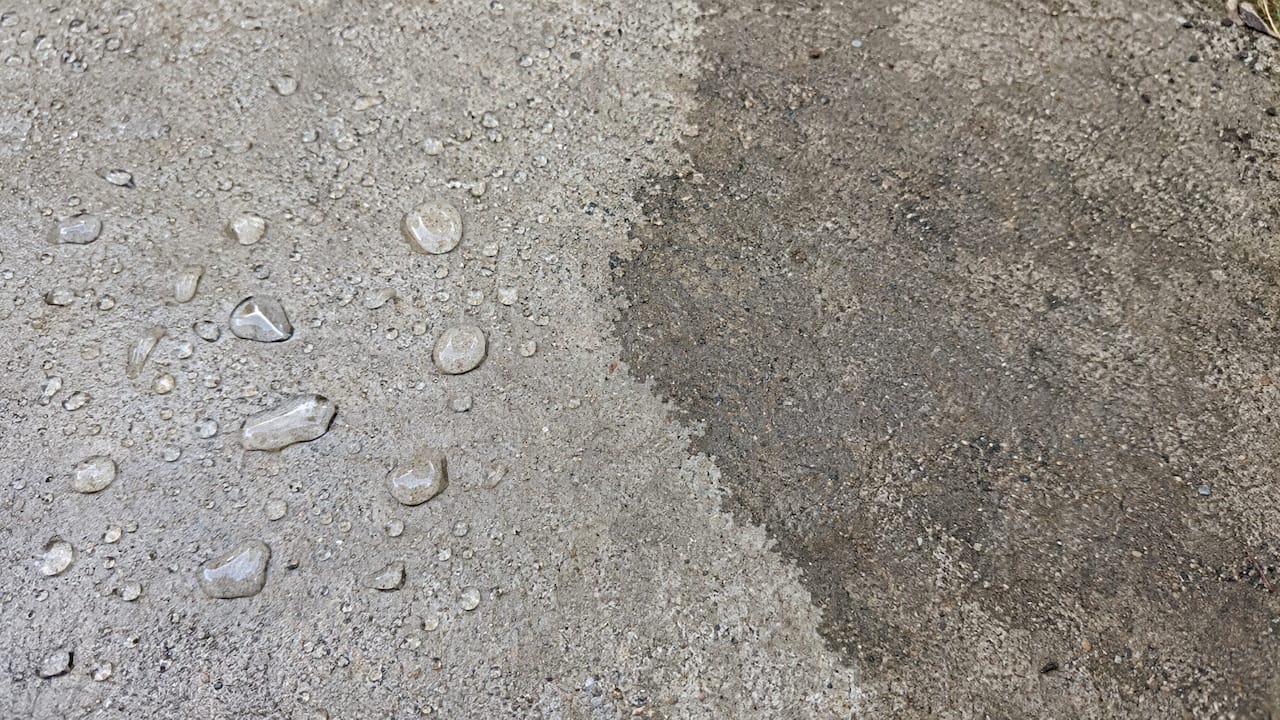
Put a yearly reminder on your calendar for April. If the test fails, you have the spring window to fix it before summer, and you will not go into the next winter exposed.
A simple Missouri sealing calendar
- Early spring: Sweep, inspect for cracks and heaved joints, and run the water test. Book repairs.
- April to May: Clean, repair and dry the slab, then seal on a calm, dry day if the water test failed or the slab is new enough.
- Summer: Avoid sealing in extreme heat. Keep an eye on oil leaks and stains, and clean them promptly.
- September to October: The second main window. Seal after cleaning and a full dry-out, before the first hard freeze.
- Winter: Use deicers sparingly, shovel rather than chip, and keep salt away from fresh or unsealed slabs.
Sealing before winter is especially useful, since the protection is there for the first freeze-thaw cycles. But a rushed fall job in cold, damp weather is worse than none at all.
Perspective
After more than 25 years of building patios, driveways and walkways around Wentzville and St. Charles County, we have come to see sealing as the last step of a good concrete job, not an extra. The slab is only as durable as the base under it, the drainage around it and the surface protection on top.
That is why we look at the whole site first. If water pools against a patio or runs onto a driveway edge, sealer will not solve it, and that water will keep finding its way into the concrete. We plan grading and drainage with the concrete, then recommend a sealing approach that suits how you use the space.
Our advice is to treat the schedule as a conversation with the weather. We watch the overnight lows and the rain forecast, we let surfaces dry fully, and we would rather reschedule a day than seal in poor conditions. Clear timelines and honest updates are part of how we work, and that includes telling you when a job should wait for the right window.
Precision Outdoor Solutions
Let us help with your concrete
If you would rather not watch forecasts and read product labels, we can plan the concrete work with you, from new slabs and patios to repairs and the right protection for each surface. Precision Outdoor Solutions serves Wentzville, St. Peters, O’Fallon, Troy and the rest of St. Charles County, with a site consultation, a clear plan and professional installation.

Learn more about our concrete services, or contact Precision Outdoor Solutions to ask for a free estimate. If you are planning a new patio, our hardscape and patio installation page explains how we build for durability.
FAQ
Can I seal concrete in a Missouri winter?
Usually not. Most sealers need air and surface temperatures above a minimum, often 40 to 50°F, during application and for one to three days afterward, and winter surfaces tend to be damp or frozen. Wait for a spring or fall window and use deicers sparingly in the meantime.
Do I need to seal concrete every year?
No, but you should check it every year. Depending on the sealer, traffic and salt exposure, resealing is typically needed every 1 to 5 years. Test with water each spring and reseal when it stops beading.
How long after pressure washing can I seal?
Give the concrete at least one to three days to dry, longer if the weather is cool or humid. Manufacturer guidance says not to seal damp concrete, and one supplier suggests allowing 72 hours after washing. If you see dark, damp patches, wait.
Is sealer enough to stop freeze-thaw cracking?
Sealer reduces water and salt absorption, which is what drives freeze-thaw damage, but it works best on sound concrete with good drainage and a solid base. Existing cracks should be repaired first, and water should be directed away from the slab.
Should I seal a new driveway right away?
No. Let it cure about 28 days first, so the concrete can dry out enough for the sealer to work as intended. If that lands in cold weather, plan to seal the next spring.
Sources
- Euclid Chemical: Protecting Exterior Concrete for Winter Durability
- ASCC: Sealer Selection and Application Guide
- RadonSeal: DryWay application instructions
- Lowe’s: How to Seal Concrete Effectively
- NAHB: Water-Based Sealers, Guide to Successful Application
- ACI 515.3R-20: Guide for Assessment and Surface Preparation
- Concrete Sealers USA: Application guidelines technical data sheet
- Cemstone: Exterior Concrete Maintenance Guide
- Concrete Network: How to Reseal Concrete
Recommended
- Concrete Patio Cost In Missouri: 2026 Price Guide
- Seal Pavers Right: Wait A Month After Polymeric Sand For Homeowners
- Concrete Control Joints: Spacing, Timing, And DIY Steps
This article was prepared with AI assistance for general information. For recommendations specific to your property, contact Precision Outdoor Solutions. Call or text us at (636) 358-8644.