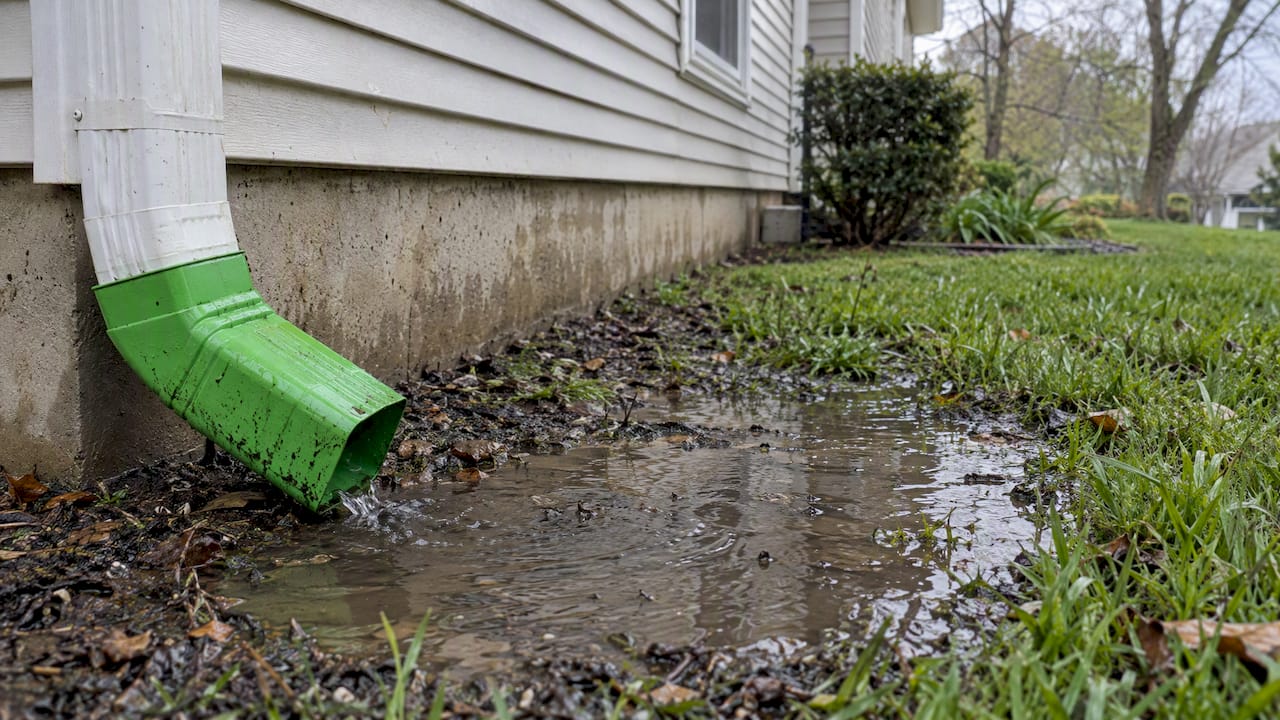
A French drain and a sump pump solve different parts of the same problem. A French drain is a passive, gravity-fed pipe in a gravel trench that intercepts groundwater and carries it away. A sump pump is a mechanical device in a pit that collects water and pushes it out through a discharge line. If water can flow downhill to a safe outlet, a French drain usually does the job. If it can’t, you need a pump. Many wet basements need both.
At Precision Outdoor Solutions, we work on yard drainage across Wentzville and St. Charles County, so this is how we’d explain the choice to a neighbor.
TL;DR
- A French drain is passive: a perforated pipe in a gravel trench that moves water by gravity. A sump pump is active: it needs power and a pit.
- Choose a French drain when water has somewhere lower to go. Choose a sump pump when gravity can’t carry water to an outlet.
- In a wet basement, the two often work as a team: the drain collects the water and the pump ejects it.
- Catch basins, surface drains and yard drains handle water that sits on top of the ground, not water pushing up from below.
- The right answer depends on your lot’s slope, outlet options and where the water shows up, so look at the whole property before you pick a system.
Table of Contents
- How each system handles water
- Side-by-side comparison
- When to use a French drain
- When to use a sump pump
- Why many homes need both
- Catch basin, surface drain and yard drain: how they differ from a French drain
- Site conditions that decide the system
- Cost: what drives the price
- Perspective
- Get a drainage plan for your property
- FAQ
- Sources
How each system handles water
What a French drain does
A French drain is a trench filled with gravel and a perforated pipe. Water in the soil moves into the gravel, enters the pipe, and runs along a gentle slope to a spot where it can leave. In a basement setting, a footing drain does this job: bulk water is drained from below the finished floor level by a footing drain that runs either to daylight or to a sump pit to be pumped out.
The key word is intercept. A French drain gives water an easy path before it can build pressure against a foundation wall or stay in your lawn.
A typical yard installation looks like this, according to LSU AgCenter guidance:
- A trench roughly 12 to 18 inches wide and 18 to 24 inches deep
- A perforated pipe, typically 4 inches in diameter, laid at the base
- Washed gravel around the pipe, typically 1 inch in size
- Geotextile fabric lining the trench so soil doesn’t mix into the gravel and clog it
The slope matters as much as the materials. The pipe has to fall continuously toward the outlet. A drain that sags or runs flat will hold water instead of moving it.
What a sump pump does
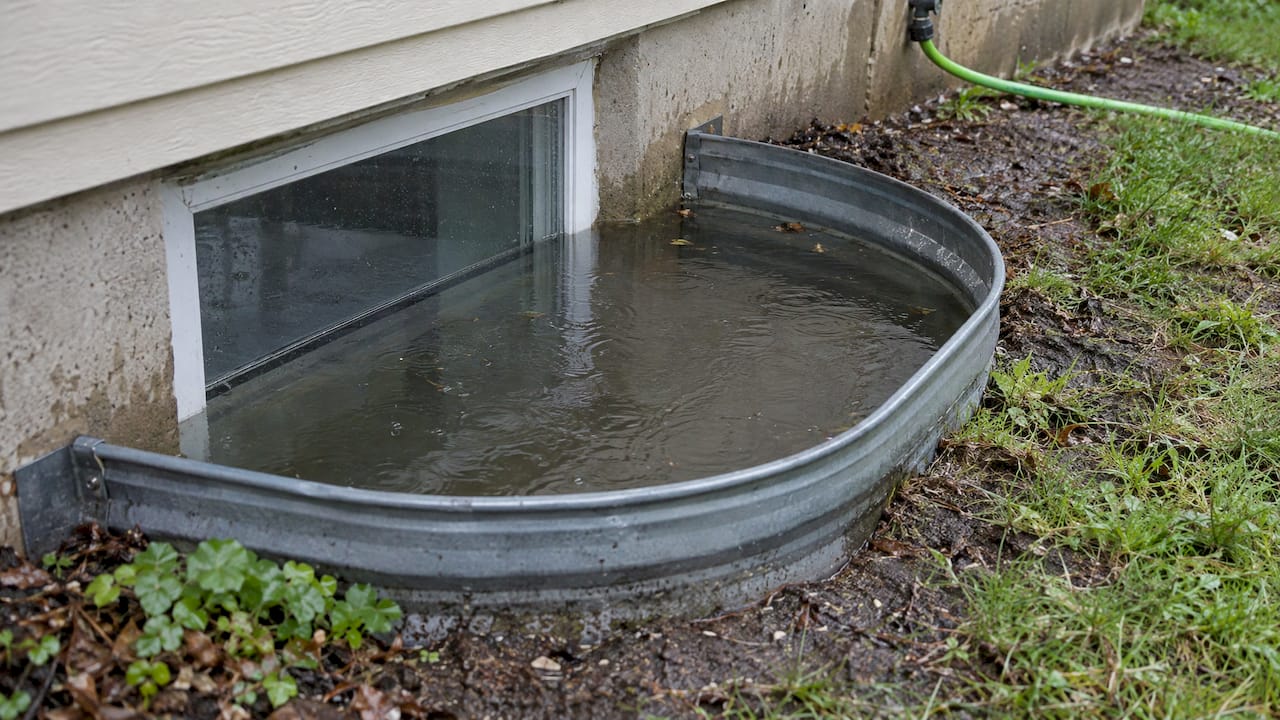
A sump pump sits in a pit (the sump or basin) at the lowest point of a basement or crawl space. Water that enters the pit trips a switch, the pump pushes it through a discharge pipe and out of the house, and a check valve stops it from flowing back.
So a sump pump doesn’t stop water from reaching your foundation. It removes water that has already collected. That is why it is the right tool when the lowest point of the home sits below any place water could drain to by gravity.
Side-by-side comparison
| Question | French drain | Sump pump |
|---|---|---|
| How it moves water | Gravity, through a sloped perforated pipe | An electric pump pushes water out of a pit |
| Where it goes | Along the foundation, in the yard, or beneath a basement floor | In the lowest part of a basement or crawl space |
| Needs power | No | Yes, so a backup plan matters |
| Needs a lower outlet | Yes, a place for water to drain to | No, the pump lifts water to the discharge point |
| Moving parts | None | Pump, float switch, check valve |
| Best at | Preventing water from reaching a problem area | Removing water that has already collected |
| Upkeep | Occasional checks that the outlet is clear and that silt isn’t building up | Regular test runs and pit cleaning |
When to use a French drain
A French drain is a strong fit when:
- Water pools in a low spot of your yard after rain.
- Soggy ground sits against a foundation wall or a retaining wall.
- Your lot has a natural fall to a street, a ditch or a lower corner where water can be released legally and safely.
- You want to deal with water outside, before it gets near the house.
If a retaining wall is part of the problem, drainage behind it is critical. Our guide to retaining wall drainage covers what to ask for.
A French drain is not the answer when the water has nowhere lower to go. If the pipe has no outlet, it fills and stays full. In that case you need a different outlet strategy or a pump.
When to use a sump pump
A sump pump makes sense when:
- Your basement or crawl space takes in water and the lowest floor is below any exit point.
- Gravity can’t move the water to an outlet. A sump pump is the only option in that case.
- A perimeter drain inside or outside the home has collected water and needs a place to send it.
The pump is only as good as its power supply. The same source notes that it fails completely if the power goes out during the storm that needs it most, so plan for that. A battery backup is the usual answer. ICLR notes that backup systems run on automotive or 12-volt deep cycle marine batteries, and some manufacturers recommend replacing the battery every two to three years.
Safe use and upkeep for a sump pump
A sump pump that you never check is a pump you can’t count on. These habits keep it ready:
- Test it regularly. ICLR recommends testing as often as every month or two, particularly where water tables are high. Pour water into the pit and watch the pump start and stop.
- Check the float. The ICLR booklet explains that most failures come from the float or switch, the pump itself, or loss of power. Floats often fail when something blocks them from moving freely, so keep the pit clear.
- Use a one-way check valve on the discharge line so pumped water doesn’t flow back into the pit.
- Cover the pit. The U.S. Department of Energy’s Building America resource says the pit should have an airtight cover to keep soil gases, water vapor and other contaminants out of the home.
For a radon, mold or electrical concern around the pit, call a licensed professional such as a radon mitigation contractor or a licensed electrician. Those are outside what a landscaper should advise on.
Building codes also set rules for pits. Check the sump pit requirements with your city or the St. Charles County building department before you dig.
Why many homes need both
In a wet basement, the two systems are not rivals. An interior or exterior French drain collects water around the footing and moves it to a low point. The sump pit sits at that low point and the pump ejects the water. One gathers, the other removes.
That is also why the “which is better” debate can mislead you. The better question is where your water is coming from and where it can go.
- Water entering the basement through the floor or wall joint: a perimeter drain feeding a pump is a common pairing.
- Water pooling in the yard, with slope to an outlet: a French drain alone is often enough.
- Water pooling in the yard, with no outlet: a pump or a different collection design may be needed.
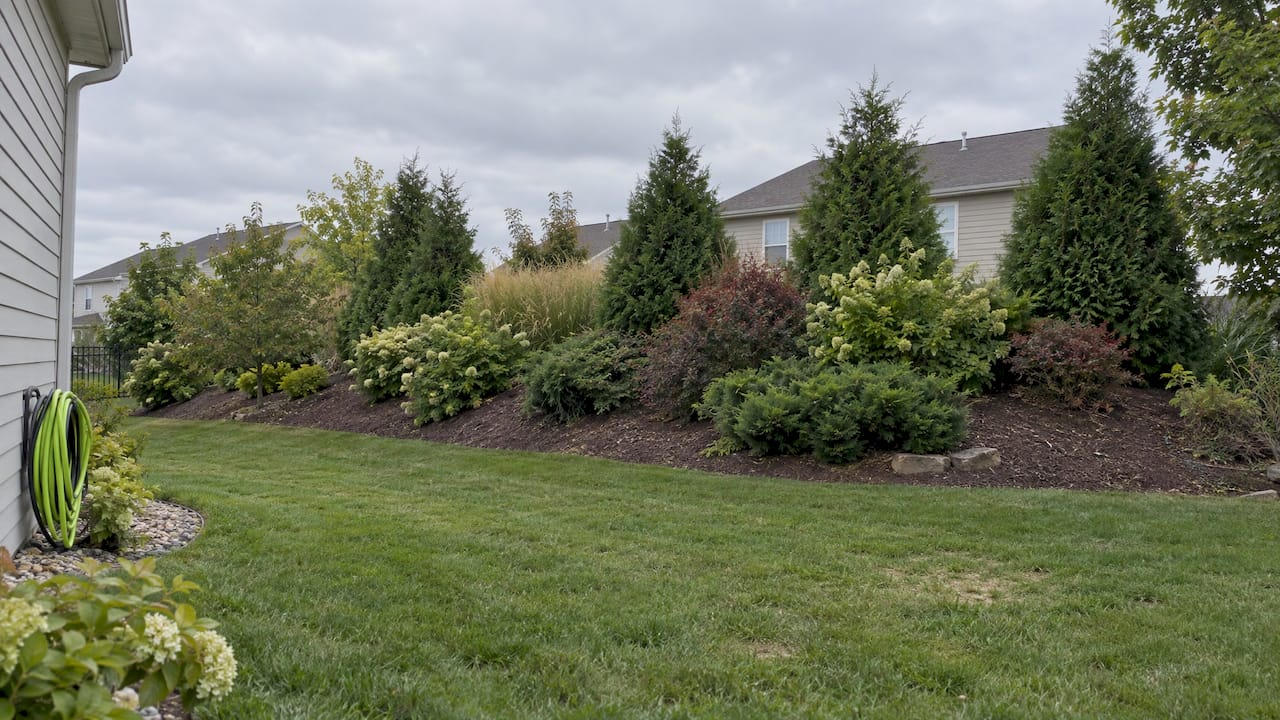
- Water sitting on the surface in a heavy rain: look at grading and surface drains first.
Grading is the cheapest fix to check first. Our post on stopping yard runoff with proper grading explains how the ground around your house should slope away from the foundation.
Catch basin, surface drain and yard drain: how they differ from a French drain
People searching for sump pumps and French drains often find themselves comparing a few other options. Here is how they fit.
Catch basin vs. French drain
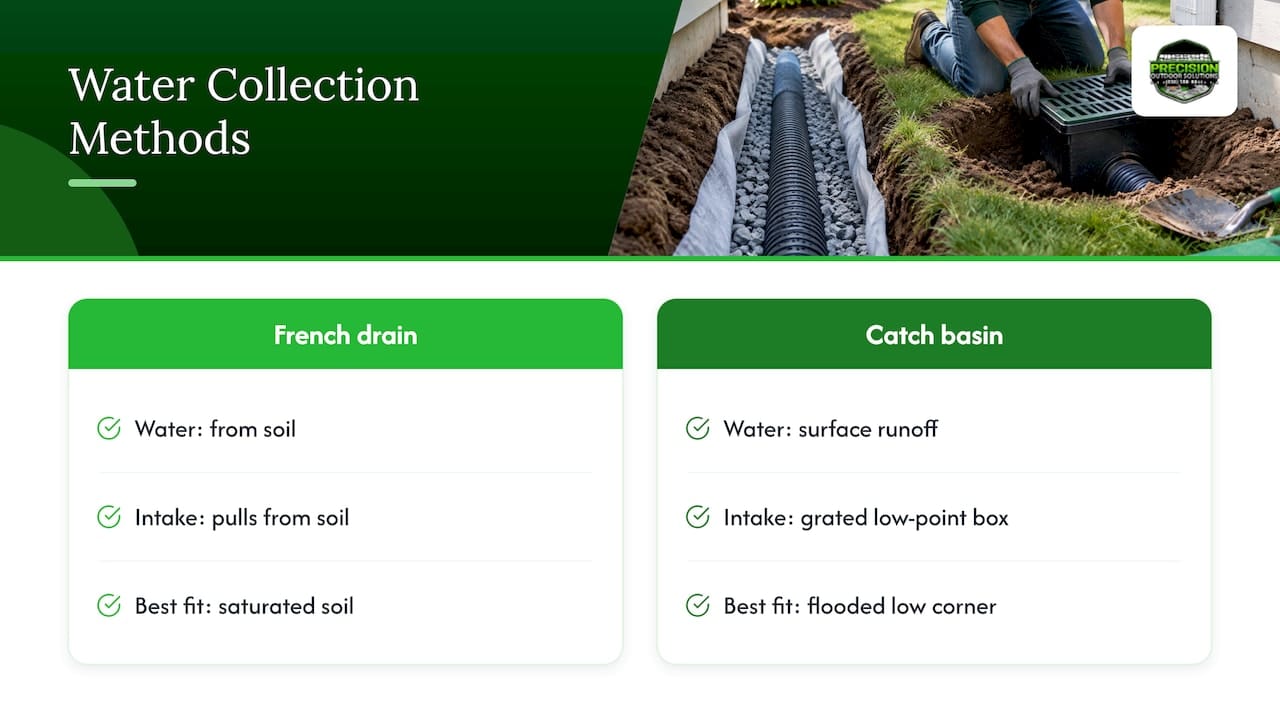
A catch basin is a grated box set at the low point of a yard. It collects surface water and sends it through a solid pipe to a street, ditch or dry well. It can handle more volume than a French drain alone, but it needs a legal outlet, which not every lot has.
A French drain pulls water out of the soil. A catch basin takes in water that is already running across the surface. If your problem is a flooded low corner after a downpour, a catch basin may fit. If your problem is saturated soil, a French drain is the better match.
Surface drain vs. French drain
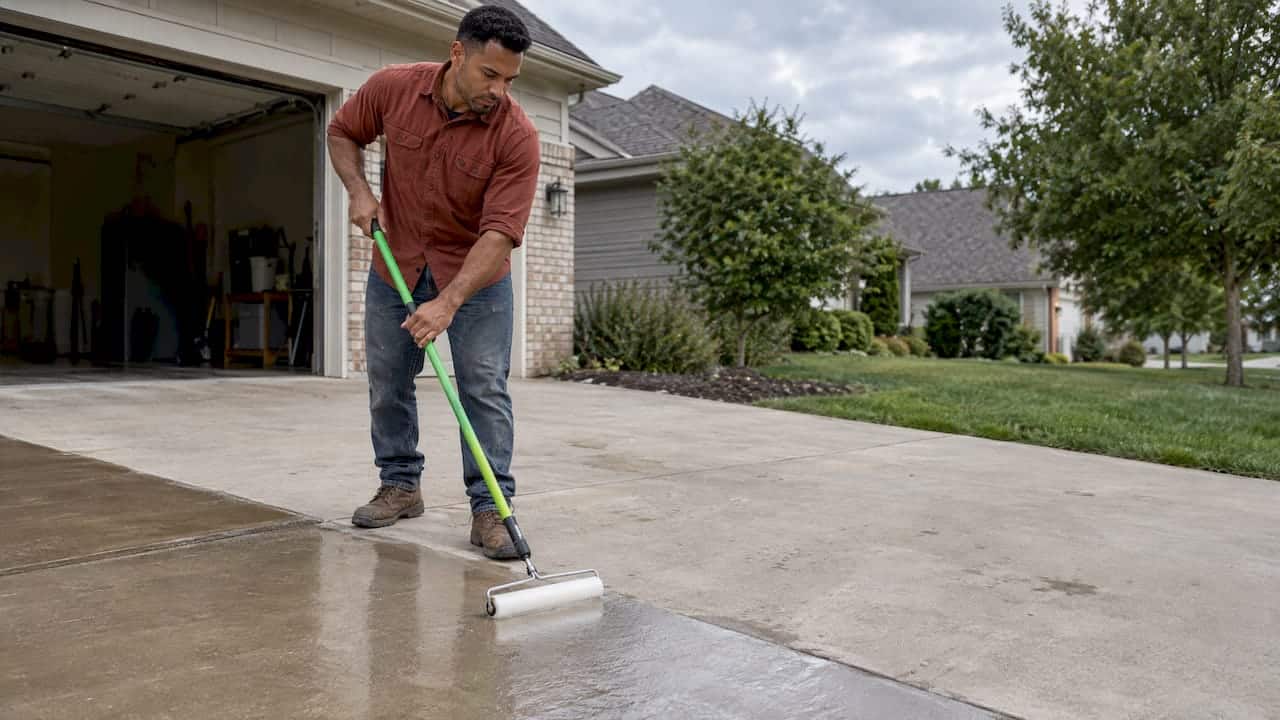
A surface drain (a channel drain or a grated inlet) captures water running across hard or bare surfaces and sends it into a pipe. It works from the top down. A French drain works below the surface and takes in water through the soil. Surface drains suit places like patios and driveways where sheet flow is the issue. We cover this in our guides to patio drainage channels and driveway drainage.
Yard drain vs. French drain
“Yard drain” is a general term. It usually means a grated inlet in the lawn, tied to a solid pipe, that takes in standing water. It is closely related to a catch basin. A French drain, by contrast, has a perforated pipe that collects water along its whole length. Pick a yard drain for a defined low spot. Pick a French drain for a long wet stretch, such as the line along a foundation or the base of a slope.
Site conditions that decide the system
Before choosing, walk your property after a heavy rain and note these things:
- Where the water appears. Inside the house, along the foundation, in the lawn or against a wall each point to a different fix.
- Where it could go. Is there a street, ditch, lower corner or dry well you can use legally and without sending water onto a neighbor?
- How much slope you have. One source puts the minimum French drain slope at 1 percent, about 1 inch per 8 feet, which is a useful rule of thumb to keep in mind.
- Roof water. Downspouts that dump next to the house add a lot of water. Good downspout placement guidelines can cut the load on any drain. If you already have a French drain, our post on keeping downspouts 5 to 10 feet from French drains explains how to tie the two together safely.
- Discharge point. A pump needs somewhere to send water. See our sump pump discharge options for practical, code-conscious ideas.
Cost: what drives the price
We don’t publish prices for drainage work, because every property is different. A job is billed per project, and these factors move the number most:
- How long the trench or pipe run is
- How deep the work goes and how hard the digging is
- Whether the water needs a pump, a basin or just gravity
- What has to be removed or restored, such as lawn, landscaping, concrete or pavers
- How far the outlet is from the problem area
A system priced by the foot or by the unit tells you little until someone has seen your yard. That is why we start with a site consultation and a plan for your property.
Perspective
We see the same mistake often in St. Charles County: a homeowner buys one fix for a problem that has two parts. A pump removes water that has already arrived. A drain keeps it from piling up in the first place. Neither one is a complete plan on its own if you haven’t looked at where the water starts.
That’s why we begin with the lot. We look at grading, downspouts, hard surfaces and possible outlets before we talk about a product. Durable drainage depends on correct slope, clean installation and a design that fits the property. We build with those in mind, and we keep you updated on timelines along the way.
If your yard needs a French drain, we design it with the right fall and a proper outlet. If water needs to be collected and moved, we plan the whole path. Our approach to drainage also carries into patios, retaining walls and landscape design, so the water plan and the outdoor space work together.
Precision Outdoor Solutions
Get a drainage plan for your property
If you’re in Wentzville, St. Peters, O’Fallon, Troy or elsewhere in St. Charles County, our team at Precision Outdoor Solutions can look at where your water comes from and recommend a fit. Our yard drainage solutions in Wentzville, MO cover site consultation, design planning and professional installation, with clear communication from the first visit to the finished job.

To see everything we build, visit our Precision Outdoor Solutions home page and reach out to talk through your yard.
FAQ
When should you not use a French drain?
Skip a French drain when the water has no lower place to go, because the pipe will simply fill and stay full. It is also the wrong tool for sheet flow across hard surfaces, where a surface drain or grading change fits better. A site visit will show which applies.
Can a French drain replace a sump pump?
Sometimes. If the drain can run by gravity to daylight or a lower outlet, it can handle the water without a pump. If the lowest point of the home sits below any outlet, the water has to be lifted, and that takes a pump. In many basements, the French drain feeds the sump pit.
How long do these systems last?
A properly installed French drain can last decades, with silt in the pipe as the main concern over time. A sump pump is a mechanical part and will eventually need replacing. Test the pump regularly, keep the pit clean and plan for a backup power source.
Do I need a permit or code check for drainage work?
Requirements vary by city and county. Sump pits, discharge lines and where water is allowed to drain are often regulated. Ask your local building department before work starts, and keep drainage from sending water onto a neighbor’s property.
What’s the first thing to check if my yard floods?
Look at grading and downspouts. If the ground slopes toward the house or roof water drops near the foundation, fixing that can reduce the load on any drain. If water still collects, then it’s time to compare a French drain, catch basin, surface drain or pump.
Sources
- Drain or Sump Pump Installed in Basements or Crawlspaces (Building America Solution Center)
- Interior Basement Drainage Systems: Sump Pumps and French Drains (HGTV)
- Landscape Ornamental Series: Installing and Maintaining a French Drain (LSU AgCenter)
- Sump pump systems (ICLR)
- 12 Yard Drainage Solutions Ranked by Cost & Effort
- Outdoor Drainage Solutions: Complete Guide for Homeowners
- Downspout Placement: Keep Runs Under 40 Feet, Discharge 5 Feet Away
Recommended
- Sump Pump Discharge Options: Practical, Code-Safe Ideas
- Downspout Drainage Options: A Homeowner’s Practical Guide
- Driveway Drainage Ideas That Actually Prevent Water Damage
- Stop Yard Runoff: 1 Inch Per Foot Grading Homeowners Need
This article was prepared with AI assistance for general information. For recommendations specific to your property, contact Precision Outdoor Solutions. Call or text us at (636) 358-8644.