Four inches is the standard minimum for a residential concrete patio, and that number holds up for most backyard projects carrying nothing heavier than furniture and foot traffic. Plan for 5 to 6 inches, or a reinforced 4-inch pour, if you’re supporting a hot tub, parking a vehicle, or building on soft or expansive soil. Thickness matters, but a properly compacted base and the right concrete mix often determine whether that slab lasts 10 years or 30.
TL;DR:
- A standard residential concrete patio should be at least 4 inches thick for foot traffic, but support for heavier loads requires 5 to 6 inches with reinforcement.
- Reinforcement options include mesh for typical slabs and rebar for heavier loads like hot tubs or vehicles, with localized edge thickening as a cost-effective reinforcement method.
- Proper site preparation, including a compacted gravel base and correct drainage, is more critical for durability than just increasing concrete thickness.
- Most patios use concrete rated between 3,000 and 4,000 PSI, with proper curing and timing being just as important as mix strength for a long-lasting slab.
- Avoid common mistakes such as skipping base prep, ignoring soil conditions, or rushing the pour, especially on complex or high-load projects.
Table of Contents
- Concrete Patio Thickness Guide by Use Case
- When Should You Increase Thickness or Add Reinforcement?
- Getting the Base and Soil Right Before You Pour
- Mix Strength, PSI, and the Truth About the 90-Minute Rule
- Control Joints and Finishing: Where Cracks Actually Start
- How Much Concrete and Money Does Thickness Add?
- Common Mistakes and When to Bring in a Pro
- Why We Specify These Numbers on Real Projects
- Get a Patio Built for Your Actual Yard, Not a Generic Spec Sheet
- Sources
Concrete Patio Thickness Guide by Use Case
Not every patio carries the same load, and the right slab thickness depends entirely on what’s going to sit on top of it. A patio built for a dining table and a few chairs doesn’t need the same specification as one holding a 4,000-pound hot tub full of water and people.
Here’s how thickness typically breaks down by use:
- Standard foot traffic patios: 4 inches, the widely accepted minimum for residential patios.
- Heavy furniture, fire pits, or outdoor kitchens: 4 to 5 inches, giving extra margin against point loads from grills, stone fire pit surrounds, or built-in counters.
- Hot tubs and spas: 4 to 6 inches depending on the tub’s filled weight, since a mid-size spa loaded with water and people can be quite heavy concentrated in a small footprint.
- Vehicle access, RV pads, or driveway extensions: 5 to 6 inches, matching guidance for slabs that need to bear rolling loads rather than just static weight.
| Use case | Recommended thickness |
|---|---|
| Standard patio, foot traffic | 4 inches |
| Fire pit or heavy furniture zone | 4 to 5 inches |
| Hot tub or spa pad | 4 to 6 inches |
| Vehicle or RV access | 5 to 6 inches |
A reinforced 4-inch slab can sometimes substitute for a full 6-inch pour under a hot tub, but that trade-off depends on soil conditions and tub weight. When in doubt, size up rather than gamble on the margin.
When Should You Increase Thickness or Add Reinforcement?
The decision to go thicker usually comes down to one question: is the load concentrated or spread out? A scattered patio set distributes weight evenly across the slab. A hot tub, a vehicle tire, or a stone column concentrates hundreds of pounds onto a few square inches, and that’s where thin, unreinforced concrete cracks first.
Reinforcement options fill different roles:
- Welded wire mesh works fine for a standard 4-inch patio under normal foot traffic.
- Rebar (typically #3 bar on a grid) belongs in slabs carrying vehicles, hot tubs, or anything over 5 inches thick.
- Fiber reinforcement supplements mesh or rebar to reduce surface cracking, but it doesn’t replace structural reinforcement on its own.
Edge-thickening is an underused trick worth knowing. Rather than pouring the entire slab at 6 inches, contractors can thicken just the perimeter to 6 to 8 inches while keeping the field at 4 inches. That cuts total concrete volume while reinforcing the edges, which take the most stress from soil movement and freeze-thaw cycling.
Pro Tip: Map out exactly where heavy features will sit before you order concrete. A localized thickened pad under a hot tub costs far less than pouring the whole patio 2 inches deeper.

Getting the Base and Soil Right Before You Pour
Ask any contractor what actually fails a concrete patio, and thickness rarely tops the list. A properly compacted gravel base and correct drainage deliver more long-term durability than an extra inch of concrete poured over a sloppy subgrade.
Here’s the sequence that matters:
- Excavate to the right depth. Remove topsoil and organic material down to stable subgrade, accounting for both your slab thickness and base material.
- Lay 4 to 6 inches of compacted gravel base. This layer drains water away from the slab and resists frost heave, and it needs to be compacted in stages, not dumped and driven over once.
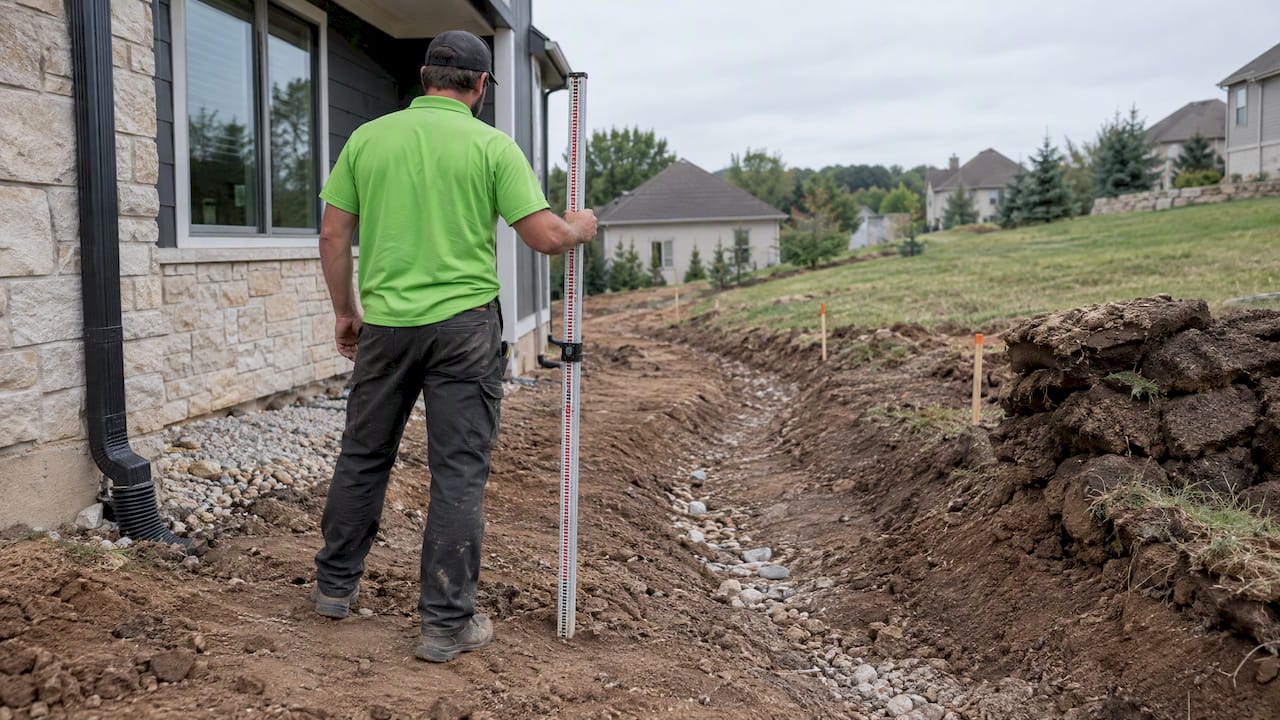
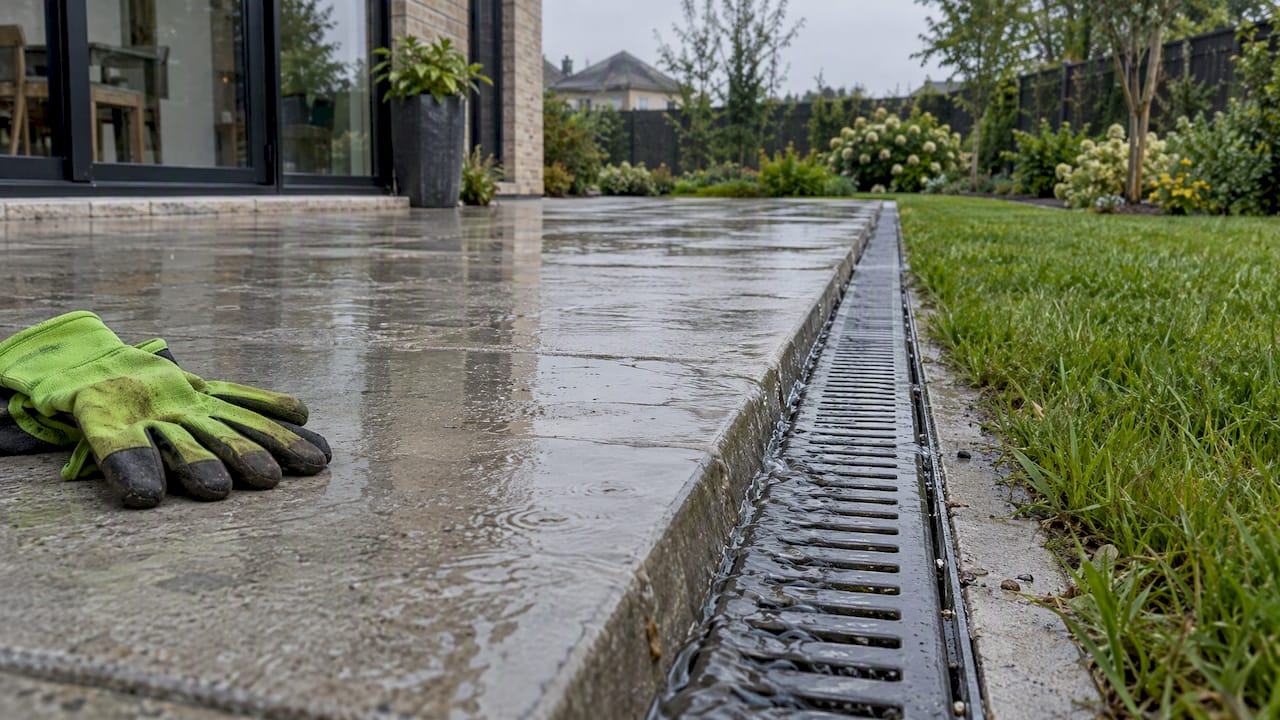
- Grade the slope correctly. Aim for 1/8 to 1/4 inch of fall per foot, directing water away from your house and any structures.
- Address problem soils separately. Expansive clay and loose fill soils shift with moisture changes and can crack even a well-poured slab. If your site has either, a vapor barrier or soil test (and possibly an engineer’s input) is worth the cost before you pour.
Skipping base compaction to save a weekend is the single most common regret homeowners report after a patio starts heaving or settling.
Mix Strength, PSI, and the Truth About the 90-Minute Rule
Most residential patios should use concrete rated between 3,000 and 4,000 PSI. That range holds up to normal weathering and loading without paying for strength you don’t need. If you live somewhere with hard winters, ask for an air-entrained mix specifically, since the tiny air bubbles it introduces help the slab handle freeze-thaw cycles without surface flaking.
The 90-minute rule, reconsidered: For decades, ready-mix concrete was expected to be placed within 90 minutes of batching. Modern admixtures now extend workable placement time well past that window when managed properly, so the old rule is more historical guideline than hard law today.
Still, talk to your supplier about discharge time before the truck arrives, especially on a hot day when concrete sets faster.
Curing matters just as much as the mix. Keep the slab moist for at least the first 5 to 7 days, either with a curing compound or regular water application. Cut that short, and you get a slab that looks fine on day one but chips, dusts, or cracks prematurely within a year or two.
- Standard patios: 3,000 to 4,000 PSI
- Freeze-thaw regions: air-entrained mix, same PSI range
- Curing window: minimum 5 to 7 days moist cure
Control Joints and Finishing: Where Cracks Actually Start
Concrete cracks. That’s not a defect, it’s physics, and control joints simply decide where that cracking happens instead of leaving it to chance. For a standard 4-inch slab, space joints every 8 to 12 feet, following the rule of roughly 2 to 3 times the slab’s thickness in feet. Thicker slabs can carry wider joint spacing.
A few finishing rules that prevent headaches later:
- Cut joints to about one-quarter of the slab’s depth, and cut within the first 24 hours before random cracking beats you to it.
- Place expansion joints wherever your patio meets a foundation, driveway, or other fixed structure.
- Avoid overworking the surface with a trowel. Excess finishing pulls water and fine particles upward, weakening the top layer and inviting scaling.
Get the joint layout right, and cracking becomes a planned, invisible seam instead of a jagged line across your new patio.
How Much Concrete and Money Does Thickness Add?
Thickness drives volume directly, and volume drives your bill. For every 100 square feet of patio, a 4-inch pour needs about 1.23 cubic yards of concrete, a 5-inch pour needs roughly 1.54 cubic yards, and a 6-inch pour runs close to 1.85 cubic yards.

Installed costs vary by region and finish, but expect roughly $8 to $12 per square foot for a standard broom-finished patio, with decorative options like stamped concrete running higher.
A couple of practical ordering notes:
- Round up your order slightly. Running short mid-pour means a rushed, expensive second delivery.
- Watch for short-load fees on small orders. Suppliers often charge a premium below a minimum yardage, so combining nearby work or adjusting your order size can save real money.
Common Mistakes and When to Bring in a Pro
Most patio failures trace back to the same handful of errors, and nearly all of them show up before the concrete truck ever arrives.
- Skipping base compaction. A rushed or skipped gravel base is the top cause of settling and cracking.
- Guessing at reinforcement. Skipping rebar under a hot tub or vehicle pad because “4 inches should be fine” almost always backfires within a few years.
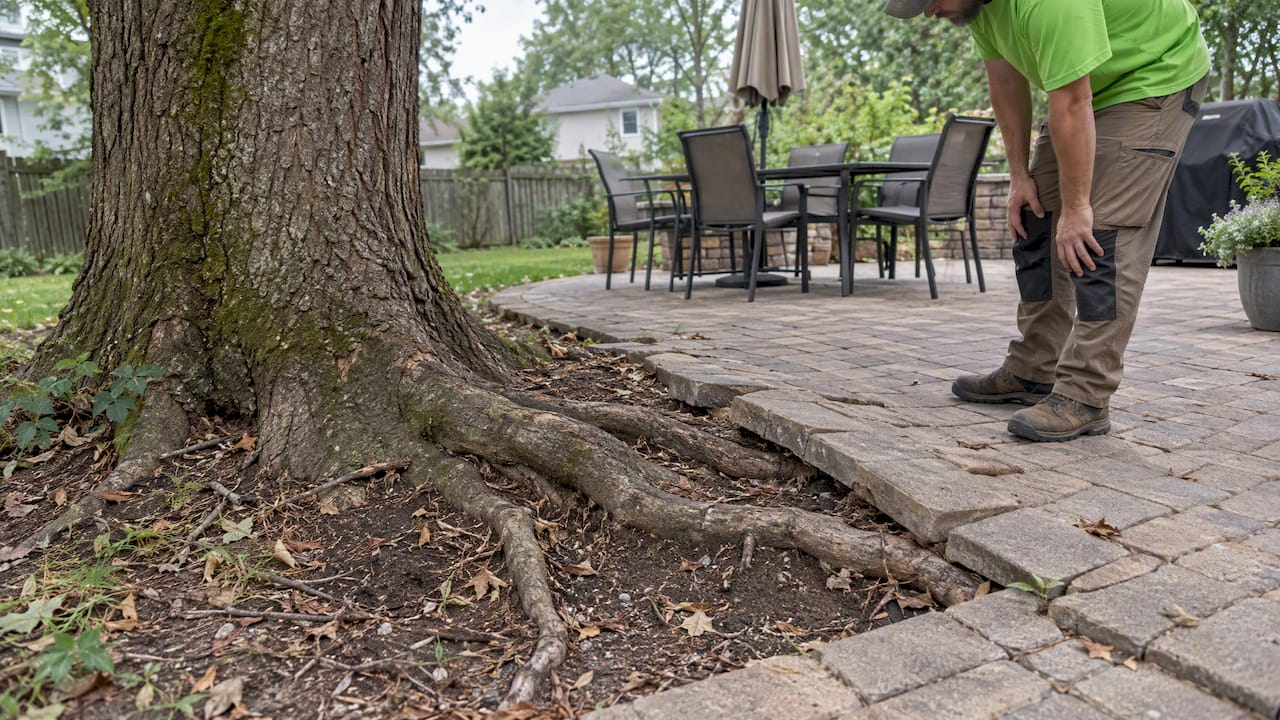
- Ignoring soil type. Pouring over expansive clay without addressing it first invites heaving no matter how thick the slab is.
- Rushing the pour. Placing concrete before the base is properly graded and compacted, or finishing too aggressively, weakens the surface long term.
Before you pour, walk through site prep, reinforcement placement, base compaction, and your delivery timing with the concrete supplier one more time.
Pro Tip: If your site has heavy clay, standing water, or you’re planning anything with wheels on it, get a professional opinion before you order concrete. It’s a lot cheaper than a repour.
Call a professional when you’re dealing with expansive soils, drainage challenges, or any load beyond normal patio furniture. Complex sites are exactly where a contractor’s judgment earns its cost.
Why We Specify These Numbers on Real Projects
We’ve poured plenty of standard 4-inch patios across St. Charles County that have held up for years under nothing more than patio sets and grill traffic. The moment a homeowner mentions a hot tub or wants a slab that can handle a trailer, we’re already talking about 5 to 6 inches or edge-thickened reinforcement instead.
Budget for the base and reinforcement first, then the finish. We’d rather walk a site and give you a specific number than let you guess.
Get a Patio Built for Your Actual Yard, Not a Generic Spec Sheet
Online thickness charts give you a starting point, but they can’t see your soil, your drainage patterns, or what you’re actually planning to put on that patio. Precision Outdoor Solutions has spent more than 25 years reading Wentzville and St. Charles County properties correctly the first time, from base compaction to reinforcement placement to final finish.

Our hardscape and patio installation work covers full site prep, drainage integration, and material selection tailored to your yard’s soil and slope, not a one-size-fits-all number pulled from a chart. We also handle drainage solutions for properties where water pooling has already caused problems, since a patio is only as good as the ground underneath it.
If you’re planning a patio project and want a specification built around your actual property, request a site visit and we’ll walk the space with you and talk through thickness, reinforcement, and budget before anything gets poured.
Sources
- How Thick Should a Concrete Patio Be? | Angi
- What is the 90 minute rule for mixed concrete? | Hunker
- Concrete Patio Thickness: How Thick Should Your Patio Be? Technical Guide – Estimation QS
Recommended
- Concrete Control Joints: Spacing, Timing, And DIY Steps
- Stamped Concrete Cost: 2026 Pricing Guide For Homeowners
- Fix A Failing Retaining Wall: Homeowner’s Repair Guide
- Patio Drainage Solutions That Actually Stop Water Pooling
This article was prepared with AI assistance for general information. For recommendations specific to your property, contact Precision Outdoor Solutions. Call or text us at (636) 358-8644.