If you own a house in St. Peters, you generally do not need a permit to build a residential fence. The city does regulate how tall a fence can be and where it can go, though, and a fence that breaks those rules can still cost you money to fix. This guide covers what the city says, where homeowners most often get tripped up, and how nearby O’Fallon handles it differently.
TL;DR
- Residential fences in St. Peters do not need a permit. Commercial, industrial and multiple-family properties need a miscellaneous building permit first, according to the city’s Planning, Zoning & Development page.
- No permit does not mean no rules. The general height limit is six feet, and a residential fence cannot enclose the front yard.
- Corner lots, pools, utility easements and stormwater structures each have their own conditions.
- O’Fallon is different: it lists fences as small projects that need a permit.
- When in doubt, call St. Peters Planning at (636) 477-6600 before you dig.
Table of Contents
- Do you need a fence permit in St. Peters?
- The rules that still apply without a permit
- Pool fences
- Find your property line before you build
- Who to call in St. Peters
- What about O’Fallon?
- Our perspective: plan the fence around the yard, not just the code
- Hiring help for your St. Peters fence
- Common mistakes to avoid
- FAQ
- Sources
Do you need a fence permit in St. Peters?
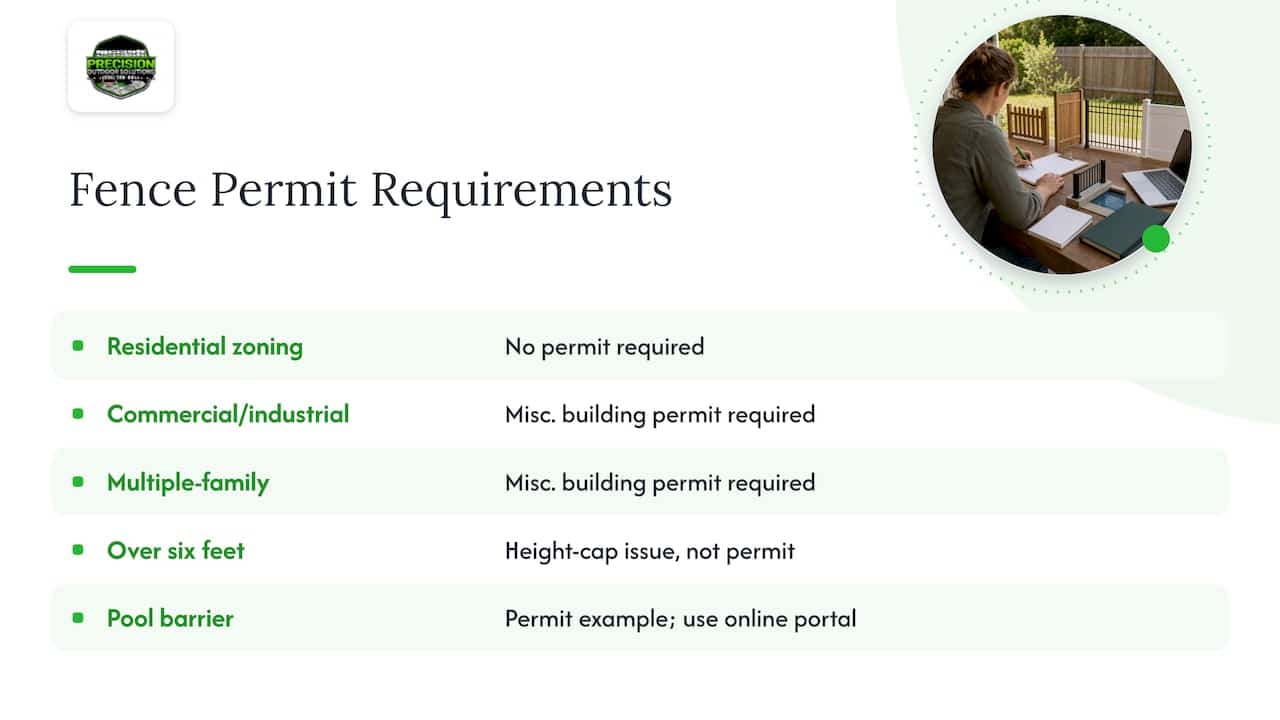
For a typical home, no. The city’s Planning, Zoning & Development page states that fence installation in residential zoning districts does not require a permit, while commercial, industrial and multiple-family installations require a miscellaneous building permit. The city code, Section 405.360, says the same thing in legal language: no permit is generally required to erect, install or alter a fence unless the section itself says otherwise.
You may see other websites claim that St. Peters requires a permit for any fence over six feet. That is not what the city’s own pages say. Because six feet is already the general height cap, a taller residential fence is a question of whether the city allows it at all, not of paying for a permit. Go by the city’s pages and a call to Planning, not by a third-party summary.
If your project does need a permit, for example a pool barrier, St. Peters sends applicants to its online permit portal, where you can apply, read the process information and schedule inspections.
What counts as a fence
The city’s fence guide defines a fence broadly: wood rails and stakes, wire, masonry, a vegetation hedge or similar materials that form a barrier or enclosure along the boundaries of a yard or lot. So a privet hedge planted as a boundary line falls under the same height and placement rules as a cedar privacy fence.
The rules that still apply without a permit
Not needing a permit means nobody reviews your plan before you build. It also means nobody catches a mistake for you. These are the rules in the city’s fence requirements guide and in the city code.
| Question | What St. Peters says |
|---|---|
| How tall can it be? | Six feet in general, unless a specific zoning district allows otherwise |
| Can I fence the front yard? | No. A residential fence cannot enclose a front yard |
| Where does a fence go on an interior lot? | Behind the front building line and within the side and rear property lines |
| Which side faces the street? | When a fence is next to a public street, the improved (finished) side faces the street |
| Over a utility easement? | Allowed, but the city is not responsible for replacing it if it must be removed for maintenance |
| Blocking drainage? | A fence cannot enclose or block a catch basin, culvert or other stormwater structure |
| Upkeep? | Keep it in good condition and finish construction within six months of starting |
Height
The six-foot cap covers fences, walls, shrubs and hedges. If you want something taller for privacy, check your zoning district first, because the code allows exceptions only where a district regulation says so. A taller fence built on a guess is the most expensive mistake on this list, since the fix is to take it down.
Front yard and building line
The front building line is the line your house sets back from the street, as shown on your plat. On an interior lot, the fence stays behind that line. If you have been picturing a decorative front-yard fence with a gate, the city rules do not allow a residential fence to enclose the front yard, so plan around that early. A landscaped border, low retaining wall or planting bed can give you definition without a fence.
Corner lots
Corner lots get the most questions. The city’s guide says the fence may extend ten feet beyond the other front building line, as platted, and must stay outside the sight-distance area so drivers can see around the corner. It also asks you to provide a survey so staff can verify and mark the permitted fence location. Do not skip that step on a corner. A fence that looks fine to you can sit inside a sight triangle.
Through lots
If your lot has streets at both the front and the back, the guide says the fence may extend beyond the building line parallel to the rear property line, subject to its placement and visibility conditions. Call Planning with your address before you set posts, since this one depends on the details of your lot.
Maintenance and the six-month clock
The code expects fences to stay in good condition: damaged boards repaired, surfaces stained or painted, rust removed. It also requires construction to be completed within six months of its start. A half-finished fence sitting through a busy summer can become a code issue.
Pool fences
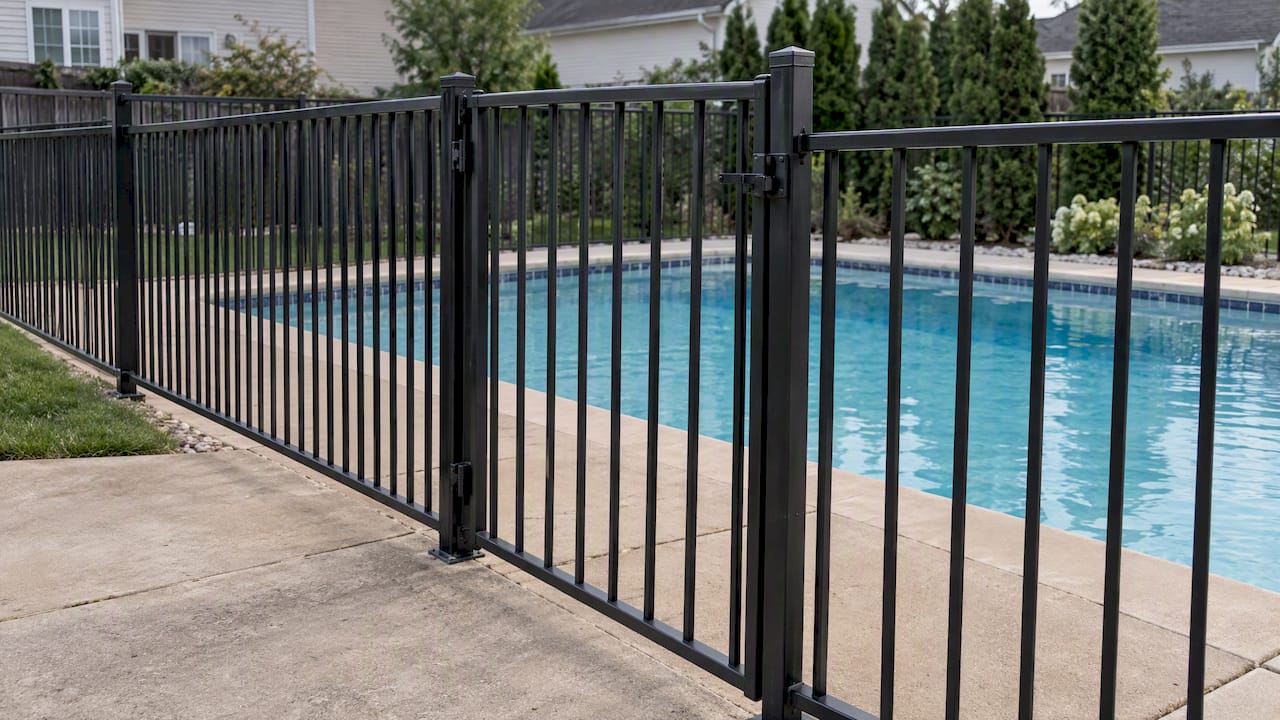
Pools have their own conditions. St. Peters requires pool fences that cannot be used as ladders, and the guide tells homeowners to consult the Building Department at (636) 477-6600, extension 1670, about pool requirements. Treat a pool barrier as a project to confirm with the city before you buy materials, including whether a permit and inspection apply to your setup. The permit portal mentioned above is where inspections are scheduled.
Find your property line before you build
Most fence disputes start with a wrong guess about where the line is. The city’s guide points you to your property survey for exact dimensions. Here is a simple order of operations:
- Pull your survey or plat. It shows lot dimensions, easements and the building lines.
- Mark the easements. Utility easements often run along rear and side lines. You can build over them, but the city will not replace your fence if it has to come out.
- Locate drainage structures. Catch basins and culverts cannot be fenced in or blocked.
- Call Planning with your address. Ask about your zoning district and any height exception.
- Tell your neighbor. It is not a legal step in this guide, but it prevents most arguments about the line.
For a deeper look at distances from the property line, see our guide to fence setback rules and height limits.
Who to call in St. Peters
The city’s fence guide lists St. Peters Planning at (636) 477-6600, or (636) 278-2244, extension 1670. Pool questions go to the Building Department at (636) 477-6600, extension 1670. Have your address and survey in front of you. Ask these questions:
- What is my zoning district, and does it change the six-foot limit?
- Does my lot count as a corner lot or through lot?
- Are there easements or stormwater structures near the line I want to fence?
- Does anything about my project, such as a pool, call for a permit?
Write down the name of the person you spoke with and the date. If the city later disagrees, you will have a record.
What about O’Fallon?
Many readers searching for St. Peters also look at O’Fallon, and the two cities do not work the same way. O’Fallon lists fences among small projects that require a permit and asks applicants to call 636-379-5660. The process it describes is:
- Determine whether a permit is needed.
- Review the submittal requirements.
- Register on the online portal.
- Apply and pay the fees.
O’Fallon says you can use its portal, after creating a free account, to apply, check review status, schedule inspections and pay application fees. Its Planning and Development Department handles zoning and land-use questions and offers an interactive zoning map and the Municipal Code’s land-use title. If you live near the line between the two cities, confirm which city your address is in. Mailing addresses do not always match city limits, and a St. Peters mailing address does not guarantee St. Peters rules.
If your property sits in unincorporated St. Charles County, or in another city such as Wentzville, the rules may differ again. Call the local planning office first.
Our perspective: plan the fence around the yard, not just the code
We have been building outdoor spaces in St. Charles County for more than 25 years, and the fence questions we hear most are rarely about the permit. They are about what happens after the fence goes up.
A fence that meets the code can still fail the yard. Here is what we look at on a site visit:
- Slope. Fences on grades need a different panel plan than flat ground. We cover options in our guide to fencing on a slope.
- Posts. Depth and footing matter more than the look of the panels. Our advice on asking about post depth is worth reading before you collect bids.
- Clear communication. You should know the layout, the materials and the timeline before work starts, and get updates as it goes.
The lack of a permit in St. Peters puts more responsibility on the homeowner and the contractor to get placement right. We would rather confirm the line, the easements and the height with you up front than pull a fence out later.
, Precision Outdoor Solutions
Hiring help for your St. Peters fence
If you would rather not handle the survey, the layout and the building line yourself, our fence installation service covers design, materials and installation for homes in Wentzville and across St. Charles County. If your fence will border a patio, retaining wall or a drainage fix, we can plan those together so the pieces work as one project. You can also start from the Precision Outdoor Solutions home page to see everything we build.
Common mistakes to avoid
- Assuming a permit is the only rule. Height, placement and drainage rules apply either way.
- Building on the line from memory. Use a survey. Stakes or old fence posts are not reliable.
- Fencing a front yard. A residential fence cannot enclose it.
- Ignoring the corner sight area. On a corner lot, stay outside the sight-distance area and get staff to verify with your survey.
- Blocking a swale, culvert or basin. The code prohibits it.
- Putting the rough side outward. Along a public street, the improved side faces the street.
- Letting the job drag. The code expects construction to finish within six months.
Retaining walls and fences often go together on sloped lots, and walls have their own height triggers. Our retaining wall height checklist explains when a wall needs more attention.
FAQ
Do I need a permit to replace an existing fence in St. Peters?
For a residential property, the city says fence installation does not require a permit, and the code covers erecting, installing or altering a fence. A replacement should follow the same height and placement rules as a new fence. Call Planning if your old fence was built in a spot that might not meet today’s rules.
How tall can my backyard fence be in St. Peters?
The general limit is six feet for a fence, wall, shrub or hedge, unless your zoning district’s specific regulations allow otherwise. Ask Planning about your district if you want more height.
Can I put a fence in my front yard?
Not one that encloses it. A residential fence in St. Peters must stay behind the front building line on an interior lot. Corner lots have a different measurement, so provide your survey to staff for verification.
Do I need a permit for a fence in O’Fallon?
Yes, O’Fallon lists fences as small projects that require a permit. Call the Building Division at 636-379-5660 to confirm the steps, then register on the online portal to apply.
Who do I call about a pool fence in St. Peters?
Call the Building Department at (636) 477-6600, extension 1670. The city requires pool fences that cannot be used as ladders, and staff can tell you whether a permit or inspection applies to your pool.
Sources
- Planning, Zoning & Development, City of St. Peters
- Fence Requirements, City of St. Peters
- Apply for Licenses & Permits, City of St. Peters
- Building and Permits, City of O’Fallon
- Planning and Development, City of O’Fallon
Recommended
- Which Fence Styles Actually Boost Curb Appeal?
- Fence Setback Rules: Height Limits And Property Line Distances
This article was prepared with AI assistance for general information. For recommendations specific to your property, contact Precision Outdoor Solutions. Call or text us at (636) 358-8644.