Use racked fencing for gentle slopes, stepped panels for steeper grades, and a terrace or retaining wall when the hillside is too steep for either method to hold up long term. Wood and aluminum rack well, vinyl typically needs stepping, and chain-link usually follows the grade with the least fuss. At Precision Outdoor Solutions, we’ve spent over 25 years handling tricky sites across our region, so we know which approach fits which yard.
TL;DR:
- Typical residential panels can usually rack to about 12 to 15 degrees, but product limits vary, so verify hardware tolerance before ordering.
- Stepped panels stay square on steeper grades, but their triangular ground gaps may let small pets escape unless you fill the openings separately.
- Footings must account for local frost depth and shifting slope soil, while drainage should be managed before construction to prevent water from eroding supports.
- DIY can suit a simple stepped repair or gentle section, but erosion, retaining walls, or gates on steep grades call for a professional site assessment.
Table of Contents
- Racked (raked) vs stepped fence methods: when to use each
- Materials and which options they fit best
- Installation and site considerations for sloped yards
- How to choose the right approach and what to ask a contractor
- Precision Outdoor Solutions: proven experience installing fences on slopes
- When to hire a pro versus DIY for sloped fences
- Get a slope-ready fence built right the first time
- FAQ
- Sources
Racked (raked) vs stepped fence methods: when to use each
A racked, or raked, fence follows the contour of your yard. The rails angle downward or upward between posts so the whole fence line rises and falls with the ground, keeping a fairly consistent gap at the bottom. This approach works well on gentle to moderate slopes, commonly up to about 12 to 15 degrees for typical homeowner-grade panels, according to Angi’s guidance on sloped fence installation. Some rackable hardware systems can handle more, but that depends on the product.
A stepped fence takes a different route. Instead of angling the rails, you install level panels in a stair-step pattern, with each section set slightly higher or lower than the next. This method handles steeper grades better because the panels themselves stay level and square, which keeps vinyl and rigid materials from binding or cracking.
The visual difference matters too. Racked fences read as one continuous line, which many homeowners prefer for a clean look. Stepped fences create small triangular gaps under each panel where it meets the ground, which can matter if you’re keeping small pets contained or trying to limit what slips under the fence during mowing.
- Racked fences suit gentle to moderate slopes and keep a steady, low ground gap.
- Stepped fences suit steeper grades but leave triangular gaps that need separate gap-filling if pet containment matters.
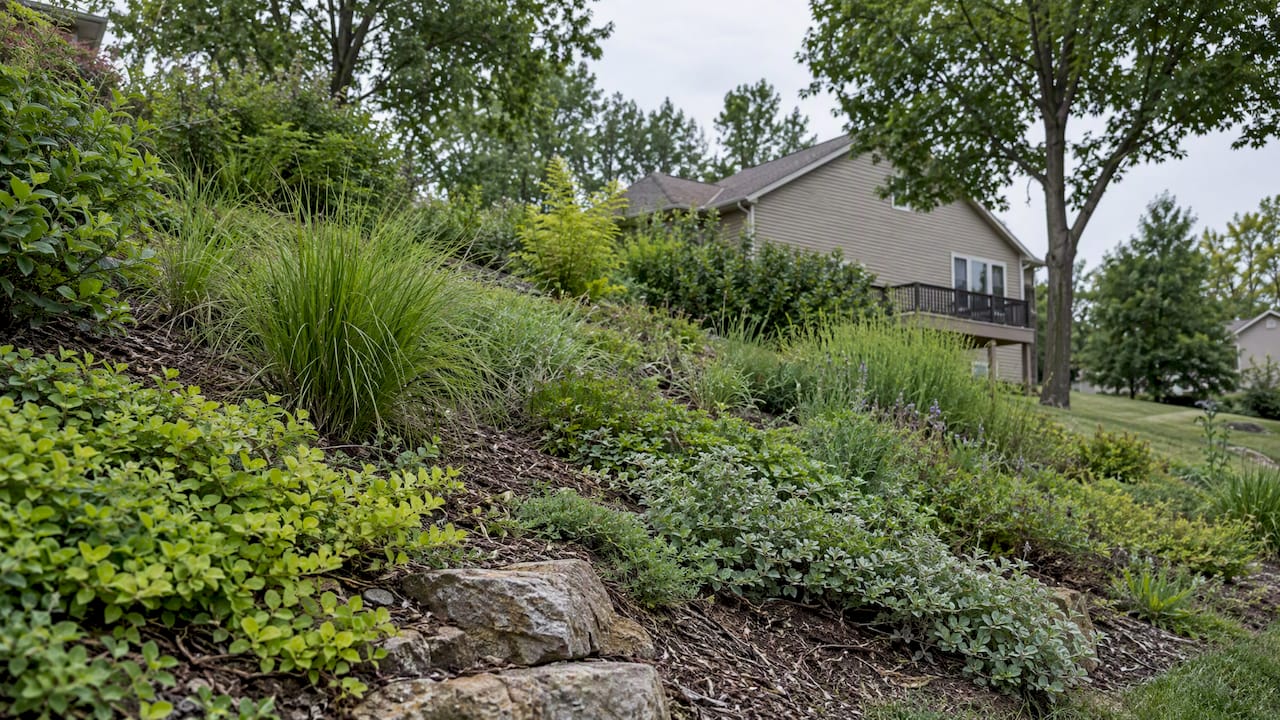
When a slope gets too steep for either method to perform well, a terrace or retaining wall often needs to go in first, which we cover later in this guide.
Materials and which options they fit best
Material choice and slope method go hand in hand. Some materials flex into a racked line easily. Others hold their shape too rigidly and need the stair-step treatment instead.
Wood is the most forgiving option on a slope. Because each picket gets cut and fitted on site, a skilled crew can build either a racked or stepped wood fence with good results, which is part of why wood remains a popular choice for irregular terrain. Aluminum comes with rackable panel options on many product lines, using pin-hinge connections or wider rail slots that let the panel pivot slightly at each post, as Fortress describes in its coverage of rackable steel and aluminum systems. That makes aluminum a solid pick for gentle to moderate grades where you still want a clean, low-maintenance look.
Rigid vinyl is the outlier. Because vinyl panels don’t flex the way wood or aluminum do, forcing them into a racked angle tends to stress the material at the joints. Most installers step vinyl fences instead, which keeps every panel square and avoids long-term cracking. Chain-link, meanwhile, is often the simplest material on uneven ground since the fabric itself can follow minor grade changes without special hardware.
- Wood adapts to racking or stepping and offers the most flexibility for an irregular yard.
- Chain-link naturally conforms to grade changes with minimal extra hardware.
Cost and upkeep vary by material regardless of slope. Wood needs periodic staining or sealing, aluminum needs almost none, vinyl resists weathering well once it’s properly stepped, and chain-link is usually the lowest upfront cost but offers the least privacy.
Installation and site considerations for sloped yards
Getting a fence to hold up on a slope comes down to what happens below ground as much as what you see above it. Post depth and footing size need to account for your local frost line and the extra stress a sloped site puts on each post. Deeper concrete footings are common on slopes, and posts should be checked for plumb repeatedly during installation since soil on a grade shifts more than flat ground does.
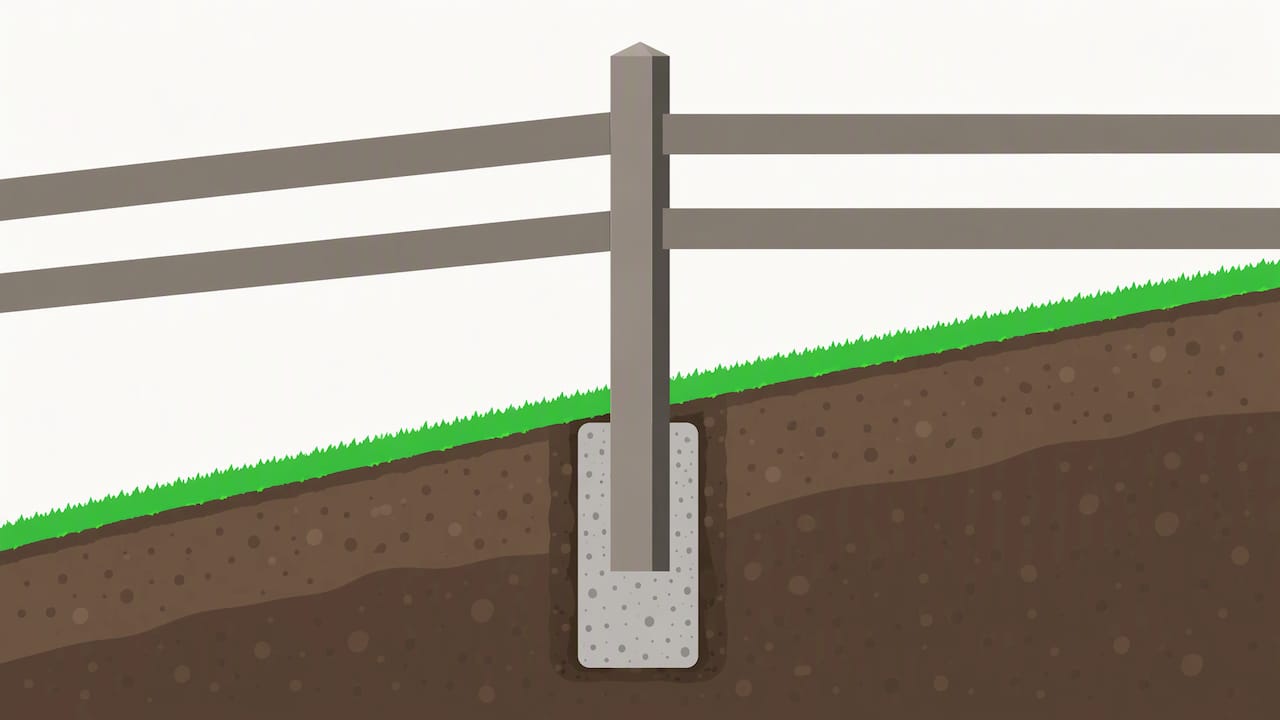
Pro Tip: Check post plumb after the concrete sets, not just before, since sloped soil can settle unevenly in the first few days.
Racking has limits. Most rackable panels are only designed to flex a few degrees before the hardware binds or the panel stresses at the joint. If your slope exceeds what the product allows, stepping is the safer call even if it means a slightly different look.
Gates deserve their own planning. A gate on a slope needs enough swing clearance at the bottom to clear the ground through its full arc, and gate posts often need deeper footings than line posts because they carry more weight and more stress from repeated use.
- Confirm post depth and footing size match your local frost depth and your slope’s soil conditions.
- Test panel racking tolerance before ordering material, since exceeding it leads to bound hinges or cracked rails.
- Plan gate swing clearance and reinforce gate posts with deeper footings.
- Address drainage paths before building, since water running along a fence line can erode footings over time.
- Check local permit rules and property line surveys before digging any post holes.
Drainage and erosion are the quiet threats to any sloped fence. Water that pools or channels along a fence line can undermine footings years after installation, which is why pairing fence work with proper grading or a French drain system often pays off. On steeper sites, combining a retaining wall with the fence line reduces how much the fence itself has to fight gravity, as the Mississippi State University Extension Service notes in its guidance on managing steep slopes and erosion. A homeowner managing standing water near structures might also find value in a flood prevention checklist that covers grading and drainage basics applicable to fence lines too.
How to choose the right approach and what to ask a contractor
Start by measuring your slope’s pitch, even roughly, since that single number determines whether racking is realistic or whether you need to step or terrace. From there, weigh the look you want against the maintenance you’re willing to take on, and match your material choice to the method your slope requires.
- Measure the slope’s degree or percent grade before choosing a method or material.
- Decide how much ground gap you can tolerate for pets, mowing, or privacy.
- Match material to method: wood and aluminum for racking, vinyl for stepping, chain-link for either.
- Factor in whether drainage work or a retaining wall needs to happen first.
When you’re getting quotes, ask each contractor what method they recommend for your measured slope and why, what post depth and footing size they plan to use, how they’ll handle drainage near the fence line, and how they’ll solve the gate on your specific grade. Also ask about timeline and warranty coverage, since sloped installations often take longer than flat ones. Budget drivers worth discussing up front include labor time on uneven ground, any retaining wall work, and specialty rackable hardware if you’re going with aluminum or steel.
Precision Outdoor Solutions: proven experience installing fences on slopes
We have experience installing fences and managing drainage across sloped properties, building stepped privacy fences, rackable aluminum lines, and combined retaining wall and fence projects on various terrain. We focus on durability first, which means checking drainage and soil conditions before a single post goes in. If your yard has a grade that’s giving you trouble, we’re glad to walk the site with you and talk through what fence installation on your slope would involve.
When to hire a pro versus DIY for sloped fences
A handy homeowner can often manage a simple stepped repair or a gently racked section without much trouble. Once erosion, terraces, retaining walls, or a gate on a steep grade enter the picture, a professional site evaluation becomes worth the cost. Safety, local code requirements, and long-term drainage are the main reasons a sloped fence project benefits from a contractor’s eye rather than a weekend project.
— Precision Outdoor Solutions
Get a slope-ready fence built right the first time
A fence that’s planned around your slope from day one saves you from costly fixes later, and that’s exactly how we approach every project. We handle the full picture: fence installation matched to your grade, drainage solutions to protect your footings, and terrace or retaining wall work when a slope calls for it. A site visit lets us measure your grade, recommend racking or stepping, and give you a clear estimate and timeline before any work starts.

| What you get | Details |
|---|---|
| Site evaluation | On-site slope measurement and method recommendation |
| Fence installation | Racked or stepped design matched to your yard |
| Drainage pairing | French drains or grading to protect footings |
| Terrace option | Retaining wall support for steep sections |
Reach out through our contact page to schedule a walkthrough and get a plan built around your actual slope.
FAQ
What are the steps involved in building a fence?
Building a fence typically starts with marking property lines and checking local permit rules, then measuring the slope to decide between racking and stepping. From there, crews set posts in concrete footings sized for the local frost depth, attach rails, and install panels, following Angi’s outline of raked and stepped construction.
Should fence rails be level or follow the ground?
It depends on the slope and material. Racked fences angle the rails to follow the ground on gentle to moderate grades, while stepped fences keep rails level and step each panel down the hill, which works better on steeper terrain or with rigid materials like vinyl.
How do you install feather edge fencing on a slope?
Feather edge or similar overlapping board fencing is usually built using the racked method on gentle slopes, with rails set at an angle so the boards follow the grade. On steeper sections, installers switch to a stepped layout to keep the boards level and avoid gaps that grow too large at one end.
How do you install fencing on sloped ground?
Start by measuring the grade, then choose racking for gentle to moderate slopes or stepping for steeper ones, setting posts in deeper footings where the soil is more likely to shift. Address drainage before building, since water running along the fence line can undermine posts over time, as the Mississippi State University Extension Service explains.
What slope is too steep for a standard fence?
There’s no single cutoff, but once a grade exceeds what a rackable panel or stepped layout can handle safely, a terrace or retaining wall is usually needed before installing a fence. A contractor can measure your specific slope and tell you which method, if any, applies directly.
Sources
- How to Build a Fence on a Slope: Raked and Stepped Methods | Angi
- Rackable steel fence panels adjust to sloping yards | Fortress
- Gardening on steep slopes | Mississippi State University Extension Service
Recommended
- Ask For Post Depth: Contractor Backed Fencing Advice For Homeowners
- Fence Installation
- Terraced Yard Ideas That Turn A Slope Into Usable Space
- Homeowners: Avoid Permit Delays With Fence And Plant Screen Ideas
This article was prepared with AI assistance for general information. For recommendations specific to your property, contact Precision Outdoor Solutions. Call or text us at (636) 358-8644.