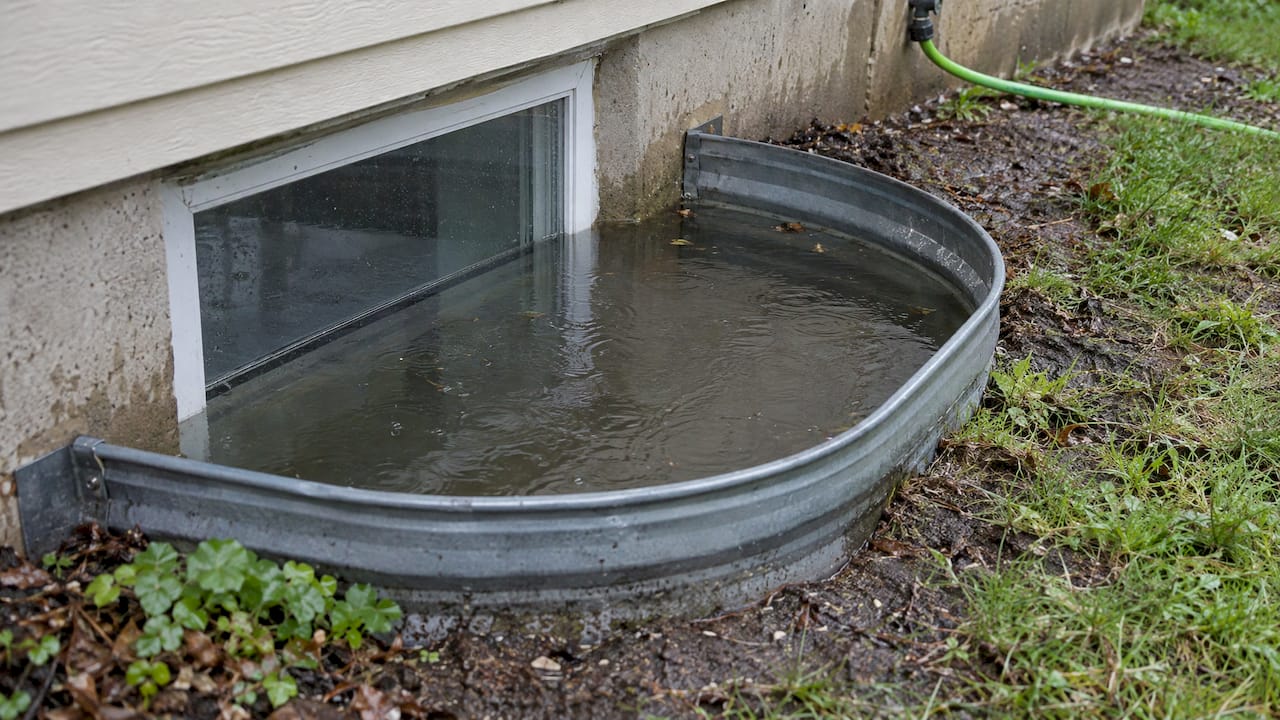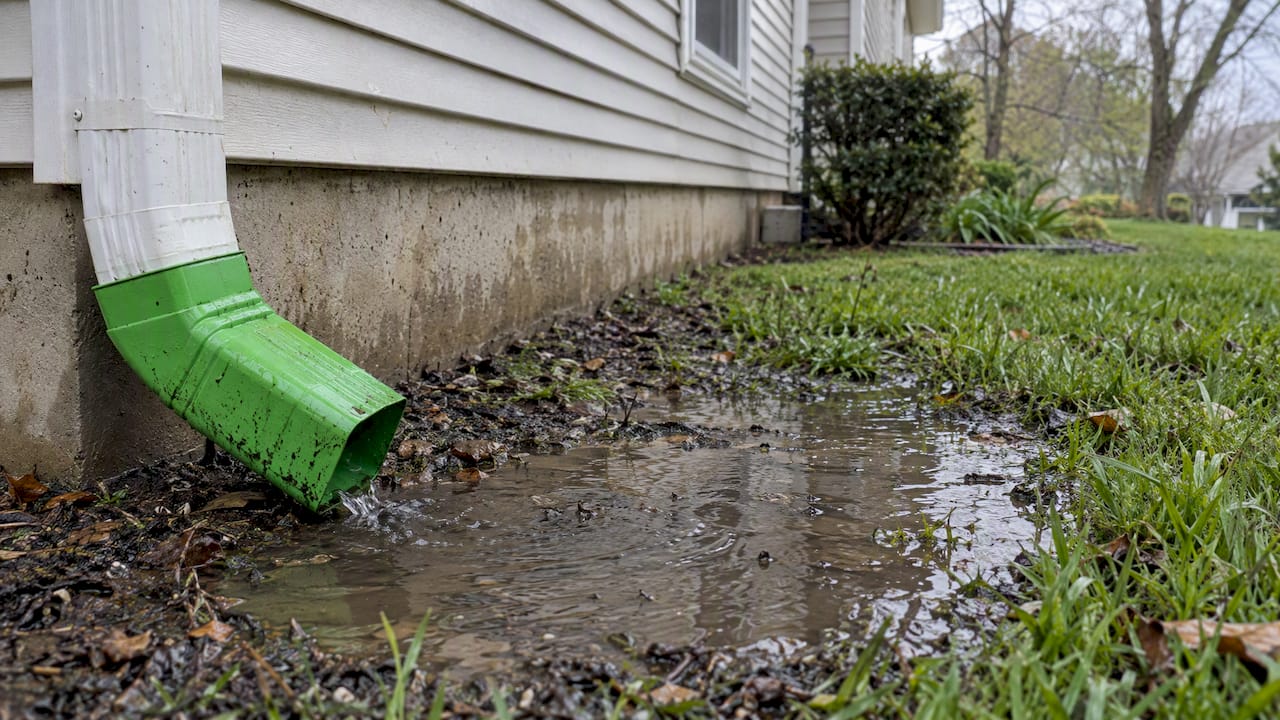
Missouri has no single statewide retaining wall permit. Your city or county decides, and the rules differ from one jurisdiction to the next. In St. Charles County and Wentzville, the common trigger is a wall taller than 4 feet. In St. Louis County, a much shorter wall can need a permit if it carries a load or sits close to a property line. Below, we explain what sets each trigger off, how to check your own lot, and what the application involves.
TL;DR
- There is no statewide permit. The city or county where the property sits decides, so start with the local building office.
- St. Charles County requires a permit for retaining walls over 4 feet. Wentzville’s pages state both a 4-foot and a 36-inch threshold, so confirm with the city before you plan.
- A wall under the height limit can still need a permit if it holds up a driveway, pool, or building, which engineers call a surcharge.
- Call Missouri 811 at least 3 working days before any digging, and keep walls off easements and septic systems.
- Building without a permit can lead to a stop work order and penalties, plus rework.
Table of Contents
- Who decides: state, county, or city
- Height rules: when a permit is required
- Other triggers: surcharge, property lines, and structures
- Setbacks, easements, and drainage
- Call 811 before anyone digs
- What the permit application involves
- What happens if you build without a permit
- How to check your own property in five steps
- Our perspective: permits are part of building it right
- Plan your wall with Precision Outdoor Solutions
- FAQ
- Sources
Who decides: state, county, or city
Missouri leaves building permits to local government. That is why the top search results for this topic are a mix of Boone County, St. Louis County, and individual cities like Crestwood. None of them applies to your yard unless your property is inside that jurisdiction.
For homeowners in our service area, the first question is simple: is your address inside city limits, or in unincorporated county land?
- Inside Wentzville: the City of Wentzville’s building division handles permits.
- Unincorporated St. Charles County: the county’s residential permit office handles them.
- Other St. Charles County cities such as O’Fallon or St. Peters run their own departments, so check with them.
Your tax bill or the county’s property lookup shows your municipality. If you are unsure, call the building office with your address. It takes a few minutes and saves you from planning around the wrong rule.
Height rules: when a permit is required
Height is the main trigger, and it is measured in a specific way. Under the St. Charles County residential code, walls up to 4 feet are measured from the bottom of the footing to the top of the wall. That is not the same as the height you see above ground. A wall that shows 3 feet of block may have a buried base that puts it over the line.
Here is how the main local rules read:
| Jurisdiction | What the official page says |
|---|---|
| St. Charles County | A residential building permit is required for retaining walls over 4 feet. Walls at or under 4 feet generally need none unless they support a surcharge. |
| City of Wentzville | The building permits page says retaining walls over 4 feet need a permit. A separate property maintenance page says walls over 36 inches. |
| St. Louis County | A permit is needed if the wall exceeds 2 feet and is surcharged by a driveway, pool, or other structure, or if its distance from a property line is no greater than its height. |
The Wentzville 4-foot versus 36-inch question
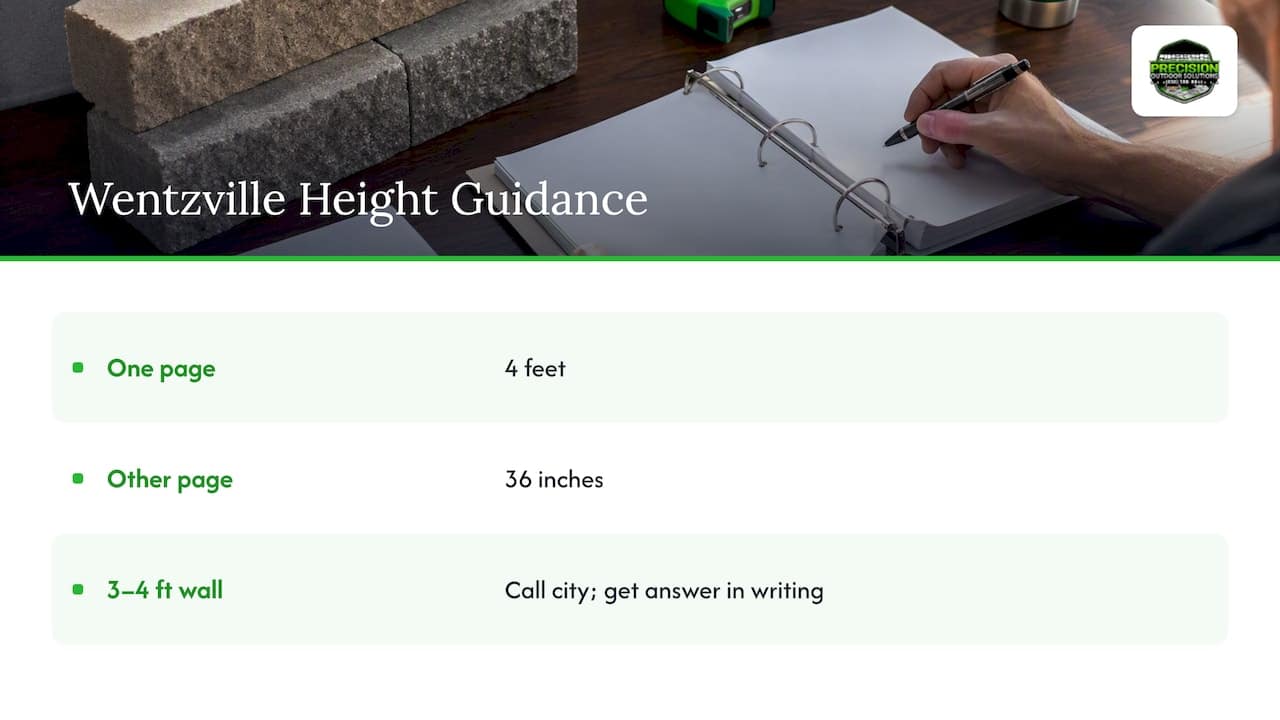
Wentzville’s own pages do not give the same number. One says 4 feet, the other says 36 inches. We would not guess which one your wall falls under. If you are planning a wall between 3 and 4 feet tall, call the city’s building division and ask directly, then get the answer in writing or by email. If the wall will be close to either number, the safe choice is to treat it as permitted. Our own retaining wall height rules checklist walks through how to measure so you are not arguing over an inch.
Other triggers: surcharge, property lines, and structures
Height is not the only thing that matters. Three situations can pull a short wall into the permit process.
A load behind the wall
A surcharge is any added weight sitting on the soil behind the wall: a driveway, a parking pad, a pool, a shed, or part of a house. St. Charles County’s code says walls up to 4 feet generally need no permit unless they support a surcharge. St. Louis County uses a lower 2-foot threshold for the same reason. A wall that holds back only lawn is a different job from a wall that holds back a car.
Distance to the property line
St. Louis County’s guide also flags walls whose distance from the property line is no greater than their height. A 3-foot wall within 3 feet of the line is treated as a concern, because failure could affect the neighbor. Even where your local office does not use the same formula, putting a wall right at the boundary invites questions. We recommend leaving room whenever the lot allows it.
Walls tied to other structures
If a retaining wall is part of a patio, a pool, a set of steps, or a building foundation, the permit may be driven by that bigger project. On a hardscape job, the wall often gets reviewed together with the rest of the plan. Our hardscape and patio installation work is often scoped this way for that reason.
Setbacks, easements, and drainage
The search “retaining wall setback Missouri” has no single answer, because there is no statewide setback. What you can rely on are the local rules that shape placement.
- Easements: St. Charles County’s plot-plan guidance says structures may not be located over easements or septic systems. Utility and drainage easements usually appear on your plat or survey. A wall built over one can be ordered removed.
- Property lines: Build entirely on your own land. Your survey pins show where that is. If you do not have a survey, get one before building near a boundary.
- Zoning setbacks: Your subdivision or city zoning may set minimum distances for structures. Ask the building office whether a wall counts, and check your HOA covenants too.
Drainage is where walls fail, and where neighbors complain
Wentzville says its maintenance covers public infrastructure, while drainage across private property is generally a private responsibility, and yard drainage should not be diverted or blocked. A wall that dams runoff onto a neighbor’s lot becomes your problem. The same page notes that Public Works and Community Development can help with drainage or erosion questions.
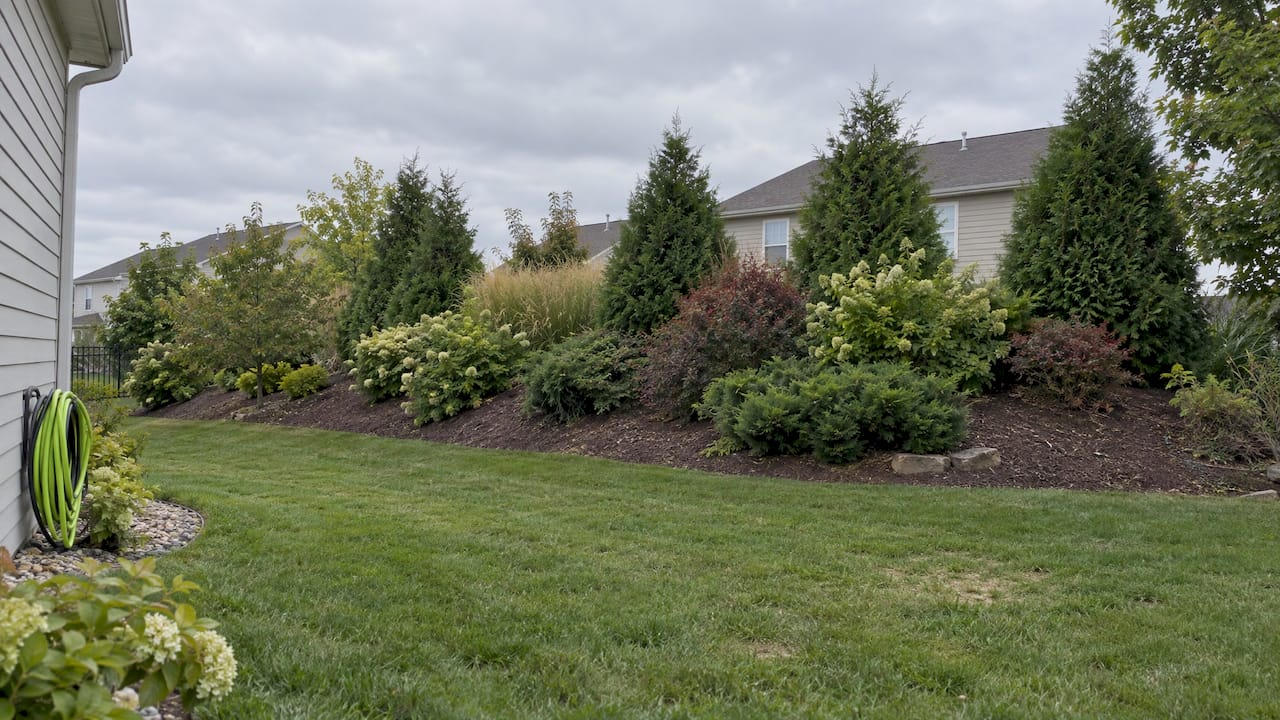
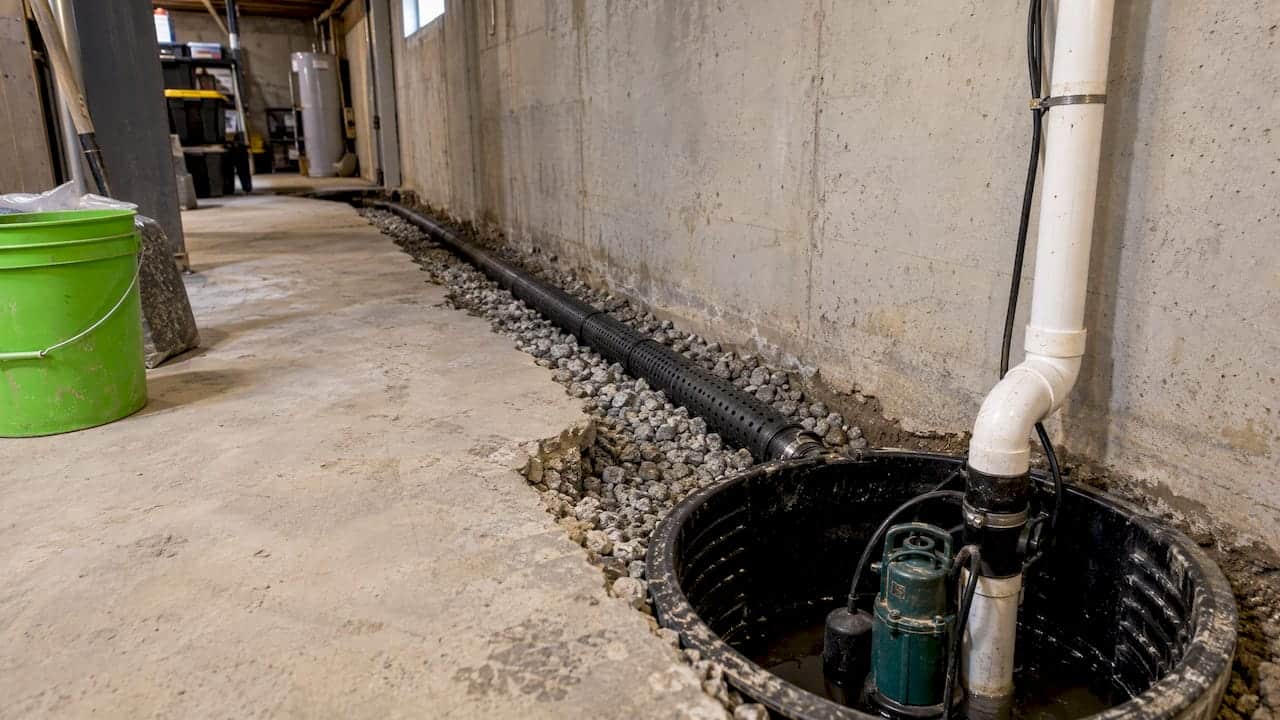
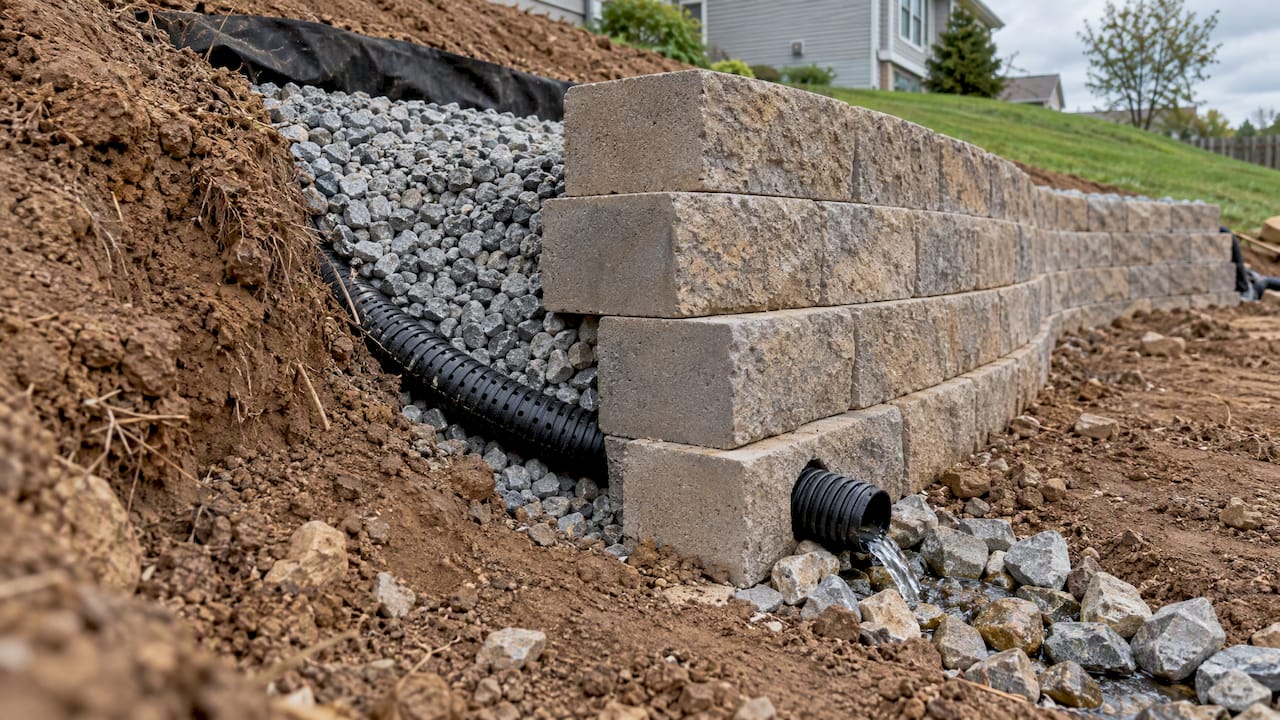
A wall also fails from the inside when water builds up behind it. Good design includes drainage stone, perforated pipe, and a clear outlet. Read our retaining wall drainage guide for how that works, and see our notes on signs your yard needs a drainage solution if water already collects where you want to build.
Call 811 before anyone digs
A permit does not tell you where the gas, electric, water, or communication lines run. Missouri law requires anyone excavating to notify Missouri 811 at least three but not more than ten working days before starting. Footings, trenches for drain pipe, and grading all count.
Practical points:
- Submit the locate request yourself or confirm your contractor has.
- Wait for utilities to respond and mark the lines.
- Keep the marks visible and dig carefully near them.
The locate ticket is separate from the building permit. You need both when the wall is permit-sized.
What the permit application involves
Requirements vary by office. St. Charles County’s page lists what it expects, and it is a good model for what to prepare anywhere in the area.
Documents
The county asks for contractor names, building plans with footing and foundation details, a plot plan showing the structure’s location and distances to property lines, and the estimated construction cost.
- Plot plan: A sketch of your lot showing the wall, property lines, easements, and any septic system. A survey makes this easier.
- Wall plans: Height, length, footing depth, materials, and drainage details. Taller walls and walls with a surcharge may need an engineer’s stamp. Our guide to the engineered retaining wall explains when that happens.
Wentzville also expects engineering discipline on larger work. Its design criteria call for construction plans for drainage and public improvements to be prepared by a Missouri-licensed professional engineer. That document is aimed at public improvements, so ask the building division how it applies to a private wall.
Fees and timing
In St. Charles County, permit fees are based on construction cost, and plan review typically takes about 10 working days. That means a wall costing more to build costs more to permit. Plan for the review window before you schedule crews, and see our retaining wall cost guide for budgeting the build itself.
Applying in Wentzville
The city says permit applications are processed through the SmartGov Permit Portal as of February 2026. The same page says contractors must hold a city-issued contractor license that renews annually by February 28. Ask any contractor you hire to show you the current license before signing.
Permits expire
A Wentzville building permit becomes invalid if authorized work is abandoned or suspended for six months. If weather, scheduling, or a change of plans stalls the job, talk to the building division before the gap gets that long.
What happens if you build without a permit
The consequences depend on the jurisdiction, but the pattern is similar. St. Charles County’s building code lets the county issue a written stop work order, and a person served with one can face an administrative penalty of up to $250. Work has to stop until the problem is fixed.
The larger costs are usually practical:
- An inspector may require you to open up or rebuild the wall to show it meets code.
- A wall that fails after a permit was skipped leaves the owner responsible for damage, including to a neighbor’s land.
- Unpermitted work can complicate a future sale or an insurance claim. Check with your insurer and a real estate professional for your situation.
If you already built a wall and suspect it needed a permit, call the building office before they find it. Offices generally prefer a homeowner who comes forward.
How to check your own property in five steps
- Identify your jurisdiction. City limits or unincorporated county.
- Measure the planned wall from the bottom of the footing to the top, not just the visible face.
- List the loads. Note any driveway, pool, shed, or building above the wall.
- Locate boundaries and easements on your survey or plat, and note any septic system.
- Call the building office with the address, height, length, and distance to the line, and ask what is required. Then call 811 before digging.
Our perspective: permits are part of building it right
We have been building outdoor spaces in Wentzville and St. Charles County for over 25 years, and we treat the permit question as the first step of design, not paperwork at the end. The rules exist because walls hold back real weight, and the failures we see most come from missing drainage and an unplanned load, not from the height number alone.
When we plan a wall, we start with the lot: where water goes, what sits above the wall, where the boundary and easements are. Then we check the height against the local office’s rule, and when a wall is close to the line, we plan it as a permitted wall. It costs little to be careful and a lot to tear out a wall.
We also keep homeowners in the loop on timing. Plan review takes days, not hours, so we build that into the schedule and give you updates as it moves.
, Precision Outdoor Solutions
Plan your wall with Precision Outdoor Solutions
If you want a wall designed around your yard’s slope, drainage, and local rules, Precision Outdoor Solutions can walk the site with you, talk through materials, and lay out a plan that fits your property.

See our landscape design service to start a conversation, or read why a retaining wall is a smart investment for a St. Charles County property. If your yard is on a hillside, our retaining walls for slopes guide covers planning in more detail.
FAQ
Do I need a permit for a retaining wall in Wentzville?
Wentzville’s building permits page says retaining walls over 4 feet tall need a permit, while another city page says over 36 inches. Because the two numbers differ, call the building division before you start on any wall above 3 feet. Also ask about walls that carry a driveway or other load.
Does a wall under 4 feet ever need a permit?
Yes. St. Charles County’s code generally exempts walls up to 4 feet unless they support a surcharge, such as a driveway or structure. St. Louis County uses a 2-foot threshold for surcharged walls and also looks at distance to the property line.
How close to the property line can I build a retaining wall?
Missouri has no statewide setback. Your city or county, subdivision rules, and any easements decide. In St. Charles County, structures cannot sit over easements or septic systems, so check your plat and survey first.
How long does a permit take?
St. Charles County says plan review typically takes about 10 working days, and fees are based on construction cost. Wentzville processes applications through its online portal, so ask the building division for current timing.
Sources
- Residential Building Permit, St. Charles County
- Residential Retaining Walls, St. Louis County
- Building Permits, City of Wentzville
- Property Maintenance Inspections, City of Wentzville
- Property Drainage, City of Wentzville
- Engineering Design Criteria, City of Wentzville
- Place a Locate Request, Missouri 811
Recommended
- Retaining Wall Cost In Missouri: 2026 Price Guide
- Retaining Wall Height Rules: 4 Foot Permit Checklist For Homeowners
This article was prepared with AI assistance for general information. For recommendations specific to your property, contact Precision Outdoor Solutions. Call or text us at (636) 358-8644.