Don’t connect a downspout directly to a French drain that doubles as your foundation’s footing drain. Roof runoff belongs in a solid, nonperforated pipe routed to daylight, a drywell, or a separately engineered infiltration trench, never into the perforated pipe that protects your foundation. The Building America Solution Center and the EPA both back this up, and a professional service can help if your yard needs a real engineered fix.
TL;DR:
- Connecting a downspout directly to a footing or foundation drain risks clogging and overloads, compromising groundwater management during storms.
- Properly routed roof runoff should be directed to daylight, drywells, or designated infiltration trenches that are at least 5 to 10 feet from the foundation.
- Site-specific assessment, including soil type and existing utilities, is essential before installing any drainage system to prevent flooding or costly errors.
- Regular pretreatment and maintenance at the inlet with screens, basins, and overflow routes are critical to ensure long-term system functionality.
- Professional help is recommended for yards with high water tables, septic fields, retaining walls, or basement seepage issues to ensure safe and effective drainage solutions.
Table of Contents
- Why Tying Downspouts Into Footing Drains Is Unsafe
- Safer Alternatives for Downspout Runoff
- How to Safely Route a Downspout to a Lateral Drain or Trench
- Site Assessment Checklist Before You Start
- Pretreatment and Maintenance Keep the System Working
- Field Perspective: When to DIY and When to Call a Pro
- Get a Professionally Engineered Drainage Fix for Your Yard
- Sources
- FAQ
Why Tying Downspouts Into Footing Drains Is Unsafe
Your roof and your foundation need water managed in two completely different ways. A downspout dumps a burst of water in minutes during a heavy storm. A footing drain is built to slowly collect groundwater seeping in through soil around your foundation, then carry it away at a trickle. Those are not the same job, and forcing one pipe to do both is where trouble starts.
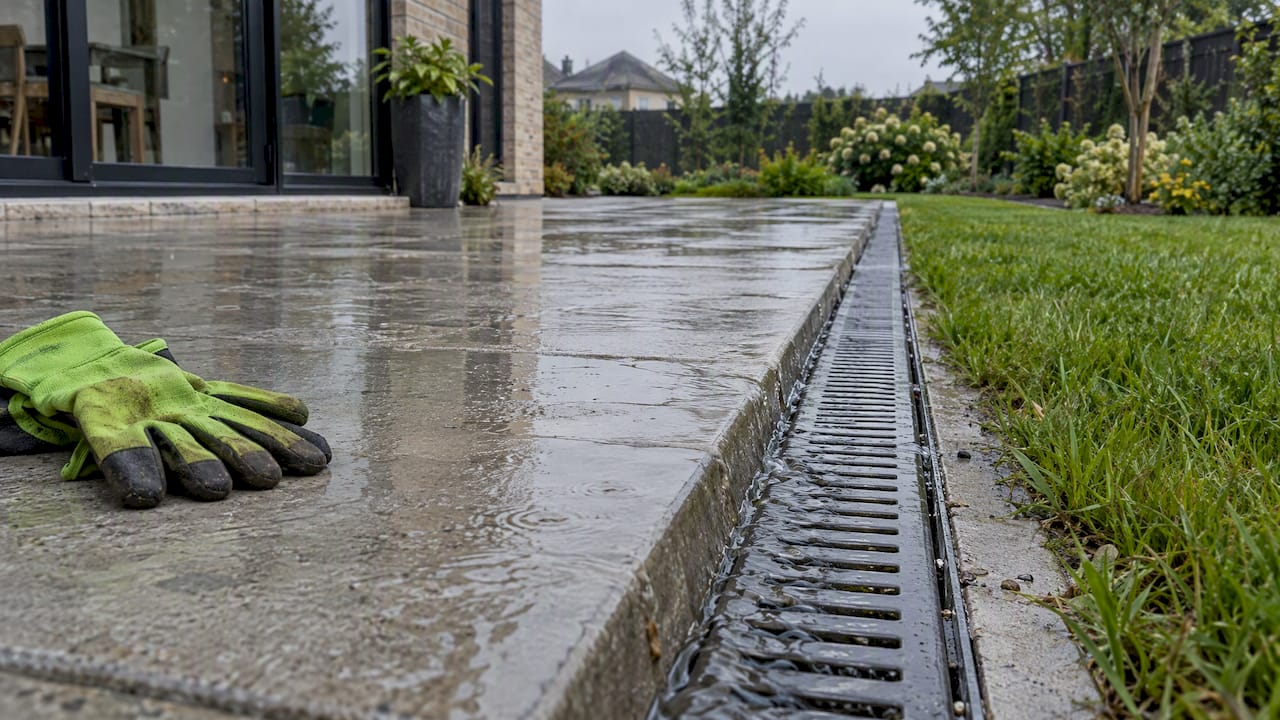
Perforated footing drain pipe is wrapped in filter fabric and bedded in washed stone specifically to intercept slow-moving groundwater, according to BASC. Feed that same pipe a downspout’s flash flood and you get:
- Sediment and grit clogging the perforations from the inside out
- Overload during storms, since footing drains aren’t sized for roof-scale volume
- Water pushed back toward the foundation wall instead of away from it
Quick fact: Building America’s own guidance calls for nonperforated pipe to carry roof runoff to a catchment area at least 10 feet from the foundation, with surface outlets set at least 5 feet out. That setback distance is the line between drainage that protects your house and drainage that slowly undermines it.
Safer Alternatives for Downspout Runoff
You have real options, and none of them involve gambling with your foundation drain. Here’s what actually works, in order of how often homeowners in St. Charles County end up choosing them:
- Solid lateral pipe to daylight. Run nonperforated PVC or HDPE downhill to an open outlet at least 5 feet from the house and 10 feet from any underground catchment. Add rock or a splash pad at the outlet to stop erosion.
- Drywell or underground catchment. A gravel-filled chamber lets water soak into the soil gradually. It needs an overflow route for storms that exceed its capacity, and it works best on lots with decent percolation.
- Rain garden or vegetated infiltration bed. A shallow, planted depression slows and filters runoff before it soaks in. It needs pretreatment to keep sediment out and enough square footage to handle your roof’s drainage area.
- Separate engineered infiltration trench. This is not a footing drain repurposed for roof water. It’s a standalone gravel trench, wrapped in filter fabric, built with its own inlet screening and overflow, sited well clear of the foundation.
- Simple surface fixes. A downspout extension with a splash block, or a rain barrel to capture the first flush, handles smaller roof areas or tight lots where digging isn’t practical.
Pro Tip: Before you commit to any option, walk your yard during a real rainstorm. Watching where water actually pools and flows tells you more in ten minutes than any drawing on paper.
How to Safely Route a Downspout to a Lateral Drain or Trench
Getting this right is mostly about sequence. Skip a step and you either flood your own trench or send water right back at the house.
Before you dig:
- Locate any existing footing drain so you don’t cut into it by accident.
- Confirm your setbacks: 5 feet minimum to open grade, 10 feet to any underground catchment or infiltration zone.
- Test how fast water soaks into your soil. Dense clay needs a different plan than sandy loam.
- Check for septic lines, retaining wall footings, and property boundaries before you break ground.
Installation sequence:
- Cap the old vertical standpipe if you’re disconnecting from an existing footing drain system.
- Attach an elbow at the downspout base and run solid, nonperforated lateral pipe away from the foundation.
- Set a slope of at least 0.5 inch per foot for runs of 10 feet or longer, so water keeps moving instead of sitting in the pipe.
- Install pretreatment right at the inlet, a leaf screen or small settling basin, before water ever enters a trench or drywell.
- Only inside a dedicated infiltration zone, switch to perforated pipe wrapped in filter fabric and bedded in washed stone.
- Add an accessible cleanout or observation port so you can check the system without tearing anything apart.
- Finish at daylight with a splash block, or into the trench or drywell with its overflow bypass already built in.
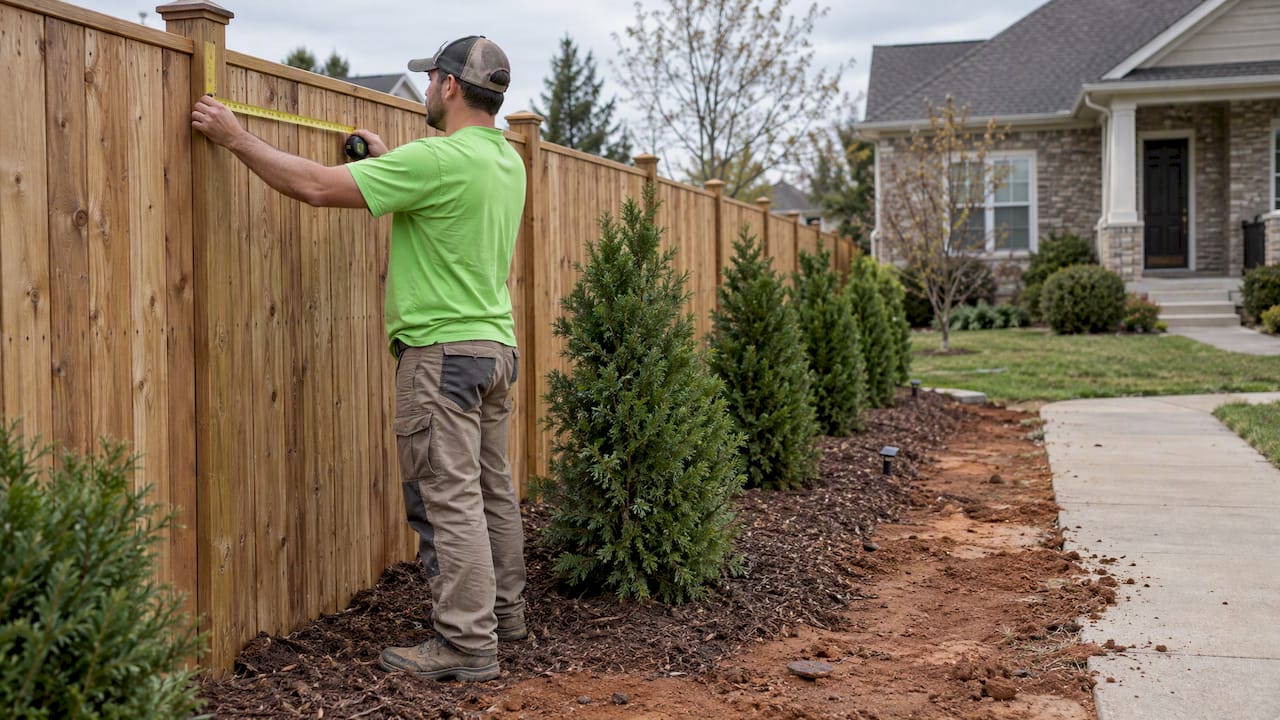
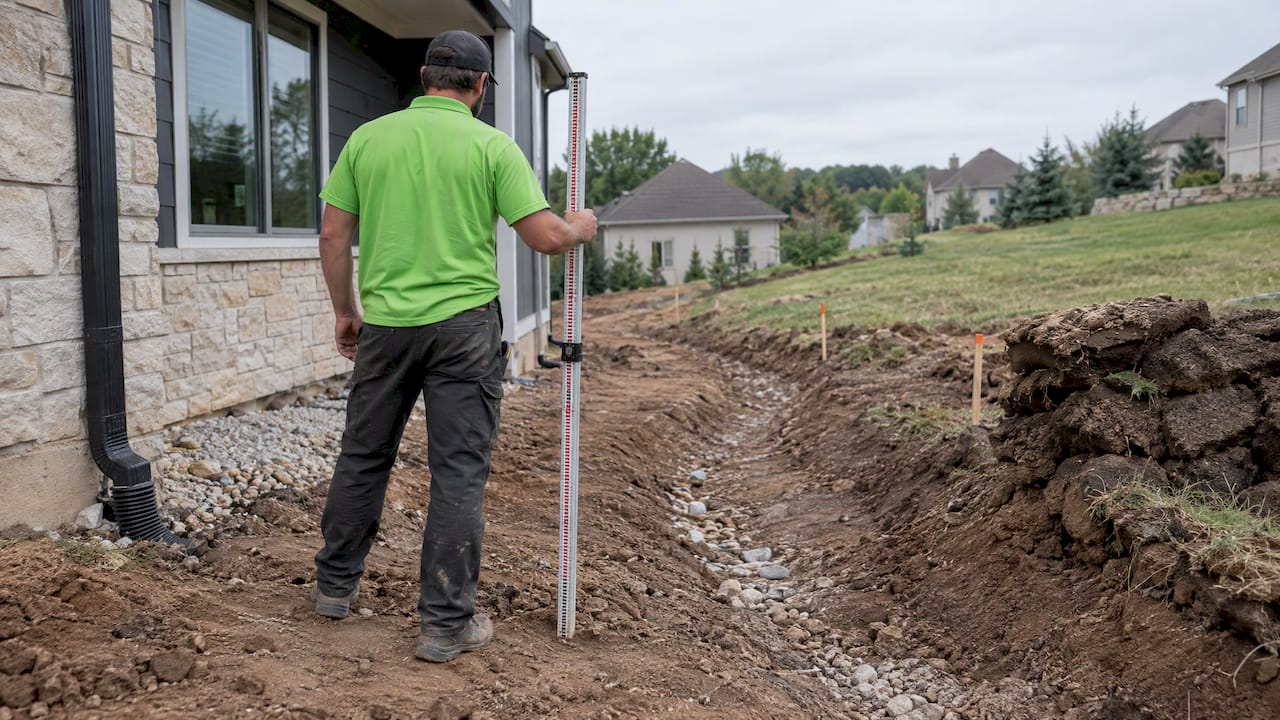
Stop and call a professional if you hit groundwater while digging, if your lot has almost no slope to work with, or if you’re within 10 feet of a septic field or retaining wall. Precision Outdoor Solutions handles exactly these complications through its yard drainage solutions service, which starts with a site survey before any pipe goes in the ground.
Site Assessment Checklist Before You Start
Not every yard can safely take an infiltration trench or drywell, and figuring that out before you dig saves a lot of wasted labor.
- Measure the distance from your planned outlet to the foundation. Anything under 5 feet for surface discharge, or 10 feet for underground catchment, is too close.
- Check soil type and drainage speed. Heavy clay, a high water table, or nearby springs mean infiltration will be slow or unreliable.
- Look for a septic field, retaining wall, basement window well, or a neighbor’s property line anywhere near your planned route.
- Walk the basement or crawl space for existing moisture stains, and check whether your current footing drain already looks maxed out during storms.
Pro Tip: If your basement shows water stains but your gutters and grading look fine on the surface, the problem is often underground, not on the roof. That’s a job for someone who can trace it properly, not a weekend fix.
A homeowner’s guide to downspout drainage options walks through more of these red flags if you want a deeper look before committing to a plan.
Pretreatment and Maintenance Keep the System Working
Most drainage failures start at the inlet, not somewhere deep in the trench. A cheap leaf screen or small settling basin at the downspout catches debris before it ever reaches the pipe, and it needs to sit somewhere you can actually reach it, not buried under a patio.
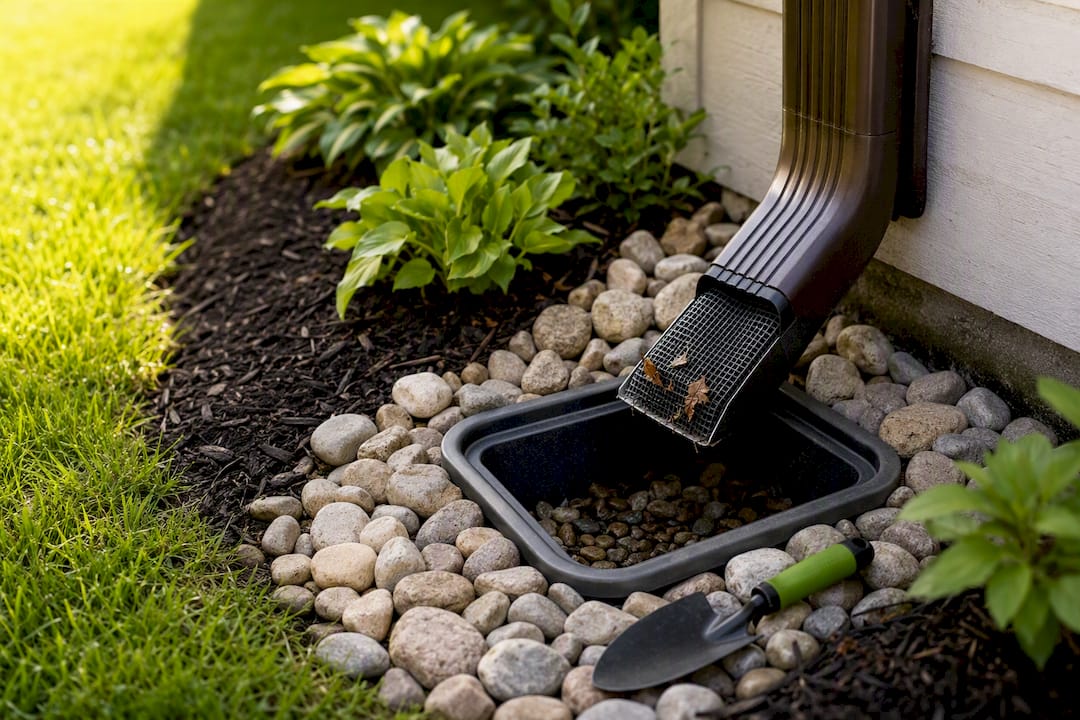
The EPA’s infiltration trench guidance recommends building in an observation well so you can check how fast water is draining and pull sediment out before it clogs the whole system. Pair that with an overflow bypass, routed to daylight or tied into a sump pump discharge path, so a big storm doesn’t overwhelm the trench.
Check the system after every major storm for the first season, then twice a year after that:
- Clear the inlet screen of leaves and grit
- Confirm the observation well shows normal drawdown, not standing water
- Look for erosion at the outlet where it meets open ground
Field Perspective: When to DIY and When to Call a Pro
A downspout extension with a splash block is a Saturday afternoon project. An infiltration trench near a septic field, a retaining wall, or a house with a history of basement seepage is not, and pretending otherwise is how a $200 fix turns into a $12,000 foundation repair.
A common DIY mistake is routing a downspout downhill without checking where the water actually ends up during a real storm. A proper site survey can catch grading problems, high water tables, and buried utilities before a single shovel goes in the ground. If your yard has any of those complications, a professional design pays for itself the first time it prevents a flooded crawl space.
— Precision Outdoor Solutions
Get a Professionally Engineered Drainage Fix for Your Yard
Drainage systems should match how a specific yard moves water, not a generic pipe run copied from the last job down the street. Effective service providers start with a real site survey, then design the trench, lateral run, or catchment your property actually needs.

Our yard drainage solutions in Wentzville, MO cover everything from initial site assessment through trench and lateral installation, plus maintenance plans that keep pretreatment and overflow systems working long after installation. If your basement has ever taken on water, or your yard turns into standing puddles after a storm, schedule a site visit and get a drainage plan built around your actual soil, slope, and setbacks instead of a one-size-fits-all pipe run.
Sources
The Building America Solution Center publishes the technical standard behind footing drain design and roof runoff separation. The EPA’s Soak Up the Rain program offers homeowner-facing guidance on disconnection and redirection. The University of Maryland Extension provides a practical, step-by-step checklist for downspout extension projects.
- Gutters and Downspouts | Building America Solution Center
- Soak Up the Rain: Disconnect / Redirect Downspouts | U.S. EPA
FAQ
Can a Downspout Go Into a French Drain?
Not into a perforated foundation or footing drain. It can connect to a separately engineered infiltration trench built specifically for roof runoff, with its own pretreatment, filter fabric, and overflow, as outlined by Building America.
Where Should You Not Put a French Drain?
Avoid placing infiltration systems within the recommended setbacks of your foundation, near a septic field, close to a retaining wall footing, or anywhere the outflow would drain toward a neighbor’s property; see this preventing yard flooding checklist for homeowners for key site constraints. Keep surface outlets at least 5 feet from the house and underground catchments at least 10 feet away.
How Do You Create a Drain for a Gutter Downspout?
Run solid, nonperforated pipe from the downspout base to a lateral outlet, sloped at roughly 0.5 inch per foot, ending at daylight, a drywell, or a rain garden. Add a leaf screen at the inlet and an accessible cleanout so the system stays serviceable.
What Is the Best Way to Divert Water From Downspouts?
For most yards, a solid lateral pipe to a daylight outlet or drywell is the simplest, most reliable fix, since it moves water away fast without relying on soil infiltration alone. Rain gardens and rain barrels work well as supplements, especially on smaller roof areas or tighter lots.
When Does a Drainage Project Need a Professional?
Call a professional when you’re near a septic field or retaining wall, dealing with a high water table, or facing recurring basement seepage despite working gutters and good grading. Precision Outdoor Solutions handles these site-specific complications through a full site survey and drainage design before any digging starts.
Recommended
- Downspout Drainage Options: A Homeowner’s Practical Guide
- Retaining Wall Drainage: A Practical Homeowner’s Guide
- Sump Pump Discharge Options: Practical, Code-Safe Ideas
- Driveway Drainage Ideas That Actually Prevent Water Damage
This article was prepared with AI assistance for general information. For recommendations specific to your property, contact Precision Outdoor Solutions. Call or text us at (636) 358-8644.