A professionally installed paver patio typically runs $15–$40 per square foot, with most midrange projects landing between $20 and $30 per square foot once base work and labor are included. For a common 400 sq ft patio, that translates to roughly $12,000–$16,000 in most U.S. markets, though a Techo-Bloc contractor survey puts the national midrange average closer to $17,750. Four factors move the number most:
- Material choice: Concrete pavers cost $2–$6/sq ft in materials alone; natural stone runs $8–$25/sq ft.
- Base preparation: Clay-heavy soil requires deeper excavation and more aggregate, adding real dollars to every job.
- Labor and region: Northeast and West Coast markets often run 30–50% above national averages.
- Design complexity: Herringbone patterns, curves, and built-in lighting all increase both labor hours and material waste.
Your best next step: measure your patio footprint, run a quick material takeoff using the formulas below, then collect at least three written contractor quotes for comparison.
Key Takeaways
A professionally installed paver patio costs $15–$40 per square foot in most U.S. markets, with material choice, base depth, and regional labor rates driving most of the variation.
| Point | Details |
|---|---|
| Typical installed cost | Most midrange paver patios run $15–$40/sq ft installed; a 400 sq ft project averages $12,000–$16,000. |
| Biggest cost drivers | Material type, base depth (soil-dependent), regional labor, and design complexity move the price most. |
| Run a takeoff first | Use the gravel formula (area × depth ÷ 324) and paver count formula before collecting bids to verify estimates. |
| Budget a contingency | Add 15–20% above your contractor quote for subsoil surprises, permit delays, and change orders. |
| Precision outdoor Solutions | Serves Wentzville and St. Charles County with detailed written estimates and full-scope patio installation. |
Table of Contents
- How much does a paver patio cost by size?
- What each paver material actually costs to install
- Breaking down the line items in a paver patio estimate
- How site conditions change your actual price
- How to calculate your material quantities before calling a contractor
- DIY vs. hiring a pro: where the real savings are (and aren’t)
- A full sample estimate for a 400 sq ft midrange paver patio
- What to ask contractors and how to spot a bad estimate
- Ongoing maintenance costs and how long pavers actually last
- Does a paver patio add value to your home?
- What contractors don’t always tell you about budgeting surprises
- Precision outdoor Solutions serves Wentzville and St. Charles County homeowners
- Sources
How much does a paver patio cost by size?
Size is one of the clearest predictors of total installed cost, though the per-square-foot rate tends to drop as the project grows. Mobilization, equipment, and setup costs are largely fixed regardless of whether you’re paving 100 sq ft or 600 sq ft, so larger patios spread those fixed costs across more area.
| Patio Size | Typical Installed Range | Midrange Estimate |
|---|---|---|
| 100 sq ft | $1,500–$4,000 | $2,500 |
| 144 sq ft (12×12) | $2,200–$5,800 | $3,800 |
| 200 sq ft | $3,000–$8,000 | $5,200 |
| 320–400 sq ft | $9,600–$16,000 | $12,800 |
| 600–800 sq ft | $15,000–$32,000 | $22,000 |
These ranges assume concrete or brick pavers with a standard 4–6 inch compacted gravel base, no major drainage work, and average regional labor. Natural stone or porcelain will push totals toward the upper end of each band.
Worked example for 200 sq ft: At a midrange installed rate of $26/sq ft, total cost = 200 × $26 = $5,200. Material-only for a concrete paver version of that same patio commonly falls in the $1,000–$1,850 range, with contractor-installed totals running $2,000–$4,500 depending on base depth and labor market.
- Economies of scale are real: per-sq-ft cost typically drops on larger patios because mobilization and equipment are fixed costs.
- A 10×10 patio (100 sq ft) often has the highest per-sq-ft rate of any common size.
- Pricing a 400 sq ft patio at the same per-sq-ft rate as a 100 sq ft one will overestimate the total.
What each paver material actually costs to install
Material choice is the single biggest lever you control before a contractor ever sets foot on your property. Here’s what each category realistically costs, from materials alone to fully installed.
Concrete pavers are the most common choice for a reason. Material-only cost runs $2–$6/sq ft, and installed cost lands around $15–$30/sq ft. They’re durable, widely available, and come in dozens of colors and profiles. Lifespan with a proper base: 25–50 years.

Brick pavers carry a slightly higher price point. Homewyse’s May 2026 data puts national average installed brick paver costs at $20.03–$25.95/sq ft for standard conditions, with complex sites pushing higher. Brick ages gracefully and holds color well, but it’s more porous than concrete and benefits from sealing in freeze-thaw climates.
Porcelain pavers run $6–$15/sq ft in materials and $20–$40/sq ft installed. They’re nearly impervious to staining and fading, which makes them popular for pool decks and modern outdoor kitchens. The trade-off: they’re heavier, harder to cut on-site, and more expensive to repair if one cracks.
Natural stone (bluestone, travertine, flagstone, granite) costs $8–$25/sq ft in materials alone, with installed prices ranging $25–$55/sq ft depending on thickness and pattern. Each piece is unique, which homeowners love, but irregular sizing means more labor and higher waste factors.
Permeable pavers cost roughly $10–$30/sq ft installed and allow stormwater to pass through the joint system rather than run off. They’re worth considering on sites with drainage issues or where local codes require stormwater management. For a deeper look at how permeable systems work alongside drainage planning, the outdoor paving drainage guide from Ecotech is a practical reference.
Compared to all of these options, poured concrete runs $6–$12/sq ft installed, making it the cheapest upfront choice. The catch: a cracked concrete slab usually means grinding it out and starting over. A cracked paver gets swapped in an afternoon.
Pro Tip: Order all pavers from the same production batch. Color variation between batches is common, and a repair paver bought two years later may not match. Store leftover pavers in a dry location for future repairs.
For a broader comparison of paving surface options before you commit to a material, the 2026 paving surface material comparison guide covers trade-offs across material types in useful detail.
Breaking down the line items in a paver patio estimate
Understanding where the money goes helps you evaluate contractor bids and spot where costs can be trimmed without cutting corners. A typical installed paver patio budget splits roughly like this: pavers 20–40%, base materials 15–25%, labor 30–40%, and the remainder covering equipment, delivery, disposal, permits, and contractor overhead.

Contractors build bids by starting with materials at cost, adding burdened labor (wages plus payroll taxes, insurance, and benefits), then applying 20–30% overhead and a 20% profit margin on top. That math is why a $6/sq ft paver doesn’t produce a $6/sq ft installed price.
| Line Item | Unit | Typical Unit Cost | Notes |
|---|---|---|---|
| Concrete pavers | Per sq ft | $2–$6 | Material only; premium styles higher |
| Gravel base (compacted) | Per cu yd | $35–$65 | Delivered and compacted |
| Bedding sand | Per cu yd | $30–$50 | 1-inch layer standard |
| Polymeric sand | Per 50-lb bag | $25–$45 | Covers roughly 25–40 sq ft of joints |
| Plastic edge restraint | Per linear ft | $1–$3 | Spiked into subbase |
| Geotextile fabric | Per sq ft | $0.10–$0.30 | Optional but recommended |
| Labor (installation) | Per sq ft | $8–$18 | Varies by region and complexity |
| Equipment rental/use | Per day | $150–$400 | Plate compactor, saw, skid steer |
| Delivery | Per load | $75–$200 | Varies by distance and supplier |
| Debris disposal | Per load | $150–$400 | Excavated soil and old surface |
| Permit fee | Per project | $50–$500 | Varies by municipality |
Cost split to keep in mind: On a typical midrange project, labor and base work together account for roughly 50–65% of the installed total. The pavers themselves are often a smaller share of the bill than homeowners expect.
Overhead and profit are not padding. They cover the contractor’s insurance, vehicles, tools, office costs, and the risk of holding a fixed-price contract. A bid with no visible overhead is either hiding it in inflated material costs or underpriced, and neither outcome is good for you.
How site conditions change your actual price
National averages are a starting point, not a guarantee. Your specific site can push costs well above or below those benchmarks, and knowing why helps you have an honest conversation with any contractor before signing.
- Soil type: Clay-heavy soil holds water and shifts seasonally, requiring a deeper compacted gravel base (often 8–12 inches vs. the standard 4–6 inches on sandy soil). More depth means more excavation, more aggregate, and more compaction passes. You can check your parcel’s soil classification for free using the USDA Web Soil Survey before you even call a contractor.
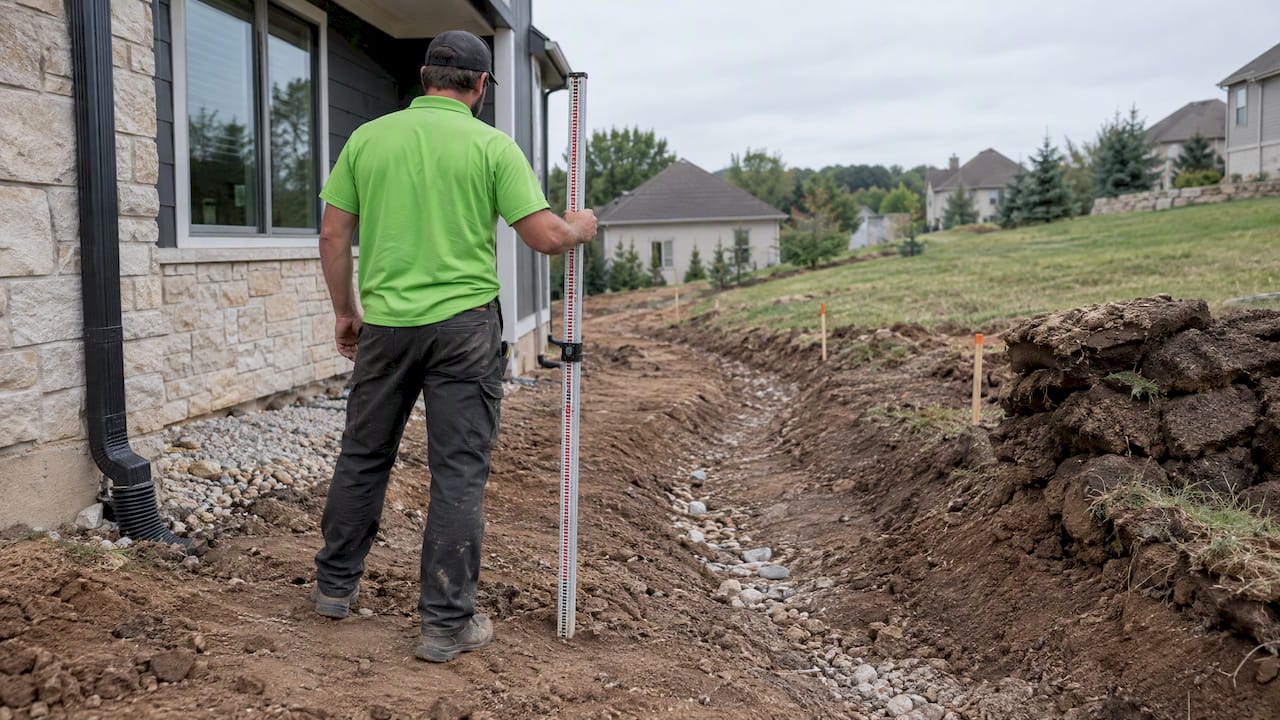
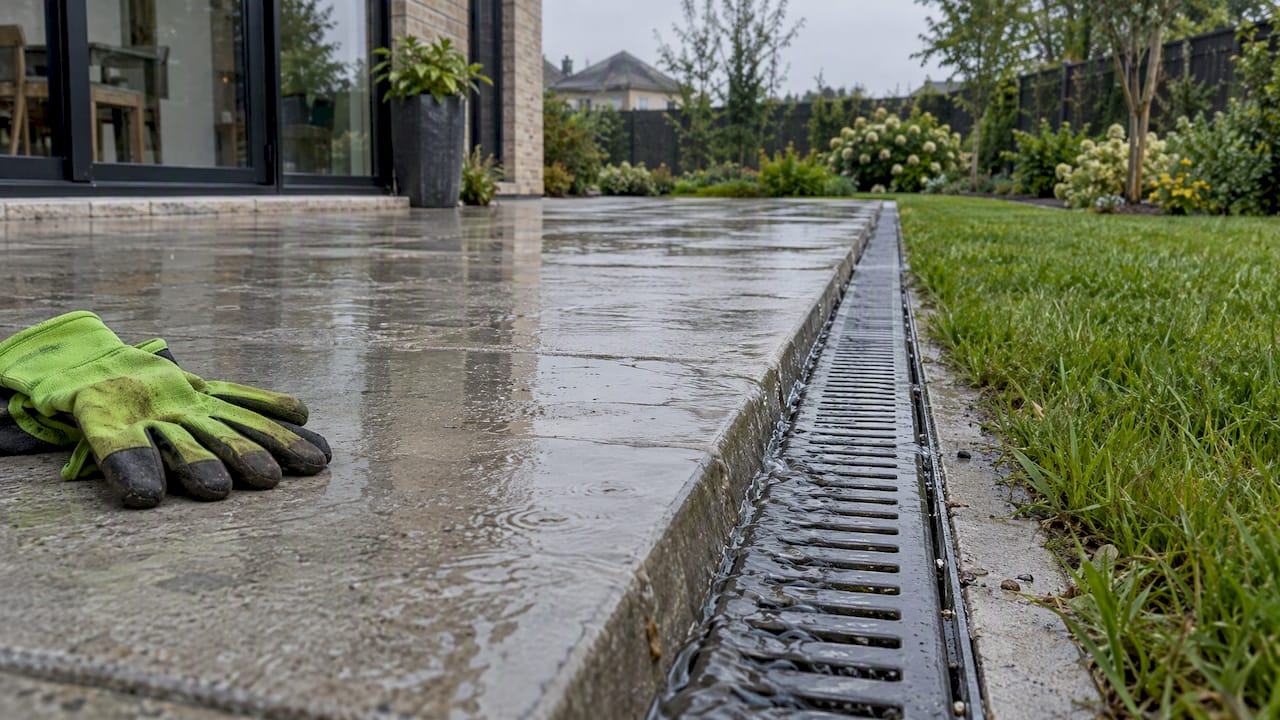
- Drainage problems: A yard that pools water after rain needs more than just pavers. A French drain or regrading adds $500–$3,000+ depending on scope. Skipping drainage work on a wet site is the fastest way to end up with a heaving, sunken patio in three years. Precision outdoor Solutions’s drainage solutions service addresses exactly this kind of site-specific issue before the hardscape goes in.
- Slope and grading: A sloped yard requires cut-and-fill work or a retaining wall to create a level patio surface. Either option adds cost, but a retaining wall on a steep grade can add $3,000–$10,000 or more to the project.
- Access: A narrow side gate, a long carry from the street, or a multi-level yard all slow material delivery and increase labor hours. Contractors price this in, sometimes significantly.
- Existing surfaces: Removing an old concrete slab costs $1–$3/sq ft in demolition and disposal. Removing a deck adds more.
- Regional labor markets: Northeast and West Coast markets commonly run 30–50% above national averages due to labor costs and seasonal demand. Midwest and Southeast markets tend to track closer to national benchmarks. Use BLS occupational wage data to check prevailing landscaping and masonry wages in your metro area and calibrate your expectations accordingly.
Gravel cubic-yard formula: Area (sq ft) × depth (inches) ÷ 324 = cubic yards needed. For a 400 sq ft patio with a 6-inch base: 400 × 6 ÷ 324 = 7.4 cubic yards. Add 10–15% for compaction loss, so order roughly 8.5 cubic yards.
How to calculate your material quantities before calling a contractor
Running your own takeoff before getting quotes gives you a baseline to check bids against and helps you catch errors in contractor estimates. Here are the key formulas, followed by a worked example for a 200 sq ft patio.
- Paver count: Calculate based on area divided by coverage per unit, multiplied by a waste factor. For example, a standard 4×8 inch brick paver with a nominal coverage requires accounting for waste around 10%.
- Gravel base (cubic yards): Area × base depth (inches) ÷ 324. For 200 sq ft at 6 inches: 200 × 6 ÷ 324 = 3.7 cu yd. Add 12% for compaction: order 4.1 cu yd.
- Bedding sand (cubic yards): Calculated similarly to gravel base, based on area times depth divided by 324.
- Polymeric sand bags: Coverage varies by joint width and paver thickness, but a 50-lb bag typically covers 25–40 sq ft of standard joints. For 200 sq ft: plan on 5–8 bags.
- Edge restraint (linear feet): Measure the patio perimeter to determine quantity needed.
Waste factors by pattern:
- Running bond or straight lay: 7–10%
- Herringbone (45°): 15%
- Circular or fan patterns: 20%+
Pro Tip: Always order pavers with the waste factor built in, and add one extra box or bundle beyond that. Running short mid-project and waiting on a reorder can delay your job by days and risk a batch mismatch.
DIY vs. hiring a pro: where the real savings are (and aren’t)
DIY installation saves on labor, which is real money. But the savings come with conditions, and the risks are worth understanding before you rent a plate compactor.
- Materials-only cost for a concrete paver patio typically runs $8–$14/sq ft when you account for pavers, gravel, sand, edge restraint, and polymeric sand. On a 400 sq ft patio, that’s roughly $3,200–$5,600 in materials.
- Contractor-installed total for the same 400 sq ft patio runs $12,000–$16,000 at national midrange rates, meaning the labor and overhead component is roughly $6,400–$10,400.
- Time investment: A 400 sq ft patio typically takes a two-person professional crew 18–28 man-hours to complete, including excavation, base compaction, and paver setting. For a solo DIYer working weekends, that same job often stretches to 3–5 weekends.
Common DIY pitfalls that lead to expensive repairs:
- Insufficient base depth: Skimping on gravel depth is the leading cause of paver settling and heaving, especially in freeze-thaw climates.
- Wrong compaction: A hand tamper is not adequate for a gravel base. Renting a plate compactor is non-negotiable.
- Incorrect sand type: Bedding sand and polymeric joint sand are different products. Using the wrong one in the wrong layer causes washout and weed growth.
- Poor drainage slope: Patios need a minimum 1/8-inch-per-foot slope away from the house. Getting this wrong means water pools against your foundation.
The honest trade-off: DIY saves money upfront but shifts all the risk to you. A failed base means lifting and relaying the entire patio, which costs nearly as much as a professional install. If you’re confident in the base work, DIY is viable. If you’re uncertain about soil conditions or drainage, a professional installation protects your investment.
A full sample estimate for a 400 sq ft midrange paver patio
This takeoff uses concrete pavers at a midrange price point, a 6-inch compacted gravel base, standard running-bond pattern, and average Midwest labor rates. Adjust line items for your material choice, pattern, and region.
This estimate lands below the national midrange because it uses Midwest labor rates and a basic concrete paver. Apply a 30–50% upward adjustment for Northeast or West Coast markets, which brings the same project to roughly $10,000–$11,600. Upgrading to brick pavers pushes the materials line higher and aligns with Homewyse’s $20–$26/sq ft brick paver benchmark, putting the total closer to $8,000–$10,400 for this size. Natural stone at $15–$25/sq ft in materials can push the installed total to $14,000–$22,000 for 400 sq ft.
The biggest uncertainties in any estimate: subsoil depth (if you hit rock or saturated clay, excavation costs jump), pattern waste (herringbone adds 15% more material), and permit requirements that vary by municipality.
What to ask contractors and how to spot a bad estimate
Getting three quotes is standard advice. Getting three useful quotes requires knowing what a good written estimate actually looks like.
A solid written estimate should include:
- Detailed scope of work (excavation depth, base material type and depth, compaction method)
- Paver specifications (manufacturer, product name, color, thickness)
- Edge restraint type and installation method
- Warranty terms (both on materials and workmanship)
- Payment schedule (a large upfront deposit before any work starts is a red flag)
- Who pulls the permit and who is responsible for inspections
- Estimated start and completion dates
- Change-order process in writing
Red flags to watch for:
- A one-line quote with no material specs or base depth listed
- A bid significantly lower than the other two (often means a thinner base or unlicensed labor)
- No proof of liability insurance or workers’ compensation
- Pressure to sign before you’ve seen comparable project photos
Questions worth asking every contractor:
- Can you show me photos of a similar project you completed in the past year?
- What base depth do you use for this soil type, and why?
- How do you handle change orders if you hit unexpected conditions?
- What’s your crew size, and will you be on-site during installation?
Asking to see a project gallery of comparable local work is one of the most reliable ways to gauge whether a contractor’s quality matches their price.
Ongoing maintenance costs and how long pavers actually last
A paver patio is not a zero-maintenance surface, but the annual upkeep costs are manageable and far lower than the cost of replacing a cracked concrete slab.
- Power washing: Once a year keeps joint sand intact and prevents moss and algae buildup. Cost if hired out: $100–$300 for a standard patio.
- Joint re-sanding: Polymeric sand in joints typically needs refreshing every 3–5 years as it breaks down from UV exposure and foot traffic. Budget $150–$400 for materials and labor on a 400 sq ft patio.
- Resealing: Sealing is optional but extends color life and makes cleaning easier. Most contractors recommend resealing every 3–5 years. Sealant for a 400 sq ft patio costs $50–$150 in materials; professional application adds $200–$500.
- Individual paver replacement: A cracked or stained paver can be popped out and replaced without disturbing the rest of the surface. This is the single biggest lifecycle advantage pavers have over poured concrete.
Expected lifespan by material, assuming a properly installed base:
- Concrete pavers: 25–50 years
- Brick pavers: 25–100 years (brick is extremely durable when kept dry)
- Natural stone: 50+ years
- Porcelain: 25–40 years (more susceptible to chipping from impact)
The base is what determines longevity more than the paver itself. A premium natural stone patio on a 3-inch base will fail faster than a concrete paver patio on a properly compacted 6-inch base. Subsoil preparation and base depth are where long-term durability is built or lost.
Does a paver patio add value to your home?
A well-installed paver patio generally adds resale value and improves buyer appeal, although the return varies by market, project quality, and what buyers in your area expect.
- Outdoor living improvements consistently rank among the higher-ROI exterior projects in national remodeling cost surveys, though exact percentages vary by region and project type.
- Paver patios tend to appraise better than poured concrete because of their longer lifespan, repairability, and visual appeal. An appraiser evaluating two otherwise identical homes will typically view a quality paver patio as a stronger asset.
- The ROI is strongest when the patio fits the home’s price point. A $25,000 natural stone patio on a $200,000 home is unlikely to return its full cost at resale. The same investment on a $600,000 home in a neighborhood where outdoor living is a buyer priority is a different calculation.
- Poorly installed patios, or ones with visible settling and weed growth, can actually hurt a sale by signaling deferred maintenance to buyers.
- Features like built-in lighting, fire pits, and outdoor kitchens add cost and appeal, but their ROI depends heavily on local buyer preferences. In St. Charles County, backyard patio design choices that prioritize usable square footage and clean drainage tend to hold value well.
The honest framing: build a paver patio because you’ll use and enjoy it. Treat any resale premium as a bonus, not a guarantee.
What contractors don’t always tell you about budgeting surprises
Budgeting for a paver patio is straightforward on paper. In practice, the surprises almost always come from what’s underground.

The most common budget shock I see: a homeowner gets a quote based on a standard 6-inch base, then excavation reveals saturated clay or an old buried debris pile. Suddenly the base needs to go 10 inches deep, the disposal load doubles, and the project cost jumps $1,500–$3,000 before a single paver is set. This isn’t a contractor trying to upsell you. It’s the reality of working with soil you can’t fully see until you start digging.
My honest advice: budget a 15–20% contingency on top of your contractor quote, not 10%. Most homeowners hear “10% contingency” and treat it as a ceiling. On hardscape projects with any soil uncertainty, drainage concerns, or permit unknowns, 20% is the more realistic buffer. If you don’t spend it, you’ve got money left over. If you do need it, you’re not scrambling.
Permit delays are the other underestimated variable. Some municipalities in St. Charles County process permits quickly. Others take 2–4 weeks, which pushes your project start date and can affect contractor scheduling. Ask your contractor to pull the permit before your project start date is locked in, not after.
The homeowners who have the smoothest projects are the ones who ask the most questions upfront, get the scope in writing, and don’t choose the lowest bid without understanding why it’s lower.
Precision outdoor Solutions serves Wentzville and St. Charles County homeowners
If you’re planning a paver patio in Wentzville or anywhere in St. Charles County, Precision outdoor Solutions brings over 25 years of hardscape experience to every project. The team handles the full scope: site assessment, drainage planning, material selection, base preparation, and professional paver installation built to last through Missouri’s freeze-thaw cycles.

What makes the process straightforward: you get a detailed written estimate that specifies base depth, materials by product name, and a clear payment schedule. No vague one-liners, no surprises on scope. If your site has drainage issues, Precision outdoor Solutions addresses those before the hardscape goes in, so your patio performs the way it should for decades. Visit the hardscape and patio installation page to see local project examples and request an on-site estimate.
Sources
These are the primary references used to build the estimates and formulas in this article. Each one is free to access and useful for validating numbers against your specific project.
- How Much Does a Paver Patio Cost? | Unilock
- Landscaping Costs USA: 2026 Overview | Techo-Bloc
- Paver Calculator – Tallyard
- Paver Calculator (Area, Quantity & Cost) – Constructly Tools
- How to Price Hardscape Jobs | ContractorToolShop
- Cost to Install a Brick Paver Patio – Homewyse
- How Much Does a Paver Patio Cost? | BobVila
- Occupational Employment and Wage Statistics (OES) | BLS
Recommended
- Hardscape & Patio Installation – Precision Outdoor Solutions
- Backyard Patio Ideas: How To Transform Your Backyard In Wentzville, MO – Precision Outdoor Solutions
- Create An Outdoor Living Space You Will Actually Use – Precision Outdoor Solutions
- Project Gallery | Landscaping, Patios & Retaining Walls In Wentzville, MO