Most homeowners pay between $1,000 and $3,330 to grade or level their yard, with a national average of about $2,180. Per-square-foot pricing typically runs $0.08–$2.00 depending on slope severity, soil conditions, and whether fill dirt needs to come in or go out. The single most useful thing you can do right now is request three written, itemized quotes from licensed contractors before committing to any number.
A few things that shift price quickly:
- Slope and drainage needs — a yard with a negative slope toward the foundation or standing water after rain almost always costs more than a flat yard that just needs smoothing.
- Soil type and fill requirements — clay-heavy soil (common in Missouri) takes longer to move and compact than sandy loam, and importing fill dirt adds material and delivery costs.
- Site access — a narrow gate or steep driveway can force a contractor to use smaller equipment or more hand labor, which pushes the labor line up fast.
Pro Tip: Ask each contractor to break out labor, equipment, materials, disposal, and permits as separate line items. A quote that lumps everything into one number makes it nearly impossible to compare bids or spot scope creep later.
Key Takeaways
Yard grading typically costs $1,000–$3,330 for most residential projects, with a national average near $2,180, and the biggest cost swings come from drainage needs, soil conditions, and site access rather than square footage alone.
| Point | Details |
|---|---|
| Typical cost range | Most homeowners pay $1,000–$3,330; national average is about $2,180 for yard grading. |
| Biggest cost drivers | Slope severity, soil type, site access, and whether fill dirt must be imported or hauled away. |
| Required quote items | Get labor, equipment, materials, disposal, permits, and change-order terms as separate line items. |
| DIY caution | Equipment rental plus materials for a 1,000 sq ft job can reach $800–$1,500 before your time; improper compaction causes long-term settling. |
| Precision outdoor Solutions | Serves Wentzville and St. Charles County with itemized quotes, licensed and insured crews, and drainage expertise built into every grading scope. |
Table of Contents
- How much does yard grading cost per square foot?
- What does grading cost for different yard sizes?
- What factors affect the cost to regrade a yard?
- What add-ons should you budget for after grading?
- Should you DIY yard grading or hire a contractor?
- How do contractors estimate grading, and what should your quote include?
- How long does yard grading take, and do you need a permit?
- How to calculate your grading cost before getting quotes
- Why a written scope protects your budget
- What I see homeowners get wrong on grading projects
- Get a local grading quote from Precision outdoor Solutions
- Sources
How much does yard grading cost per square foot?
Per-square-foot pricing ranges from $0.08 to $2.00, but that wide spread reflects the difference between a simple surface smoothing on flat, accessible ground and a steep-slope regrading project that requires heavy equipment, imported fill, and drainage work. Most residential jobs land somewhere in the middle.
Angi reports typical yard leveling costs of $1,022–$3,334, with labor, land clearing, and permit fees listed as separate line items. The Homewyse cost calculator puts basic grading under favorable conditions at roughly $1.13–$1.52 per square foot, which is a reasonable mid-range figure to use when building an initial budget.
| Cost Metric | Typical Range | Notes |
|---|---|---|
| Per square foot | $0.08–$2.00 | Wide range; mid-range is $1.13–$1.52 for basic work |
| Typical project total | $1,000–$3,330 | National average ~$2,180 |
| Labor (hourly) | $50–$100/hr | Varies by region and equipment type |
| Permit fees | $100–$500+ | Depends on local municipality and project scope |
| Topo survey / engineering | $500–$2,000+ | Required for larger or complex sites |
Regional labor costs matter more than most homeowners expect. BLS occupational wage data shows meaningful differences in construction laborer and equipment operator wages across metro areas. A project priced at $1,500 in a lower-cost rural market might run $2,200 or more in a higher-cost metro, even with identical scope. When comparing quotes, check whether the contractor’s labor rate reflects your local market.
- Midwest and Southeast markets tend to run at or below the national average.
- Northeast and West Coast markets often run 20–40% above it.
- Rural areas may see lower base labor rates but higher equipment mobilization fees.
What does grading cost for different yard sizes?
Yard size is the most straightforward cost driver. Here are realistic price bands for common homeowner jobs, based on the per-square-foot ranges above.
- 200–500 sq ft (patio base, pool prep, small patch): $200–$1,000. At this scale, many jobs are surface-level smoothing or compaction prep. Fill dirt and disposal costs are modest.
- 1,000–2,000 sq ft (typical backyard): $1,000–$3,500. This is where most residential grading projects land. Slope correction, drainage reshaping, and topsoil work are common at this size.
- 5,000–10,000 sq ft (large yard or side lot): $3,000–$8,000+. Larger equipment is usually required, and disposal or import of soil becomes a significant cost line.
- Per acre: $1,500–$5,000+ per acre for residential-scale grading, depending on terrain and drainage complexity.
Worked example: a 20×20 area (400 sq ft)
A 20×20 patch is a common size for patio base prep or a small drainage correction. Using the mid-range figure of $1.32 per square foot:
400 sq ft × $1.32 = $528 for basic grading labor and equipment
Add fill dirt if needed ($30–$55 per cubic yard delivered), compaction, and cleanup, and a realistic all-in budget for a straightforward 20×20 job runs $600–$1,200. If the area has a significant slope or drainage issue, budget $1,500 or more.
Costs tend to jump when a project crosses two thresholds: when the slope requires more than a few inches of cut or fill across the area, and when soil needs to be hauled off-site rather than redistributed. Both add equipment time and disposal fees that can double the base grading cost.
What factors affect the cost to regrade a yard?
Two yards of identical size can carry very different price tags. Here is what contractors actually look at when they build a quote.
Cut-and-fill vs. importing soil. The cheapest grading job redistributes existing soil on-site (cut from high spots, fill into low spots). The moment you need to bring in fill dirt or haul soil away, costs climb. Fill dirt runs $30–$55 per cubic yard delivered, and disposal fees for excess soil can add $200–$500 or more depending on haul distance and dump fees.
Soil type. Clay soil, which is common throughout Missouri and much of the Midwest, is harder to excavate, slower to compact, and heavier to move than sandy or loamy soil. Contractors working in clay-heavy areas typically spend more equipment hours per cubic yard moved.
Steep slopes also increase equipment risk and may require erosion control measures during and after grading.
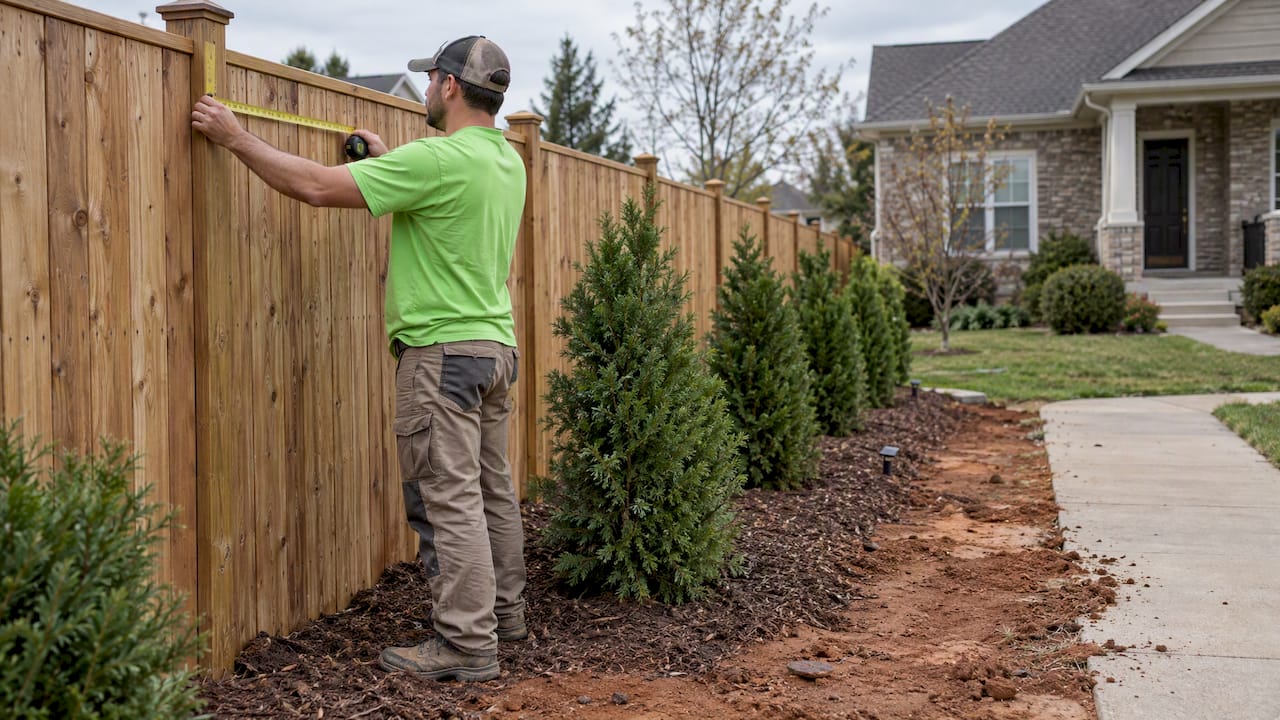
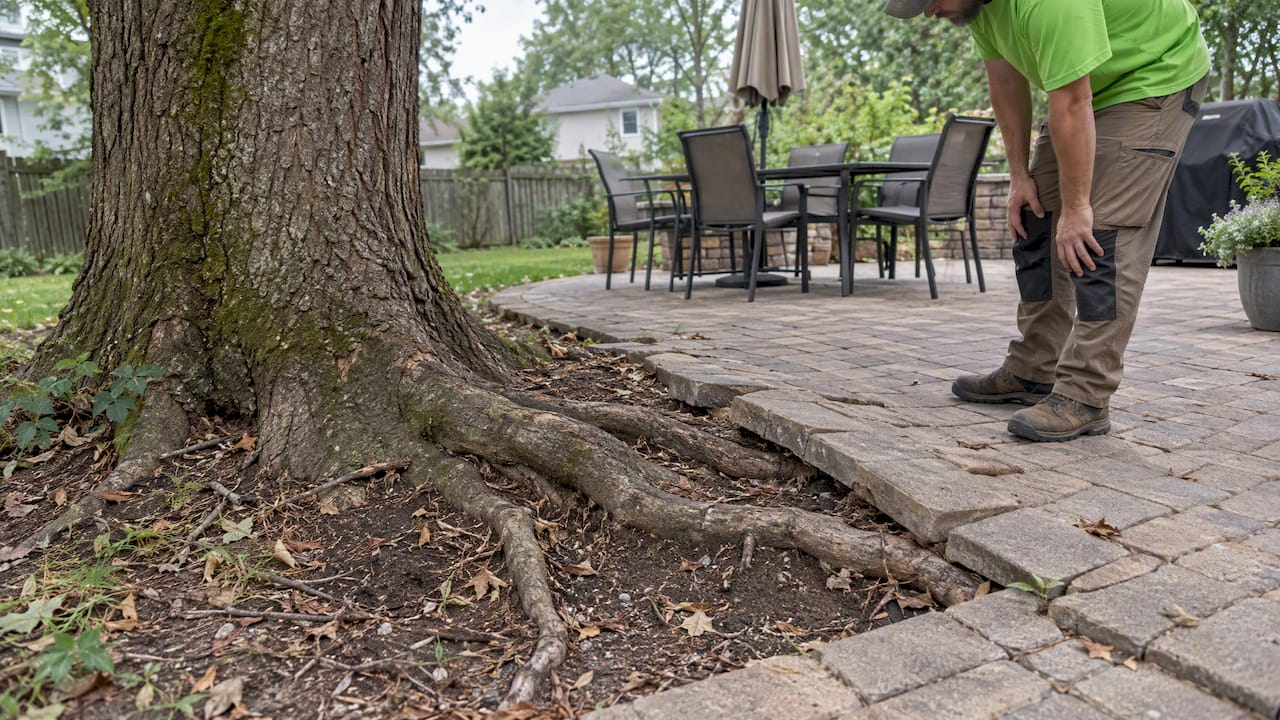
Site access. This is the hidden cost driver most homeowners miss. A narrow side gate, a low-hanging tree, or a steep driveway can prevent a full-size skid-steer from reaching the work area. Contractors then use smaller equipment or hand labor, both of which take longer and cost more. Inspect your access points before getting quotes and mention any constraints upfront.
- Utility locations — underground lines (gas, electric, water, cable) must be located before any excavation. Utility damage is expensive and dangerous.
- Permits and erosion control — some municipalities require permits for grading projects that disturb more than a set area (often 500–1,000 sq ft). Erosion control measures like silt fencing add $1–$3 per linear foot.
- Timing — grading in wet conditions can damage soil structure and require rework. Spring and fall are generally preferred in the Midwest; summer heat and winter freeze both create complications.
Pro Tip: Before any contractor visits, walk your yard after a heavy rain and note exactly where water pools or flows. That information helps a contractor price the drainage component accurately rather than guessing.
What add-ons should you budget for after grading?
Grading rarely happens in isolation. Once a contractor assesses your yard, you will likely hear about one or more of these add-ons. Knowing the typical price ranges helps you spot when a quote is reasonable and when it has grown beyond what the job actually needs.
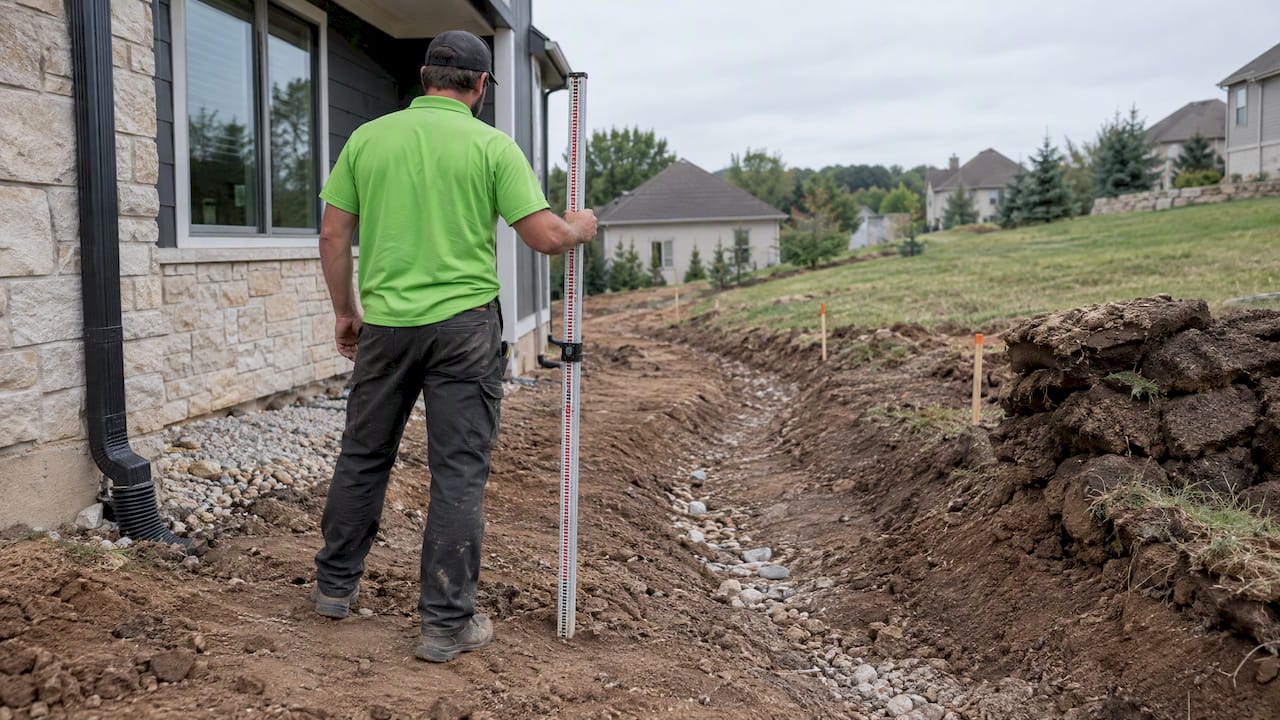
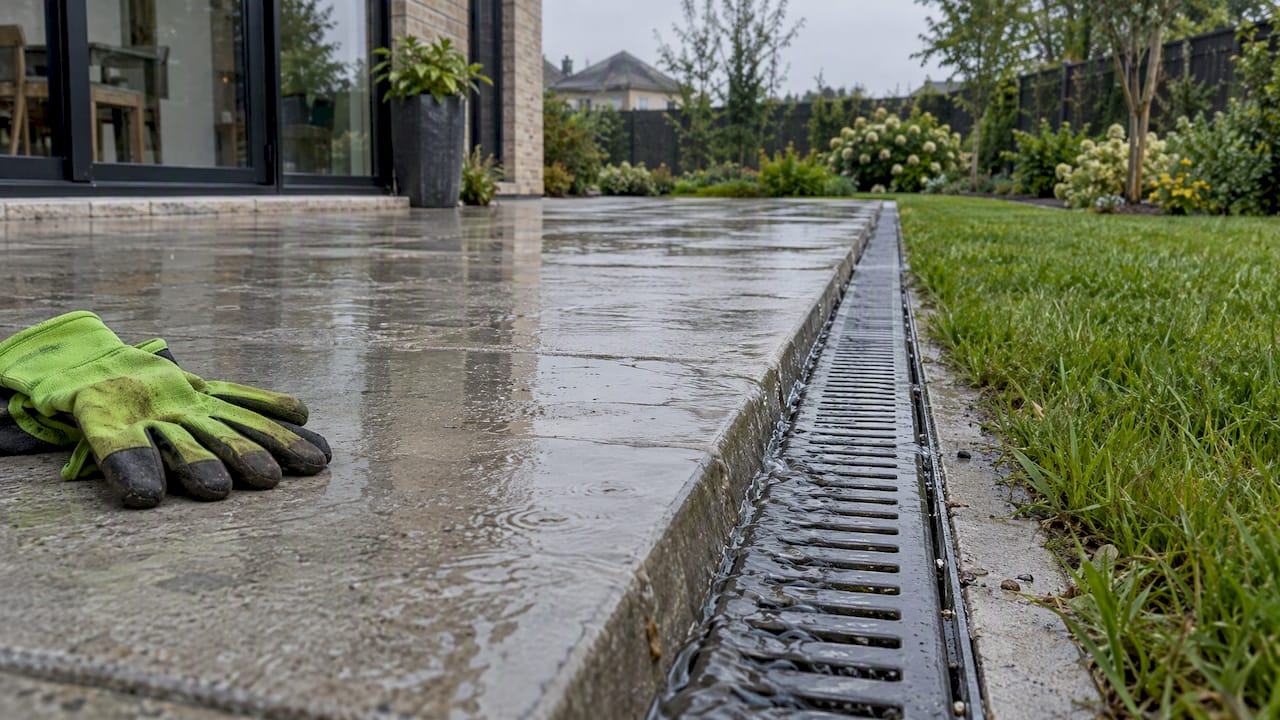
If your yard has signs of a drainage problem — pooling water, soggy patches, or water moving toward the house — grading alone may not solve it. French drains and dry wells are the most common paired solutions.
| Add-On | Typical Cost Range | When It’s Needed |
|---|---|---|
| French drain (per linear foot) | $20–$60 per linear foot | Standing water, saturated soil, or water near foundation |
| Dry well | $1,000–$3,000 | High-volume runoff with no good outlet |
| Retaining wall (per linear foot) | $25–$55 per linear foot | Slopes over 3 ft of grade change |
| Fill dirt (per cubic yard, delivered) | $30–$55/cu yd | Low spots requiring import soil |
| Topsoil (per cubic yard, delivered) | $25–$50/cu yd | Finish layer for seeding or sod |
| Sod installation (per sq ft) | $1–$3/sq ft installed | Immediate ground cover after grading |
| Seeding and straw | $0.08–$0.50 per square foot | Lower-cost alternative to sod |
| Soil/debris hauling and disposal | $200–$600+ | Excess soil removed from site |

Retaining walls are often required when regrading creates a grade change of more than two or three feet over a short horizontal distance. A wall that looks like a simple add-on can easily run $3,000–$8,000 for a modest residential installation, so get that line item priced separately from the grading work.
One thing to clarify with every contractor: does the quote include delivery of fill dirt and topsoil, or is that a separate charge? Many contractors price materials and delivery separately, and a few cubic yards of topsoil can add $200–$400 to a job that initially looked straightforward.
Should you DIY yard grading or hire a contractor?
DIY grading is realistic for small, flat areas with minor slope corrections. For anything involving drainage, foundation proximity, or significant soil movement, hiring a pro is the safer and often more cost-effective choice once you account for equipment rental and the risk of doing it wrong.
DIY makes sense when:
- The area is under 500 sq ft with minimal slope.
- You are smoothing an existing lawn, not correcting drainage.
- You have experience operating compact equipment.
- No permits are required in your municipality.
Hire a contractor when:
- Water is moving toward your foundation or pooling near the house.
- The slope change exceeds 6 inches over the work area.
- Utilities need to be located and worked around.
- The project requires compaction testing (common before patio or concrete installation).
- A permit is required — pulling a permit as a homeowner on a grading project carries liability.
Equipment rental costs for DIY
- Skid-steer loader: $350–$600 per day rental. Useful for moving soil, but requires a trailer to transport and may not fit through a standard gate.
- Mini-excavator: $300–$500 per day. Better for tight spaces, but slower for large-area grading.
- Plate compactor: $80–$150 per day. Required after any fill work to prevent settling.
- Laser level or grade stakes: $50–$100 per day rental or purchase. Necessary for accurate slope correction.
Add delivery fees ($100–$200 round trip for equipment transport) and the cost of fill dirt, and a DIY project on a 1,000 sq ft yard can easily run $800–$1,500 in equipment and materials alone, before your time. A professional quote for the same job often comes in at $1,200–$2,500 with proper compaction and a warranty on the work.
The biggest risk in DIY grading is improper compaction. Loose fill settles unevenly over time, creating new low spots and drainage problems. If you are grading as a base for a patio, concrete, or pavers, under-compacted fill will cause cracking and shifting within a few seasons.
How do contractors estimate grading, and what should your quote include?
A reliable contractor will visit the site before quoting. Any bid submitted without a site visit should be treated with caution. Here is what a thorough contractor inspects and what your written estimate must include.
What contractors look at during a site visit:
- Overall slope and grade across the work area (often measured with a laser level or transit)
- Soil type and current moisture conditions
- Existing drainage patterns and any problem areas
- Access points for equipment
- Proximity to the foundation, utilities, and structures
- Whether existing soil can be redistributed or if import/export is needed
What must appear in a written estimate:
- Labor — hours estimated and hourly rate, or a fixed labor total
- Equipment — type of equipment, mobilization fee
- Materials — fill dirt, topsoil, gravel (quantity and unit price)
- Disposal — hauling fees and dump costs for excess soil
- Permits — who pulls them and the estimated fee
- Erosion control — silt fencing or seeding after grading
- Cleanup and final grade — what the site looks like when the crew leaves
- Change-order terms — how price changes are approved and documented
Questions to ask every contractor:
- Who is responsible for calling 811 (utility locate) before excavation?
- Will you perform compaction testing, and do you provide documentation?
- What is your warranty on the finished grade?
- Can you provide references and before/after photos from similar jobs?
- Are you licensed and insured in Missouri?
A well-documented landscape plan and scope of work protects you from scope creep. If a contractor finds unexpected conditions mid-job (buried debris, a utility conflict, worse soil than expected), the change-order clause determines whether you get a written approval before costs increase.
How long does yard grading take, and do you need a permit?
Timeline and permitting depend heavily on project size and your municipality’s rules.
Typical timelines:
- Small job (under 500 sq ft, minor slope correction): 1–2 days including mobilization, grading, and rough cleanup.
- Medium job (1,000–3,000 sq ft with drainage work): 3–5 days. Add time for compaction, topsoil, and seeding.
- Large job (5,000+ sq ft or retaining wall included): 1–3 weeks depending on weather and material delivery schedules.
Permit and survey triggers:
- Most Missouri municipalities require a grading permit when the disturbed area exceeds 500–1,000 sq ft or when work is within a set distance of a waterway or wetland.
- Projects near the foundation or involving significant grade changes (over 12–18 inches) often require a topographic survey before permitting.
- Retaining walls over a certain height (commonly 4 feet in Missouri) typically require an engineering review and a separate structural permit.
- Always call 811 before any excavation. Missouri law requires it, and utility damage is your liability if you skip the locate.
Best time of year for grading in the Midwest:
- Spring (April–May): Good soil workability, but watch for wet conditions that can cause compaction damage.
- Fall (September–October): Ideal. Soil is workable, seeding establishes before winter, and contractor schedules often open up.
- Summer: Possible but hot, dry conditions can make compaction harder and turf establishment slower.
- Winter: Generally avoided; frozen ground prevents proper grading and compaction.
How to calculate your grading cost before getting quotes
A simple formula gives you a working budget number before the first contractor arrives.
The formula: Square footage × per-sq-ft rate = base grading cost
Use these figures for initial budgeting:
- Conservative (simple, flat, accessible site): $0.80–$1.13 per sq ft
- Typical (moderate slope, standard access): $1.13–$1.52 per sq ft
- Complex (steep slope, drainage work, import/export soil): $1.75–$2.00+ per sq ft
Worked examples
-
400 sq ft (20×20 patio base):
- Low: 400 × $0.80 = $320 (plus materials and disposal)
- Typical: 400 × $1.32 = $528
- High: 400 × $2.00 = $800
- All-in realistic budget: $600–$1,500
-
1,000 sq ft backyard leveling:
- Low: 1,000 × $0.80 = $800
- Typical: 1,000 × $1.32 = $1,320
- High: 1,000 × $2.00 = $2,000
- All-in realistic budget: $1,200–$3,000
Sample cost breakdown for a 1,000 sq ft job (typical):
- Labor and equipment: $800–$1,200
- Fill dirt (5 cu yd): $175–$275
- Topsoil finish layer (3 cu yd): $100–$150
- Disposal/hauling: $200–$400
- Permit (if required): $150–$300
- Seeding and straw: $100–$200
- Total: $1,525–$2,525
These numbers align with the $1,022–$3,334 range reported by Angi and the $1,000–$3,330 typical range from Modernize. Use them as a sanity check when reviewing contractor bids, not as a substitute for a site-specific quote.
Why a written scope protects your budget
HUD’s sitework guidance documents how site-preparation tasks like drainage, erosion control, and utility separation regularly change the scope and cost of residential sitework. The core finding is consistent with what experienced contractors see in the field: conditions discovered during excavation frequently differ from what was visible at the surface, and projects without a documented change-order process tend to generate disputes.
Statistic: Modernize reports that large regrading projects with drains or retaining walls can exceed $10,000, compared to a national average of about $2,180 for typical jobs. That gap reflects scope expansion, not just size.
The practical implication is straightforward. A written scope that specifies what happens when unexpected conditions arise (buried debris, a utility conflict, soil that requires more import than estimated) gives you a documented approval process before costs change. Without it, a $2,000 quote can become a $4,000 invoice with no clear paper trail.
Pro Tip: Require a written change-order clause that states no additional work will proceed without your written approval and a revised cost estimate. This single clause prevents the majority of contractor billing disputes on grading projects.
Contractors who resist providing an itemized written scope are worth approaching with caution. A professional who has done this work before knows what the job involves and can document it. Vague scopes protect the contractor, not you.
What I see homeowners get wrong on grading projects
Most homeowners focus on the per-square-foot number and miss the two things that actually determine whether a grading project solves their problem: drainage design and compaction.
Grading that moves water away from the foundation but deposits it in a neighbor’s yard, a low corner of your own property, or a spot with no outlet creates a new problem while solving the original one. A contractor who grades without mapping where the water goes after the job is done is not finished with the design. Ask specifically: where does the water outlet, and what happens during a heavy rain?
Compaction is the other overlooked piece. Fill dirt that is not properly compacted in lifts (typically 6–8 inches at a time) will settle unevenly. If you are grading as a base for a patio or hardscape installation, under-compacted fill causes cracking and shifting within a few seasons. Ask your contractor whether they compact in lifts and whether they document it.

Precision outdoor Solutions has been working in Wentzville and St. Charles County for over 25 years. The first thing we look at on a site visit is not the slope itself but where the water currently goes and where it needs to go. That determines whether grading alone solves the problem or whether drainage solutions need to be part of the scope from the start.
Get a local grading quote from Precision outdoor Solutions
Wentzville and St. Charles County homeowners dealing with poor drainage, negative slopes, or yard prep for a new patio have a local option with a proven track record. Precision outdoor Solutions offers site grading, drainage system installation, retaining walls, topsoil and sod installation, and full outdoor living services under one roof.

Every quote includes an itemized written scope covering labor, materials, disposal, and permits. Precision outdoor Solutions is licensed and insured, and we provide before-and-after photos and references from completed projects in your area. You will know exactly what is included and what triggers a change order before work begins.
Ready to get a realistic number for your yard? Contact Precision outdoor Solutions for a free on-site estimate. We serve Wentzville, St. Charles County, and the surrounding area, and we will walk your property, map the drainage, and give you a written quote you can actually compare.
If you are also considering a patio, retaining wall, or backyard remodeling as part of the same project, ask about bundling the grading and hardscape work for a single coordinated scope.
Sources
These are the primary sources used to build the cost ranges and guidance in this article. Use them to verify numbers and run your own estimates.
- Lawn Leveling & Yard Grading Costs in 2026 | Modernize
- How Much Does Land Grading Cost in 2026? | Lawn Love
- How Much Does It Cost to Level a Yard? 2026 Data | Angi
- Cost to Grade Landscaping – 2026 Cost Calculator (Customizable) | Homewyse
- Sitework, utilities and site preparation guidance | HUD USER
- Occupational Employment and Wage Statistics (OES) | BLS
Recommended
- Retaining Walls: A Smart Investment For Your St. Charles County Property – Precision Outdoor Solutions
- Create An Outdoor Living Space You Will Actually Use – Precision Outdoor Solutions
- Backyard Patio Ideas: How To Transform Your Backyard In Wentzville, MO – Precision Outdoor Solutions
- Why Now Is The Best Time To Plan Your Fall Outdoor Project – Precision Outdoor Solutions