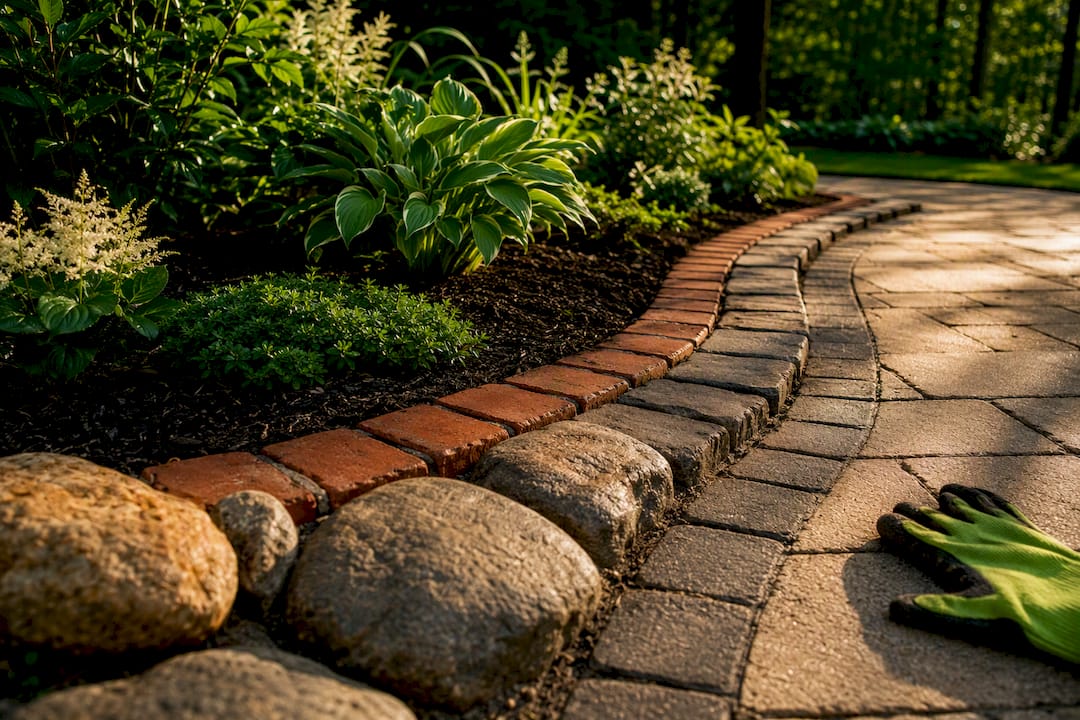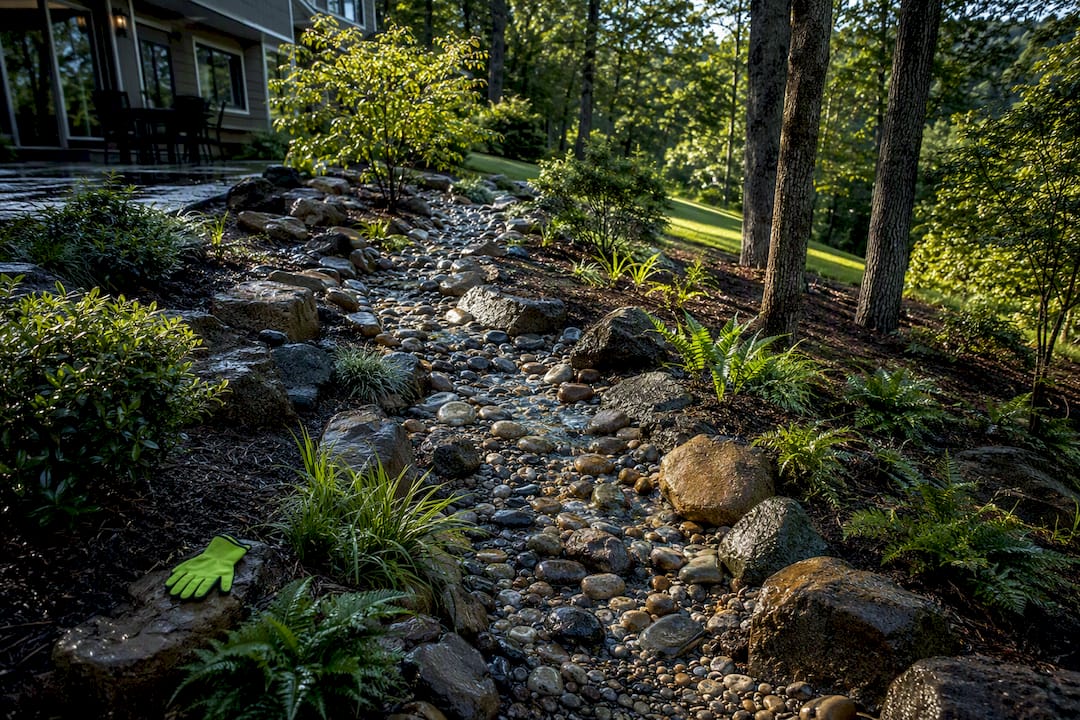
If tree roots are ruining your patio, start with a safety check, then decide between a temporary fix and a durable repair based on how big the roots are. Small cracks and minor heaving usually call for grinding or re-leveling. Large structural roots near the trunk mean it’s time to call an ISA Certified Arborist before anyone touches a shovel or saw.
TL;DR:
- Repairing large roots over 2 inches thick requires professional arborist assessment to prevent tree destabilization or death.
- Installing a root-excluding gravel or foam base at least 4 inches thick helps protect future pavement from root uplift, especially in well-drained soils.
- Temporary fixes like grinding raised edges or re-leveling pavers can improve safety but do not stop ongoing root growth from causing further damage.
- Proper site assessment should consider species, age, soil volume, and drainage to reduce the risk of roots damaging pavement over time.
- Replacing a damaged surface without addressing the sub-base and root barriers increases the chance of recurring issues and costly repairs.
Table of Contents
- How to Tell if Your Patio Damage Is Caused by Tree Roots
- Why Roots Lift Patios: Growth Habits and Site Risk Factors
- Fast, Temporary Repairs to Reduce Trip Hazards
- Durable Repair and Prevention: Bases, Barriers, and Better Plant Choices
- When to Hire an Arborist or Hardscape Contractor
- Does Removing Roots Hurt the Tree or the Yard Around It?
- Field Perspective: How We Approach Root-vs-Patio Problems
- How We Can Help With a Root-Damaged Patio
- FAQ
- Sources
How to Tell if Your Patio Damage Is Caused by Tree Roots
Not every crack or dip comes from a root. Settling soil, poor original base work, and freeze-thaw cycles can all mimic root damage, so a quick inspection helps you confirm the cause before you pay for the wrong fix.
Look for these signs:
- Heave or doming: a raised, rounded bump in the patio surface, often near a large tree.
- Linear cracks: straight cracks that run in one direction, usually pointing back toward the trunk.
- Lifted or tilted pavers: individual pavers pushed up or tipped at an angle while neighboring ones stay flat.
- Gaps under slab edges: hollow spots you can hear or feel when you tap the edge of a slab.
A safe inspection means lifting a loose paver or two, probing a few inches down with a trowel, and noting the tree’s size, species, and distance from the damage. If you find exposed roots thicker than 2 inches, see roots tangled near a gas line or sewer pipe, or notice the tree leaning or shedding bark, stop and call a professional. At that point you’re no longer dealing with a simple patio repair.
Why Roots Lift Patios: Growth Habits and Site Risk Factors
Most tree roots live in the top 12 to 18 inches of soil, spreading out far wider than the canopy rather than growing straight down. As a tree matures, those roots thicken in diameter the same way a trunk does, and that secondary growth is what pushes up pavement over time, a pattern the US Forest Service has documented as a nationwide cost of more than $100 million a year in hardscape repairs.
Several conditions raise the odds of trouble:
- Fast-growing, shallow-rooted species planted too close to hardscape
- Trees older than 15 to 20 years, when root diameter growth accelerates
- Restricted soil volume that forces roots to concentrate near the surface
- Overwatering or poor drainage, which pushes roots up toward oxygen near the surface
- Short distance between the trunk and the patio edge
This is also why some barrier products disappoint homeowners. In compacted or poorly drained clay soil, roots often find their way around or over a barrier looking for oxygen and moisture, while the same product can perform well in a well-drained, sandy site.
Fast, Temporary Repairs to Reduce Trip Hazards
Before you commit to a full rebuild, you can usually make a damaged patio safer within a day. These fixes buy time while you plan something permanent.
- Grind or shave raised edges. A concrete grinder can knock down a lip so it’s flush with the surrounding surface, though Iowa State Extension notes concrete can typically be ground down to about half its original thickness before it’s compromised.
- Add a ramp or wedge. Asphalt or concrete wedge ramps smooth the transition between an uneven joint, and any ramp near a walkway should follow ADA slope guidance where accessibility matters.
- Pull and re-level pavers. Lifting affected pavers, regrading the base by hand, and resetting them is a reasonable stopgap, though it will need to be redone if the root underneath keeps growing.
None of these fixes are permanent, and all three avoid the riskiest mistake homeowners make: cutting large roots themselves. Removing a major root without guidance can destabilize the tree or kill it outright.
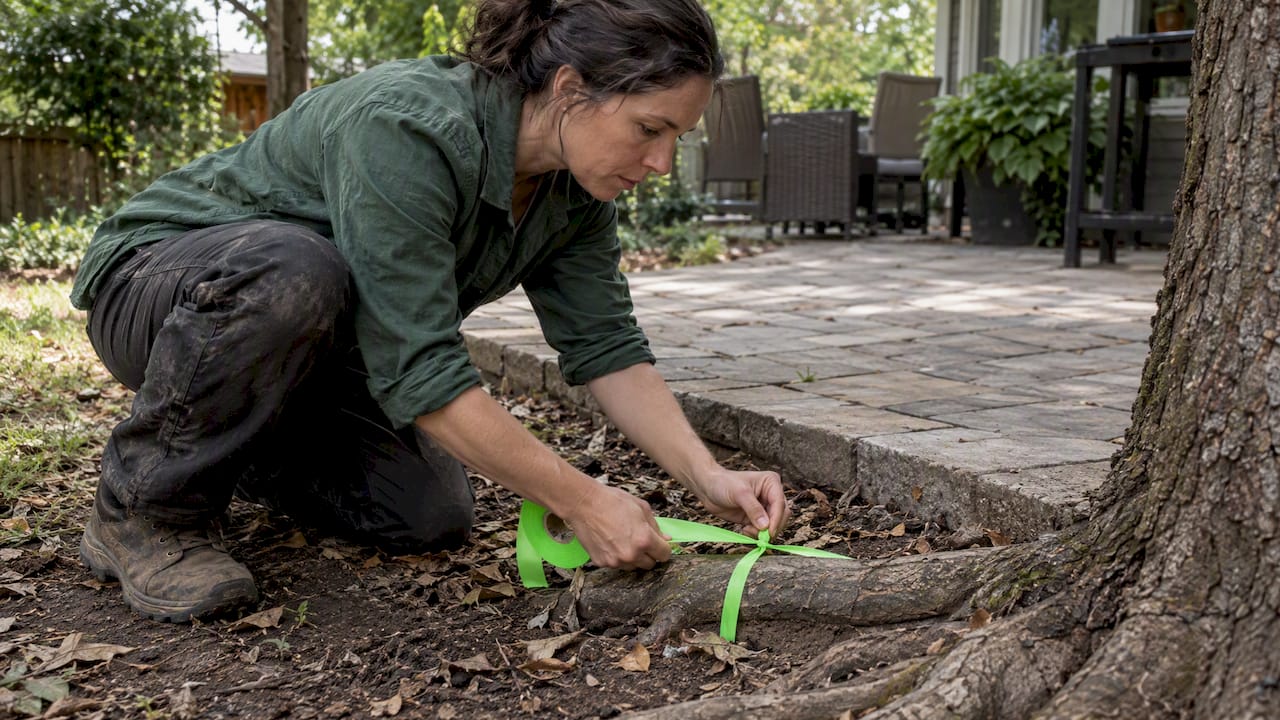
Pro Tip: Mark any exposed root with surveyor’s tape before you grind or ramp around it, so no one on the job accidentally saws through it later.
Durable Repair and Prevention: Bases, Barriers, and Better Plant Choices
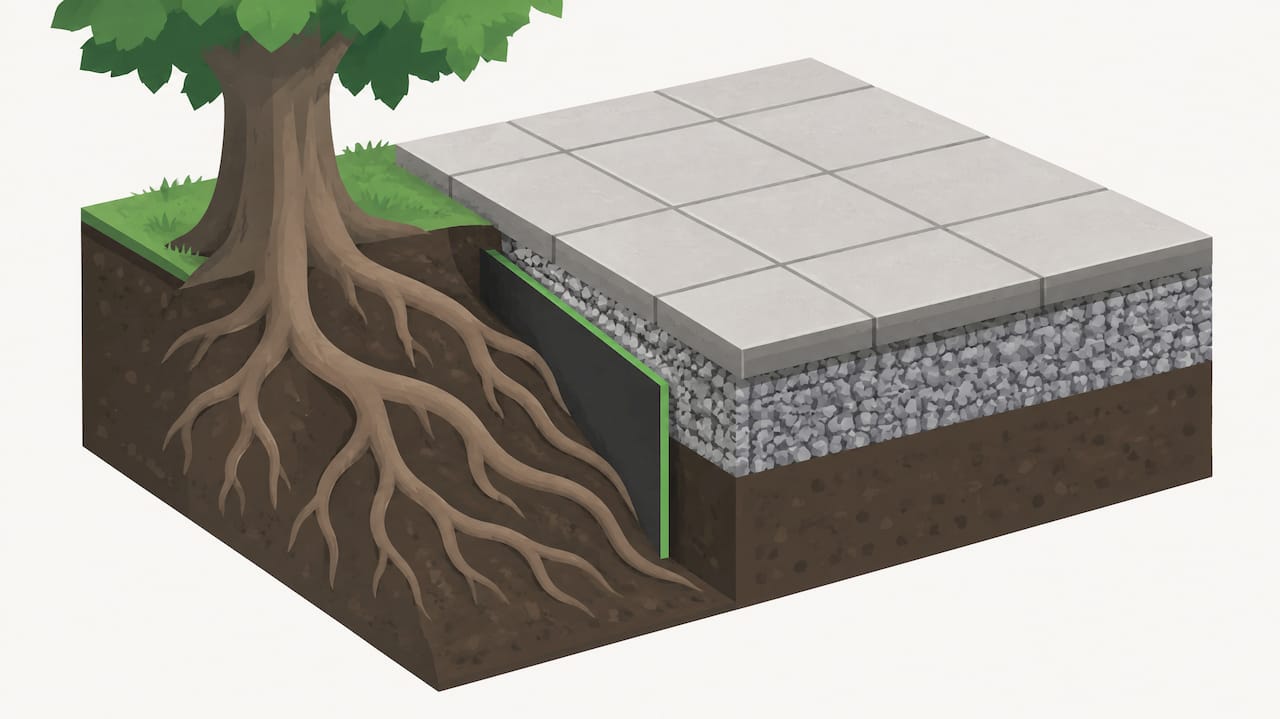
A lasting fix usually means rebuilding the sub-base, not just patching the surface. Iowa State Extension recommends at least 4 inches of washed coarse gravel, sized 1 to 1.5 inches with no fines, or a stacked rigid foam board base totaling about 4 inches, both of which discourage roots from reentering the area beneath new pavement. These root-excluding bases work best in well-drained soil; in heavy clay, drainage problems can undercut their performance.
Here’s how the main long-term options compare:
- Root-excluding gravel or foam base: rebuilds the patio on a layer roots struggle to penetrate, best suited to sites with decent drainage.
- Vertical root barriers: redirect roots downward or sideways, but surveyed urban forestry programs report mixed results, with about 25% calling them effective, another 25% partially effective, and the rest skeptical, especially in compacted soil.
- Bridging or raised slabs: span over a root system instead of resting on it, a design choice that works well in ADA-sensitive areas when slopes are planned carefully.
- Interlocking pavers or rubber pavers: replace rigid concrete with segments that can be lifted and reset individually as roots grow, instead of requiring a full slab replacement.
Field trials from the University of Florida.pdf) found that gravel sub-base under paths encouraged deeper rooting and extended pavement life in well-drained sites, though barrier performance varied by soil type. That’s a strong argument for pairing any barrier with proper base prep rather than relying on the barrier alone.
If root shaving is part of the plan, Iowa State’s extension guidance is specific: never cut roots larger than 2 inches in diameter without an arborist’s input, never shave more than one-third of a root’s diameter, and never cut a buttress root closer than three times the trunk’s diameter. Cutting closer than 1.5 times that distance raises a real risk of tree instability. For future planting, choose species with deeper, less aggressive root systems and give them enough soil volume to avoid repeating the problem near a new patio.
When to Hire an Arborist or Hardscape Contractor
Some situations are outside DIY territory. Call a professional when you see:
- Roots thicker than 2 inches lifting a large section of patio
- A mature tree (often 15 to 20 years or older) close to the damaged area
- Repeated cracking after a previous repair
- Roots growing near gas lines, sewer pipes, or a home’s foundation
Start by vetting an ISA Certified Arborist, who can assess whether the tree is stable, propose a root treatment plan, and set limits on how much root mass can safely be removed. Bring the hardscape contractor in at the same time so both professionals agree on a plan, since a patio rebuild and a root plan need to work together.
A solid hardscape quote should spell out the sub-base material and depth, whether a root-excluding layer is included, how drainage will be corrected, and what warranty covers future heaving.
Does Removing Roots Hurt the Tree or the Yard Around It?
Cutting roots is not a neutral act. A tree’s root system anchors it, stores energy, and takes up water and nutrients, so removing too much of it in one spot can weaken the whole tree, slow its growth, or make it more likely to blow over in a storm. That’s the reasoning behind the one-third and three-times-trunk-diameter limits mentioned earlier: they’re meant to keep enough root mass intact for the tree to recover.
There’s a ripple effect beyond the tree itself. A mature tree’s canopy shades soil, moderates temperature for nearby plants, and supports birds and pollinators that depend on it. Removing a large root, or the whole tree, changes those conditions for everything growing nearby. This is why arboriculture and forestry extension sources consistently push for the least invasive option first: bridging over roots, rerouting a path, or shaving a small percentage of a root rather than removing it outright. When removal truly is necessary, doing it with an arborist’s guidance protects both the tree’s survival odds and the yard’s broader health.
Field Perspective: How We Approach Root-vs-Patio Problems
In our experience, homeowners get the best long-term results when they fix the base, not just the surface. A common approach is to rebuild on a gravel or foam board base, use targeted root shaving only after an arborist weighs in, and choose pavers over poured concrete where roots are still active underneath.
How We Can Help With a Root-Damaged Patio
We handle root-damaged patios the way the sections above describe: fix the base, not just the crack. Our team offers Hardscape & Patio Installation built on root-excluding gravel or foam bases, Yard Drainage Solutions to correct the moisture patterns that pull roots toward the surface, Concrete Services for sites where a poured patio still makes sense, and Landscape Design when a tree needs to be worked around rather than removed.

A site visit from our team includes:
- An on-site assessment of the patio damage and the root system nearby
- A clear read on whether the issue needs an arborist, a hardscape fix, or both
- A recommended repair path suited to your soil and drainage
- A written estimate before any work begins
We serve homeowners in Wentzville and across St. Charles County. Reach out for a consultation and we’ll walk the site with you before you commit to anything.
FAQ
Am I responsible for damage caused by my tree roots?
In most cases, yes: property owners are generally responsible for damage their trees cause on their own land, including to a patio or foundation. Rules vary by city and neighborhood, so check local ordinances or your HOA before starting any root removal work.
How do you keep tree roots from damaging concrete?
The most reliable approach pairs a root-excluding base, such as washed gravel or rigid foam board at least 4 inches thick, with good drainage so roots aren’t drawn upward looking for water. Vertical root barriers can help in some soils but perform inconsistently in compacted or poorly drained ground.
Will damaged tree roots grow back?
Roots that are shaved rather than fully removed typically continue growing and can lift pavement again over time, especially if more than a third of the root’s diameter was cut. A barrier or root-excluding base installed alongside the repair reduces the chance of the same spot failing again.
Does homeowners insurance cover damage caused by tree roots?
Standard homeowners policies often exclude gradual damage like root uplift, since insurers typically cover sudden, accidental events rather than slow structural movement. Check your specific policy or ask your agent directly, since coverage details vary by insurer and plan.
Sources
- A review of tree root conflicts with sidewalks, curbs, and roads | US Forest Service Research and Development
- Arboriculture & Urban Forestry (root barrier effectiveness)
- Sidewalk Repair Near Trees | Iowa State Extension
- Protecting tree roots during construction | Texas A&M Forest Service / ISA guidance
Recommended
- Homeowners: Base Prep And Targeted Reinforcement Beat Thicker Concrete
- Patio Drainage Solutions That Actually Stop Water Pooling
- 5 Patio Repair Options For Homeowners: DIY Fixes Or Call A Pro
This article was prepared with AI assistance for general information. For recommendations specific to your property, contact Precision Outdoor Solutions. Call or text us at (636) 358-8644.