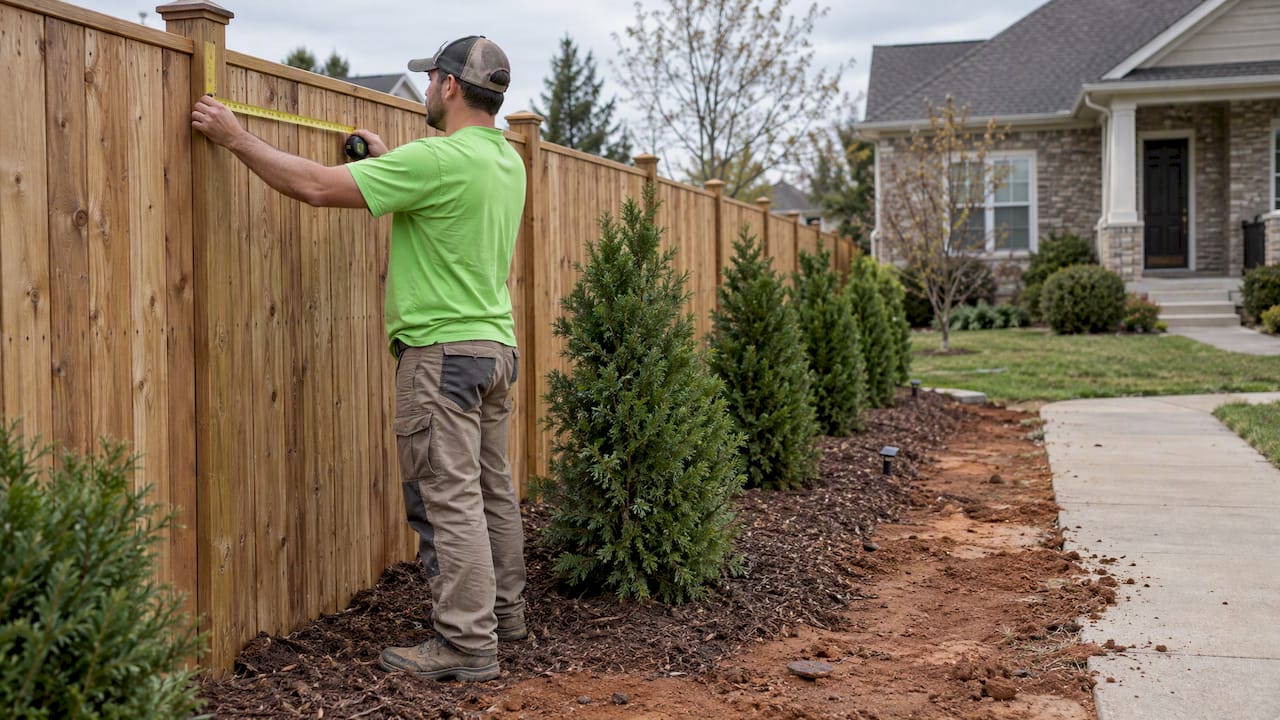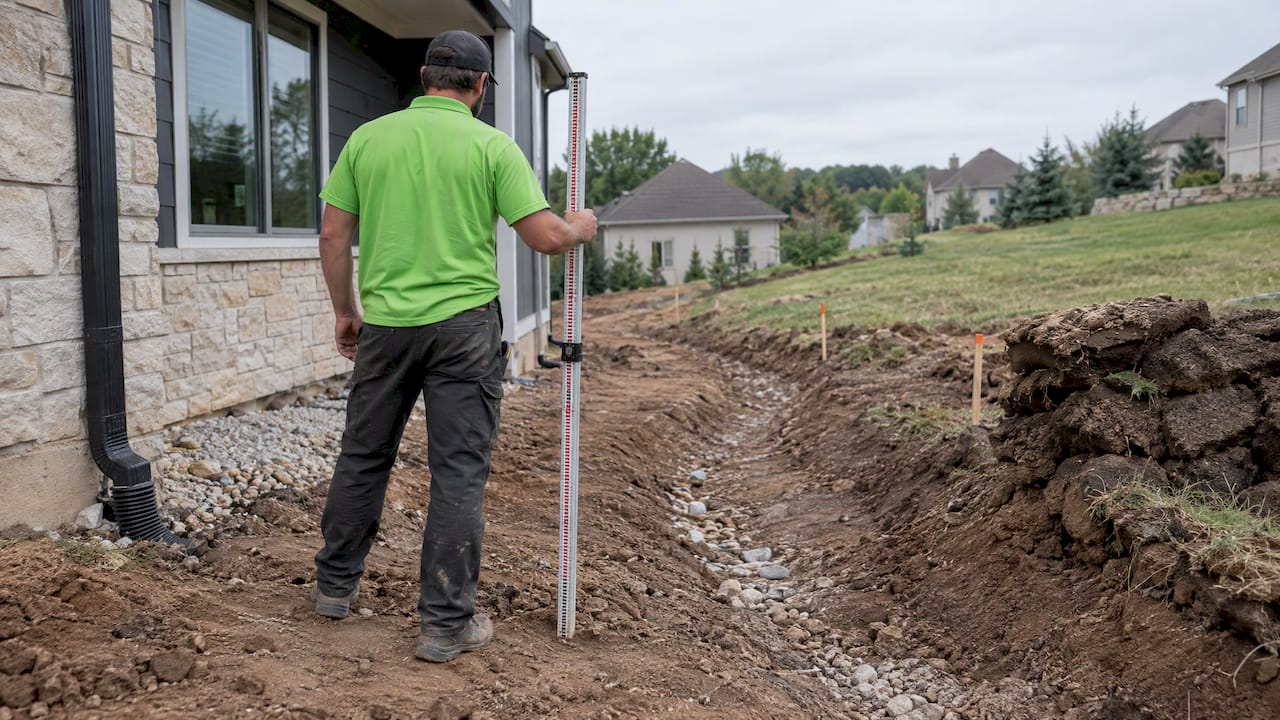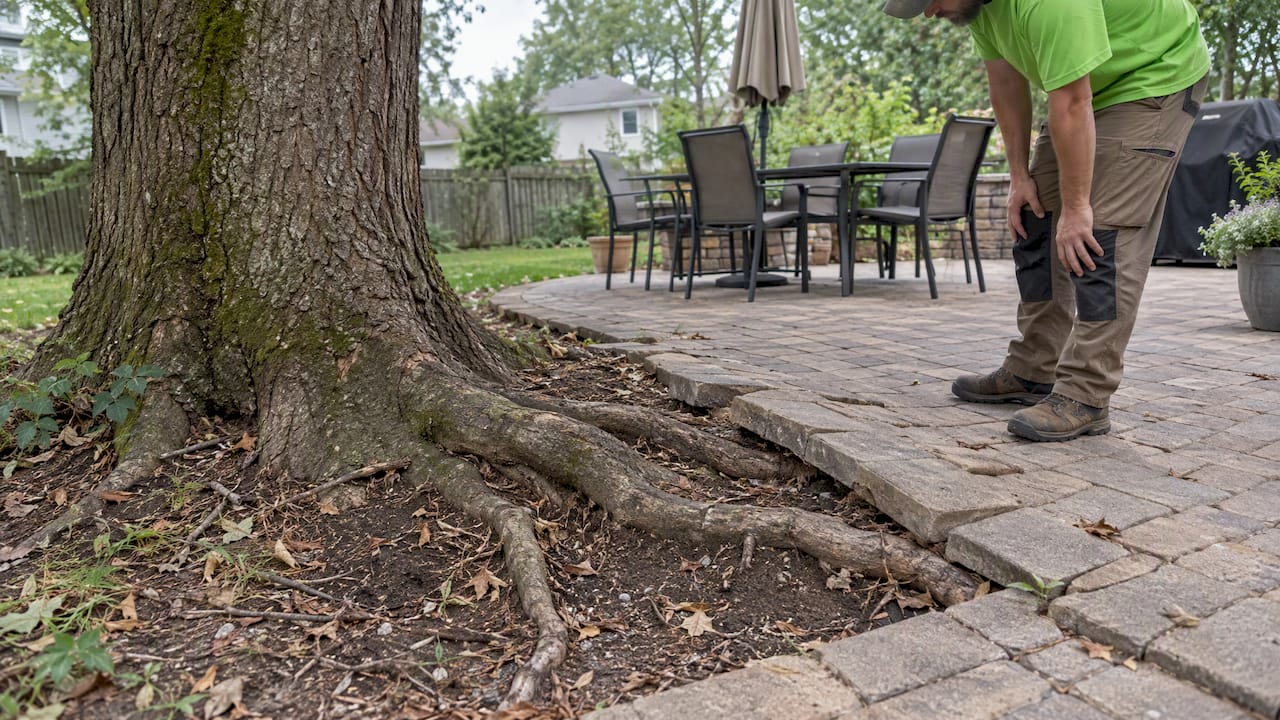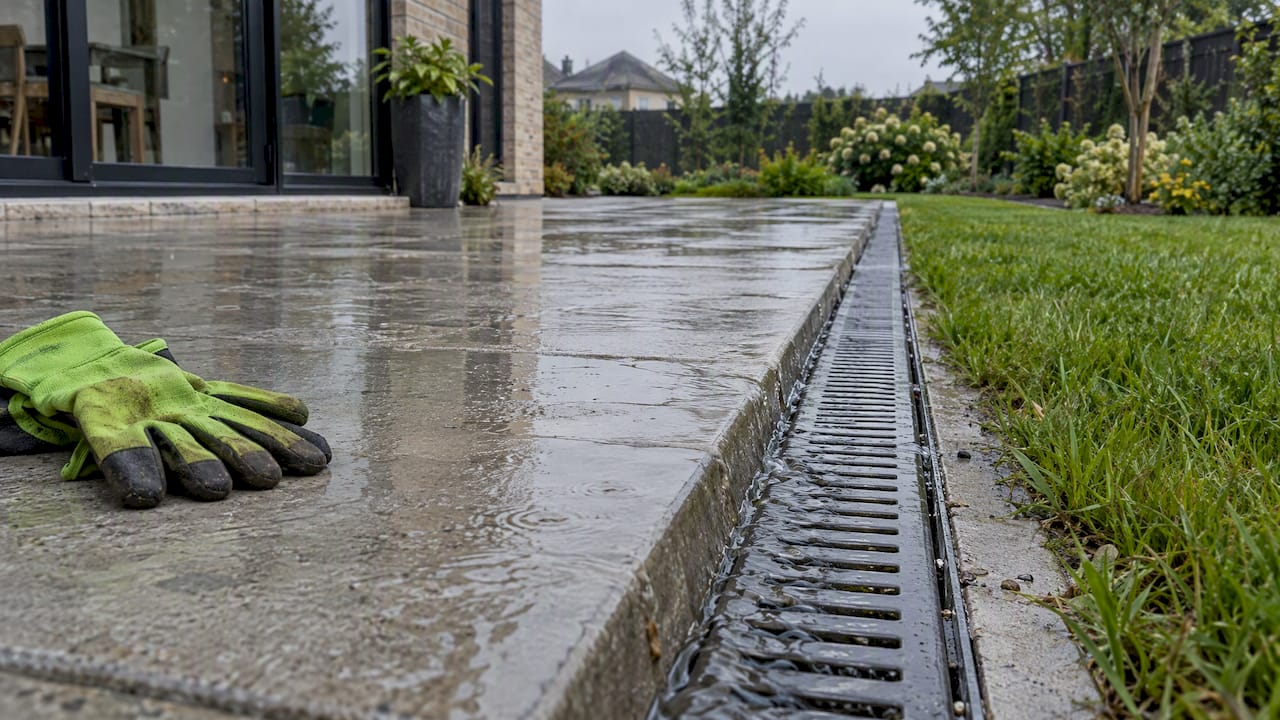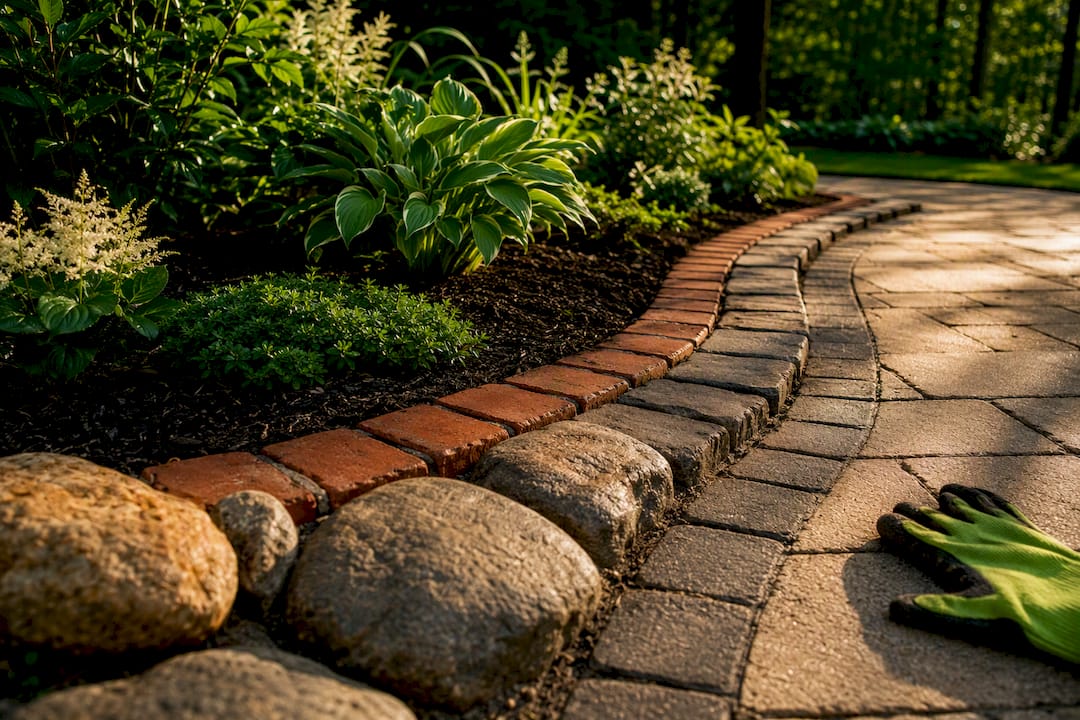
For most homeowners, the right answer is a vegetated dry swale with a gentle 1–2% slope, shallow bottom width, and a drawdown target of 24 to 48 hours after a storm. If your yard is small, the slope is mild, and the soil drains reasonably well, this is a project a patient DIYer can tackle over a weekend. Steep grades, clay soil, or a swale running near a foundation call for a professional grading and drainage assessment first.
TL;DR:
- A dry swale requires a slope of 1 to 2 percent, a bottom width of 2 to 8 feet, and must drain within 24 to 48 hours to avoid standing water issues.
- Slow-draining soil or clay conditions may necessitate installing an underdrain, engineered soil, or gravel bedding to ensure effective drainage.
- Proper maintenance, including sediment removal and avoiding mowing when wet, is essential for the swale’s long-term functionality and erosion prevention.
- Steep grades, clay-rich soil, or proximity to foundations often require professional assessment and construction for safety and effectiveness.
- Visual signs of inadequate drainage include water ponding longer than two days and persistent high water tables, indicating a need for tailored design or expert intervention.
Table of Contents
- What Is a Swale, and Which Type Fits Your Yard?
- What Design Specs Should Guide Your Swale?
- Will Your Soil Actually Drain a Swale?
- What Materials Hold Up Best in a Swale?
- How Do You Build a Swale Step by Step?
- How Do You Keep a Swale Working for Years?
- When Should You Bring In a Contractor?
- The Part of Swale Design Most Guides Skip
- Ready to Fix Your Yard’s Drainage for Good?
- Sources
- FAQ
What Is a Swale, and Which Type Fits Your Yard?
A swale is a shallow, graded channel that moves and treats rainwater across your property instead of letting it pool or erode a path downhill. Unlike a ditch, which is dug primarily to move water fast and often stays bare or rocky, a swale is built with a gentler profile and usually planted, so it slows water down and lets some of it soak into the ground. That distinction, swale vs ditch, matters because a poorly graded ditch can actually make erosion worse, while a properly sloped swale calms the flow.
Three swale types cover almost every residential situation:
- Dry swales stay dry between storms and rely on permeable soil (sometimes layered with an underdrain) to drain within a day or two.
- Wet swales hold water longer, function closer to a mini wetland, and suit low, flat yards with a high water table.
- Vegetated water-quality swales combine grass or plantings with careful grading to filter pollutants before water reaches a storm drain or creek.
If your yard has standing water more than two days after rain, or a persistently high water table, a wet swale or a rain garden may fit better than a dry one. Comparing rain garden vs swale designs is worth doing before you dig. A rain garden is a shallow depression that stores and infiltrates a specific volume, while a swale conveys water along a path. Many yards benefit from both working together.
What Design Specs Should Guide Your Swale?
Getting the numbers right separates a swale that works for a decade from one that erodes by the second season. The core targets, drawn from municipal stormwater manuals, are consistent enough to treat as defaults for most residential yards.
Longitudinal slope should sit between 1% and 4%, with 1–2% preferred for water quality and infiltration. Steeper grades need check dams to slow the flow and prevent scour, spaced roughly every 50 to 80 feet on slopes above 4%. Bottom width typically runs 2 to 8 feet, depending on how much water the swale needs to carry.
Side slopes should be no steeper than 3:1, with 4:1 preferred for easier mowing and lower erosion risk. Design ponding depth is about 12 inches, with an 18-inch maximum and 4 to 6 inches of freeboard built in above that. If water doesn’t drain within 24 to 48 hours, either the soil isn’t infiltrating fast enough or you need an underdrain.
Will Your Soil Actually Drain a Swale?
Before you commit to a dry swale design, run a simple test: dig a hole about a foot deep, fill it with water, and time how long it takes to drain. If it takes more than a day, your native soil probably won’t support infiltration on its own, and a formal percolation test is worth the cost before construction begins.
- Slow-draining sites often need an engineered soil layer over an underdrain, or added gravel beneath the channel bottom.
- A sediment forebay upstream of the main channel catches grit before it clogs finer soil.
- Keep contributing drainage area modest. Guidance for water-quality swales caps it around 5 acres, and residential lots are almost always well under that.
- Never route the swale to discharge onto a road or directly onto a neighbor’s property; keep the water and the responsibility on your own site.
- Check with your municipality before digging. Grading changes, especially ones affecting runoff direction, sometimes trigger a permit.
Pro Tip: Photograph your yard during and right after a heavy rain. Those photos show a contractor exactly where water pools and which direction it’s moving, which speeds up every conversation that follows.
What Materials Hold Up Best in a Swale?
Where water enters the swale at any real speed, a crushed stone apron or a small splash pad absorbs the impact and keeps the inlet from washing out. A sediment forebay near concentrated inlets catches coarse debris before it travels further down the channel. On sites where soil testing showed slow drainage, a gravel bed with filter fabric and an underdrain pipe becomes part of the base, not an afterthought.
Aesthetics don’t have to fight function here. A few options that hold up well:
- Rock-lined channel beds read as intentional landscaping and resist erosion at the same time.
- Pea gravel paths alongside the swale give you a walkable edge without compacting the planted bottom.
- Boulders placed at bends double as informal check dams and as focal points in the planting bed.
- A mixed native plant palette softens the whole feature and needs less mowing than turf grass alone.
Boulders and check dams, done well, function as landscape features while still slowing flow and preventing scour, which is part of why swales look better in mature landscapes than most people expect.
How Do You Build a Swale Step by Step?
Building a swale correctly is mostly about sequencing. Skip a step and the finished channel either erodes or never drains.
- Mark the intended path with stakes and string, then measure slope with a string level or laser level to confirm it falls between 1% and 2%.
- Excavate a trapezoidal channel, sloped sides and a flat bottom, rather than a rounded ditch shape.
- If soil testing showed slow infiltration, install gravel bedding, filter fabric, and an underdrain pipe before backfilling.
- Build check dams at any point the slope exceeds recommended limits, and stabilize the inlet with crushed stone or a splash pad.
- Place planting soil or engineered media at the design depth, then seed or plant immediately.
- Add temporary erosion control (straw matting or jute netting) until vegetation establishes.
- Do the final grading pass, checking that ponding stays within your target depth and freeboard.
Pro Tip: Late summer through early fall installation gives roots a head start before winter, so the swale is stabilized well before the next heavy spring rain.
How Do You Keep a Swale Working for Years?
Plant selection should match how wet the bottom actually gets. Native grasses and sedges tolerate periodic saturation better than standard turf, and water-tolerant perennials add color without demanding constant care. Near a driveway or road where salt runoff is a factor, choose salt-tolerant species specifically, since regular turf often thins out there within a season or two.
- Mulch newly planted areas at establishment to hold moisture and slow erosion while roots take hold.
- Inspect the swale after every significant storm, checking for new erosion, debris buildup, or standing water.
- Clear sediment from the forebay regularly. It fills faster than most homeowners expect.
- Mow grass swales to at least 2.5 to 3 inches, never scalping the vegetation.
- If water sits longer than 48 hours, check the underdrain for blockage or the soil for compaction.
Pro Tip: Avoid mowing right after rain. Wet soil compacts under a mower’s weight, which can undo the infiltration you spent time engineering.
When Should You Bring In a Contractor?
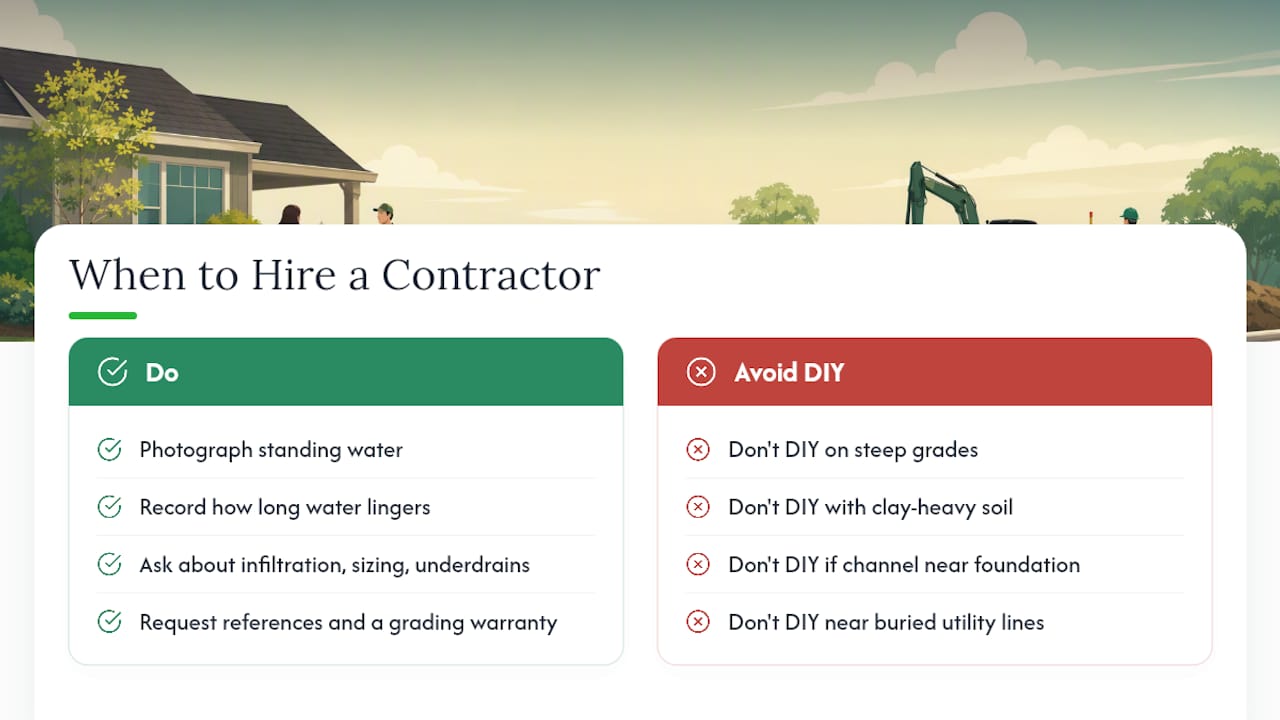
Some swale projects are genuinely manageable on your own. Others aren’t, and the signals are fairly clear: steep grades, clay-heavy soil that won’t drain, a channel running near a foundation or buried utility line or a local permit requirement for grading changes.
Before contacting anyone, take photos of standing water and note how long it lingers after a storm. When you talk to a contractor, ask specifically about infiltration testing, water-quality volume sizing, underdrain options, and how they’ll stabilize inlets against erosion. Ask for references and whatever warranty they offer on grading work.
Precision Outdoor Solutions has spent over 25 years handling drainage projects across St. Charles County, including yards where standing water, sloped lots, and foundation proximity ruled out a simple DIY fix. If you’re seeing water pool near your home, a checklist of warning signs can help you decide how urgent the project really is.
The Part of Swale Design Most Guides Skip
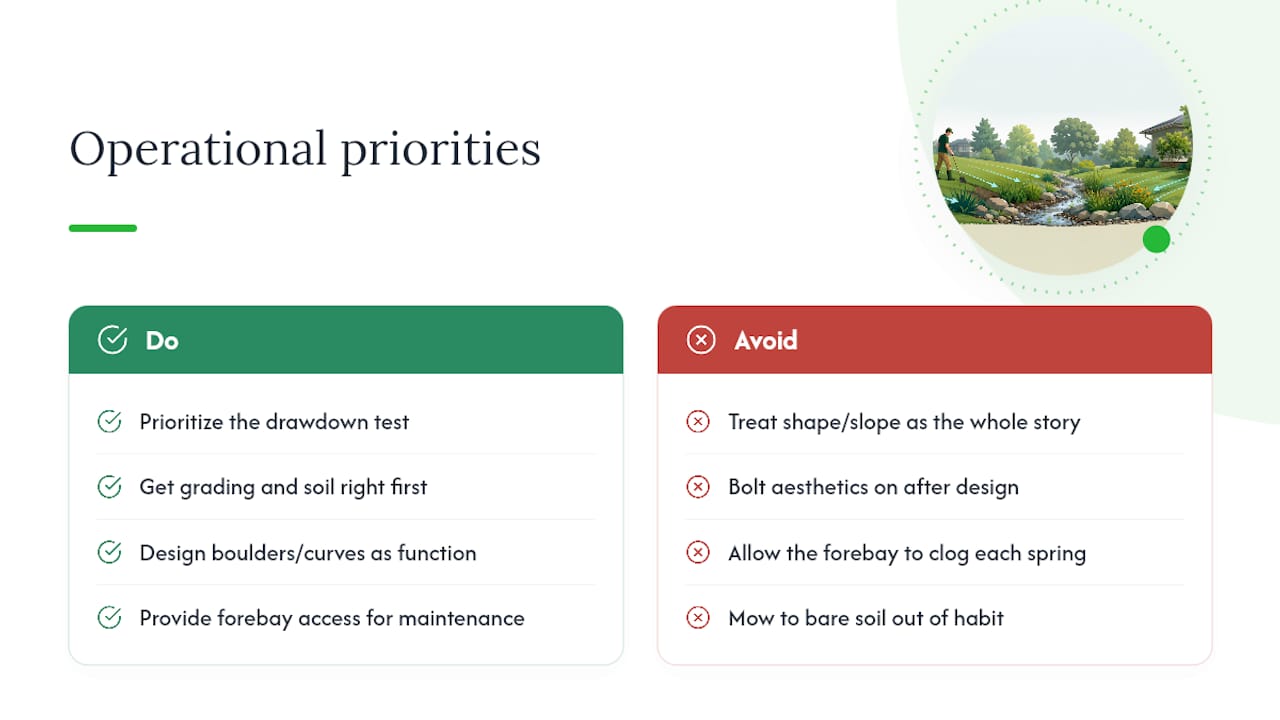
Most advice on swale landscaping tips treats the shape and the slope as the whole story, then stops. That’s backwards. A swale with textbook dimensions still fails if the forebay clogs every spring or if someone mows it down to bare dirt out of habit. Maintenance is the operational limit on a swale’s lifespan, not the design math.
The other place conventional advice falls short is treating aesthetics as an afterthought bolted onto a functional channel. Boulders, curves, and native plantings aren’t decoration layered over engineering. Done right, they’re part of how the swale slows water and resists erosion in the first place.
If you take one thing from this article, prioritize the drawdown test over the pretty rendering. A swale that ponds for a week is a mosquito problem waiting to happen, no matter how good the plant selection looks on paper. Get the grading and soil right first. The landscaping decisions get easier, and more forgiving, once the water actually moves the way it’s supposed to.
Ready to Fix Your Yard’s Drainage for Good?
A DIY swale can handle a mild slope and decent soil, but Precision Outdoor Solutions steps in where the stakes are higher: steep grades, clay-heavy lots, or a swale running close to a foundation in Wentzville or across St. Charles County. Our crews handle the grading, soil work, and planting as one project instead of a patchwork of guesses.

Before your consult, gather a few photos of where water pools and how long it sits after a storm, along with any notes on soil type if you’ve already tested it. We’ll walk the site, talk through drainage and landscape design options together, and give you a plan built around how your specific yard drains. Reach out through our services page to get a project started.
Sources
- Water Quality Swales (BMP) — Nashville / technical SWMM guidance
- Mass
- Iowa Stormwater Management Manual — Grass swales
- How to maintain your grass drainage swale — Montgomery County MD
FAQ
How Can I Create a Swale in My Yard?
Mark the path, confirm a slope between 1% and 2% with a level, excavate a trapezoidal channel, stabilize the inlet with crushed stone, then plant the bottom and sides with water-tolerant vegetation.
How Deep Do Swales Need to Be?
Most residential swales are designed around 12 inches of ponding depth, with an 18-inch maximum and 4 to 6 inches of freeboard built in above that.
Is a Swale Better Than a French Drain?
A swale handles surface water through an open, planted channel and adds a landscape feature, while a French drain moves water underground through buried pipe. Sites with visible ponding and room to grade usually favor a swale; tight side yards or subsurface water problems often favor a French drain instead.
What Does a Swale in a Yard Look Like?
A well-built swale looks like a shallow, gently curving channel with sloped grassy or planted sides, sometimes accented with boulders or a stone-lined bed rather than a bare, straight-cut ditch.
Recommended
- Retaining Wall Drainage: A Practical Homeowner’s Guide
- Signs You Need A Drainage Solution For Your Yard In Wentzville, MO
- Downspout Drainage Options: A Homeowner’s Practical Guide
- Sump Pump Discharge Options: Practical, Code-Safe Ideas
This article was prepared with AI assistance for general information. For recommendations specific to your property, contact Precision Outdoor Solutions. Call or text us at (636) 358-8644.