For most Missouri lawns, the fall priority is simple: aerate, then seed cool-season turf, then apply your primary fall fertilizer in mid-September at about 1 lb of nitrogen per 1,000 square feet. Follow that with a mid-October feeding and a soil test before winter sets in. Warm-season lawns like zoysia run on a different clock entirely, and mixing up the two schedules is the single most common mistake homeowners make between Labor Day and Thanksgiving.
TL;DR:
- Core aeration should precede seeding and fertilizing to improve soil channels and ensure nutrients reach the root zone; skipping this step leads to uneven germination and runoff issues.
- Fall fertilization for cool-season lawns in Missouri requires two applications of 1 pound of nitrogen per 1,000 square feet in September and October, with a possible November boost based on soil tests.
- Warm-season grasses in Missouri should be fertilized early enough to prevent late growth that risks frost damage, avoiding late fall seeding altogether.
- September is the critical month for lawn improvements, as it offers 4 to 6 weeks of growth before the first frost, making it the most effective time for seeding and initial fertilization.
Table of Contents
- Fall Lawn Care Missouri: Your Step-by-Step Checklist
- Cool-Season vs. Warm-Season: Getting the Timing Right
- What to Feed Your Lawn This Fall (and How Much)
- Aerating and Overseeding for Real Results
- Mowing and Watering While Roots Take Hold
- Soil Testing: The Step Most Homeowners Skip
- Pests, Disease, and Getting Ready for Winter
- A Local Look at What Actually Changes the Plan
- Why September Deserves More Credit Than It Gets
- How Precision Outdoor Solutions Handles Fall Lawn Work for You
- Sources
- FAQ
Fall Lawn Care Missouri: Your Step-by-Step Checklist
September through November is when Missouri lawns either bounce back from summer stress or fall further behind. Here’s the order that actually works, based on how University of Missouri Extension structures its cool-season maintenance calendar.
- Inspect and clean up. Walk the yard and clear sticks, matted grass clippings, and any leftover mulch clumps. Flag thin or bare patches now, because that’s where your seed budget goes.
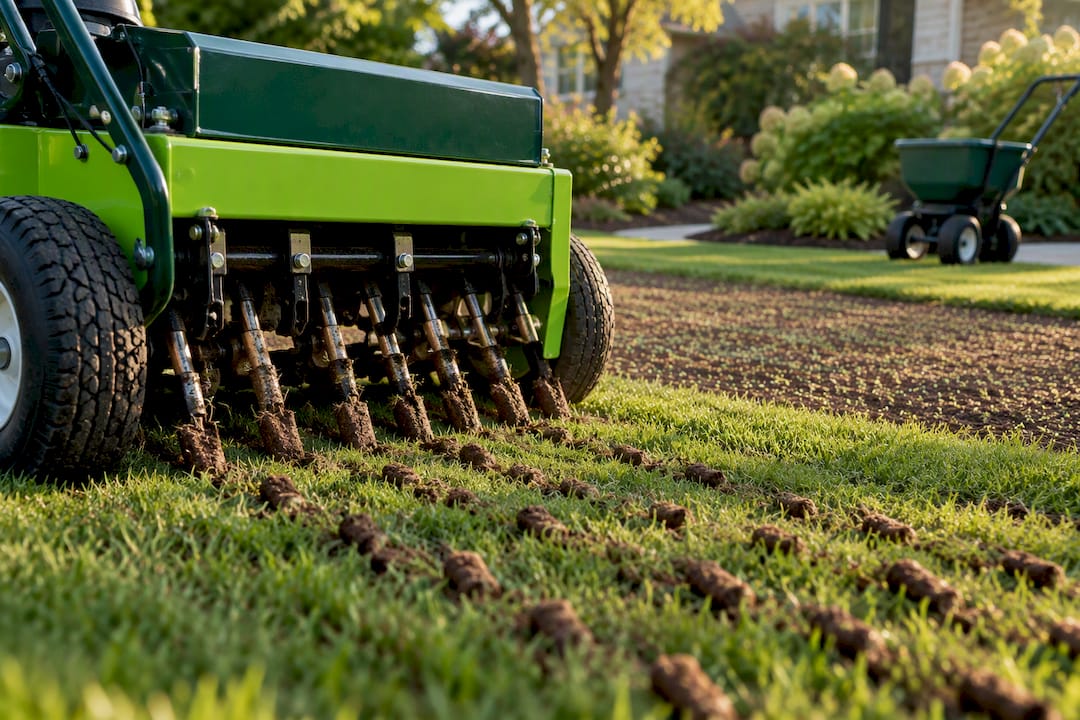
- Core aerate first. Pull plugs about a half inch in diameter, 3 to 4 inches deep, spaced 3 to 4 inches apart if you’re renting a machine. This step matters more than most homeowners realize. Aeration before fertilizing and seeding opens channels so seed and nutrients actually reach the root zone instead of sitting on compacted soil. Rent an aerator for a small yard; for anything over a third of an acre, or a yard with heavy clay, hiring it out usually saves you a weekend and a sore back.
- Overseed cool-season lawns. Tall fescue at 4 to 6 lbs of pure live seed per 1,000 square feet for routine maintenance, or 6 to 8 lbs per 1,000 square feet if you’re renovating a thin or patchy lawn. Do this within days of aerating while the holes are still open.
- Fertilize on schedule. Apply your first 1 lb N/1,000 sq ft in mid-September, then repeat in mid-October. Split applications beat one big dose every time.
- Water for the stage you’re in. New seed needs frequent light watering; established turf needs deeper, less frequent soaks. More on this below.
- Manage leaves and adjust mowing as temperatures drop, tapering both as the lawn heads into dormancy.
Pro Tip: Fill your spreader on the driveway or sidewalk, not on the grass. A spill on turf will burn a yellow scar that outlasts the whole fall season.
Skipping the aeration step is the shortcut that costs homeowners the most. Seed thrown onto compacted, thatchy soil germinates unevenly, if at all, and fertilizer applied to the same surface runs off in the next hard rain instead of feeding roots. If you’d rather hand off the checklist than run it yourself, Lawn & Landscape Maintenance from Precision Outdoor Solutions covers this exact sequence for St. Charles County properties.
Cool-Season vs. Warm-Season: Getting the Timing Right
Missouri sits in the transition zone, which means the state grows both cool-season and warm-season turf, and each type wants the opposite fall treatment. Confusing the two schedules is where a lot of DIY fall plans go wrong.
Cool-season lawns (tall fescue, Kentucky bluegrass):
- September is prime seeding season. Get seed down early enough to allow 4 to 6 weeks of growth before the first killing frost.
- Fertilize mid-September and again mid-October at 1 lb N/1,000 sq ft each time.
- A light November application can help if your soil test and lawn condition call for it.
- This is also the season for the bulk of your annual root-building work. Fall growth sets up next summer’s heat tolerance.
Warm-season lawns (zoysia, bermuda, buffalograss):
- Do not seed in fall. Warm-season grasses are heading into dormancy, and new seed simply won’t establish before cold weather arrives.
- Finish nitrogen fertilizer by late August or early September at the latest. Feeding warm-season turf too late pushes tender new growth right before frost, which increases winter injury risk.
- In southern Missouri, where warm-season lawns are more common, apply any winterizer product earlier than you would for fescue up north.
Mixed lawns and renovation calls: If you’ve got a lawn that’s more weed than turf, or thin fescue struggling under shade that’s opened up after a tree came down, September is your renovation window. Anything less than 40% healthy turf usually calls for full renovation (aerate, seed at the higher 6 to 8 lb rate, and skip mowing until the new grass is established) rather than a simple overseed.
What to Feed Your Lawn This Fall (and How Much)
The math here is straightforward once you know the target. MU Extension’s recommended approach is 1 lb of nitrogen per 1,000 square feet in mid-September, followed by another 1 lb N/1,000 sq ft in mid-October, bringing cool-season lawns to a total annual nitrogen load of roughly 2.5 to 3.0 lbs per 1,000 square feet across the year.
Why fall, not spring? Turf specialists have a name for heavy spring feeding: they call it “fool’s gold.” It pushes fast top growth at the expense of roots and leaves the lawn more vulnerable to summer disease. Shifting the bulk of your nitrogen budget to fall builds the deep root system that actually gets a lawn through a Missouri August.
Some homeowners prefer a three-application split (mid-September, mid-October, and a smaller November dose) to spread out the same 2.5 to 3.0 lb total. Either approach works; consistency matters more than which exact split you choose.
A few product rules to keep in mind:
- Look for a fertilizer with a 3-1-2 nitrogen-phosphorus-potassium ratio (something like a 15-5-10 blend), which matches what most Missouri lawns actually need.
- Choose a product with 30 to 70% slow-release nitrogen. Slow-release feeds the lawn steadily instead of dumping nitrogen all at once, which cuts both burn risk and runoff.
- Skip phosphorus unless a soil test tells you the lawn needs it. Missouri soils are frequently already sufficient, and excess phosphorus is a known contributor to runoff into local waterways.
- Calibrate your spreader before you start, and always fill it on a hard surface rather than the lawn itself, so a spill doesn’t leave a scorched patch.
Aerating and Overseeding for Real Results
Aeration and overseeding work as a pair, not two separate chores. Pulling plugs before you spread seed gives every seed a channel of loosened soil to root into, rather than a hard crust to bounce off of.
- Aerate first, ideally when soil is slightly moist, so the machine pulls clean plugs instead of just poking holes. Skip aerating bone-dry, compacted clay; water the day before if you have to.
- Seed immediately after, while the holes are still open. For tall fescue, use 4 to 6 lbs of pure live seed per 1,000 square feet for routine overseeding, or 6 to 8 lbs per 1,000 square feet for full renovation of a thin or damaged lawn. Kentucky bluegrass needs a lighter touch and more patience.
- Expect germination in 7 to 10 days for tall fescue, closer to two weeks for Kentucky bluegrass. Don’t panic if a section looks bare after five days; give it the full window.
- Water lightly and often for the first one to two weeks to keep the seedbed consistently moist, not soaked, since letting the surface dry out even once can kill germinating seed. Once the new grass reaches about an inch tall, taper toward deeper, less frequent watering to push roots down instead of keeping them shallow.
- Lay a light straw mulch over new seed if you’re expecting heavy fall rain, which helps hold seed in place and deters birds from picking it off before it sprouts.
Pro Tip: Check your spreader’s calibration before overseeding, not after. An uncalibrated spreader can put down double the intended seed rate in some spots and half in others, and you won’t notice the unevenness until three weeks later when the lawn grows in blotchy.
Mowing and Watering While Roots Take Hold
New seed and established turf want different watering routines, and getting them backward is a fast way to waste a fall’s worth of work.
For established lawns, keep mowing tall fescue at 3.5 to 4 inches through fall. Never remove more than one-third of the blade length in a single cut. As growth slows with cooler temperatures, you’ll mow less often, but don’t stop mowing until the grass genuinely stops growing.
For new seed, the routine looks different:
- Water lightly two to three times a day for the first week or two to keep the seedbed dark and consistently moist. This is the single most common point where new seed fails: one dry afternoon can undo two weeks of germination progress.
- Once seedlings reach mowing height, shift gradually to deeper, less frequent watering. This trains roots to grow down rather than staying shallow near the surface.
- If you’re on an automatic irrigation system, adjust the schedule manually during establishment. Most default settings water too infrequently for germinating seed and too frequently for a lawn that’s already rooted.
- As nighttime temperatures drop into the 40s, cut back watering frequency across the whole yard. Established turf needs far less water once it’s not fighting summer heat.
Soil Testing: The Step Most Homeowners Skip
Fall is the ideal time to test soil, both because lab turnaround is faster than in spring’s rush and because results arrive in time to guide your fertilizer and lime decisions before winter. MU Extension offers soil testing through county offices, including St. Louis County, and the process is inexpensive relative to the fertilizer dollars it can save.
- Target a soil pH between 6.4 and 6.8, with 6.0 to 7.0 considered an acceptable range for most Missouri turf.
- If your test comes back below 6.0, lime is likely worth applying; follow the rate your lab report recommends rather than guessing.
- Use your results to decide on phosphorus. If levels are already adequate, skip phosphorus fertilizers entirely and choose a nitrogen-heavy blend instead.
- Only apply a winterizer product if your soil test or lawn condition genuinely calls for extra potassium going into cold weather. It’s not an automatic step for every yard.
Pests, Disease, and Getting Ready for Winter
Fall fertilization timing does more than build roots. Feeding on the MU Extension schedule, rather than dumping nitrogen on the lawn in late spring, meaningfully lowers the odds of foliar diseases that thrive on soft, fast summer growth.
- Check for white grubs in late summer through early fall by cutting a small square of turf and counting larvae. More than 8 to 10 grubs per square foot in a section is generally the threshold where treatment makes sense.
- Keep up with leaf removal. A thin layer breaks down fine, but a thick, wet mat smothers grass blades and blocks light, leaving dead patches by spring. Rake or mulch-mow leaves weekly once they start dropping in volume.
- Hold off on winterizer products until you know your soil actually needs the extra potassium boost; not every lawn requires one, and applying it reflexively wastes money without a clear benefit.
A Local Look at What Actually Changes the Plan
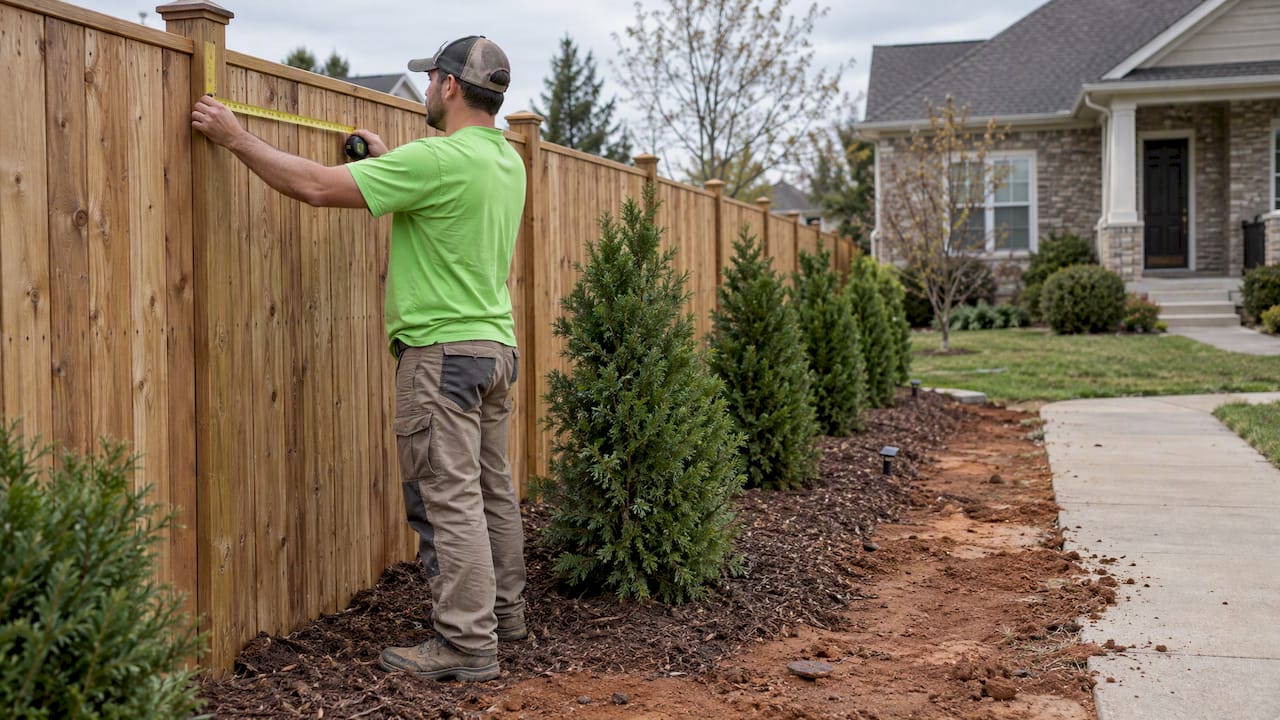
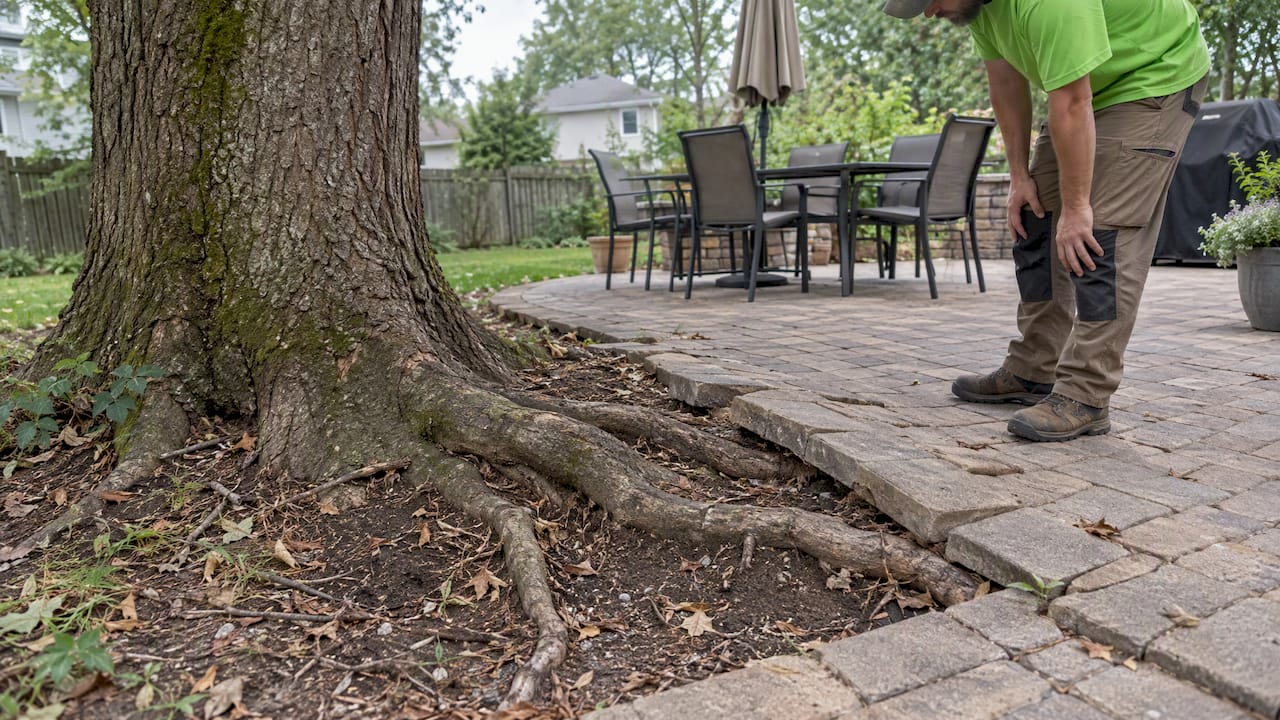
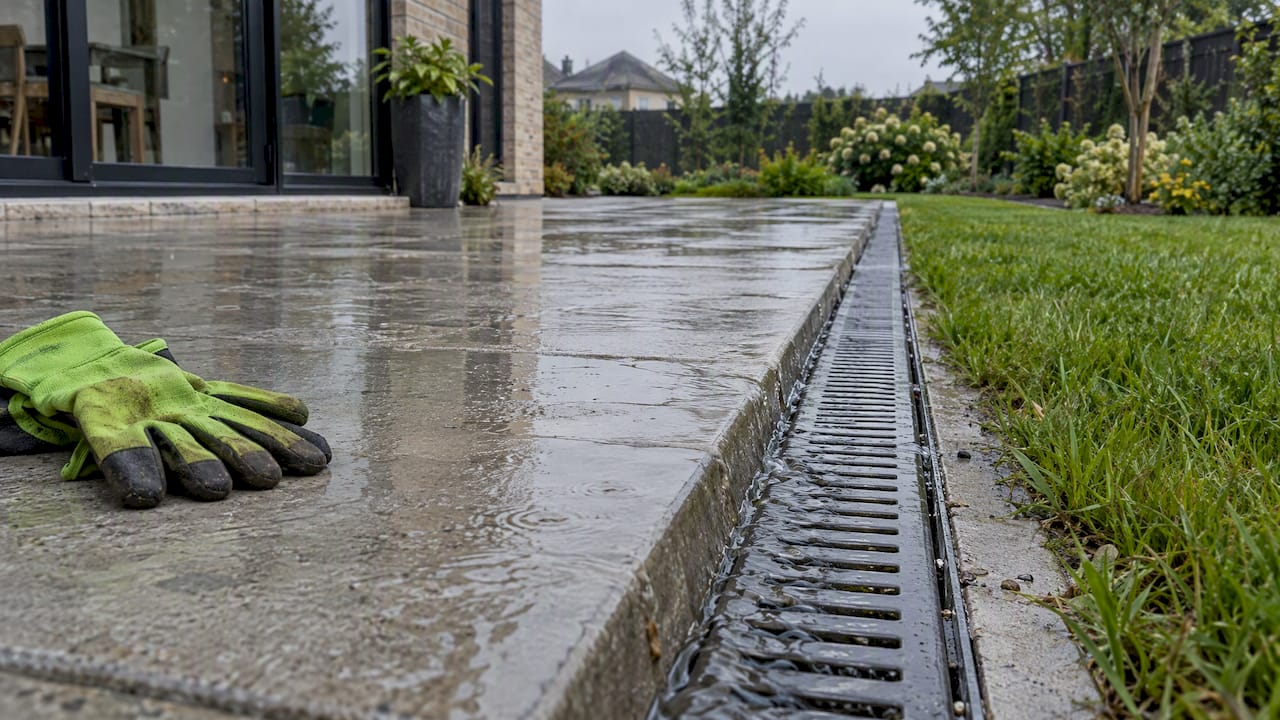
Every fall lawn plan on paper assumes flat ground, even drainage, and uniform soil. Real St. Charles County yards rarely match that assumption. A quick compaction probe often reveals clay that needs a second aeration pass, and an irrigation coverage check frequently turns up dry corners that a sprinkler head has been missing all summer. Drainage review matters just as much: overseeding a spot that holds water after every rain just wastes seed.
Renting an aerator makes sense for a small, flat, easy-access yard. Hiring a professional makes more sense once you’re dealing with steep grades, extensive thin areas that need real spreader calibration, or standing water that a homeowner-grade drainage fix won’t solve. If drainage is the underlying issue, Yard Drainage Solutions in Wentzville, MO addresses the root problem before seed ever goes down.
Pro Tip: If water pools in the same spot every fall, fixing that drainage issue before you seed will save you from reseeding the exact same patch next September.
Why September Deserves More Credit Than It Gets
Most fall lawn advice treats September, October, and November as roughly interchangeable, as if any weekend in autumn will do. That’s the part of conventional wisdom worth pushing back on. September isn’t just a good time to work on your lawn; it’s the month where the math actually lines up, because seed needs 4 to 6 weeks of growth before frost, and fertilizer needs to hit the soil while roots are still actively growing.
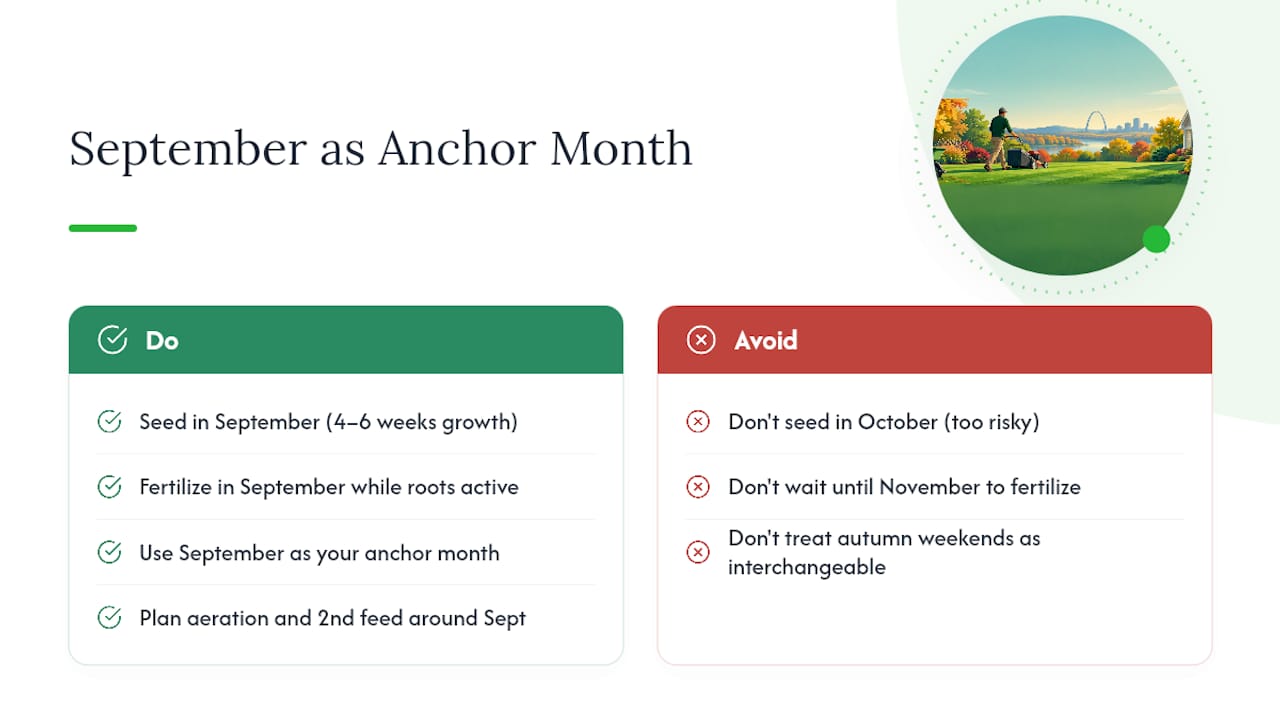
Wait until October to seed, and you’re gambling against the calendar. Wait until November to fertilize for the first time, and you’ve skipped the window where nitrogen does the most good. What the research consistently supports is treating September as the “go” month, not just another autumn weekend, and building everything else (aeration, the second fertilizer round, soil testing) around that anchor point.
If you take one thing from twenty five years of watching Missouri lawns through the fall, it’s this: the homeowners who get September right rarely need to scramble in October.
— Precision Outdoor Solutions
How Precision Outdoor Solutions Handles Fall Lawn Work for You
Hiring a local landscaping company can be a reliable alternative to managing spreader settings and seed rates yourself, providing experienced crews familiar with proper aeration, seeding, and fertilization sequences.

A consultation starts with a walk of your property to check compaction, drainage, and thin or bare areas, the same checks outlined above, before recommending a plan specific to your lawn rather than a one-size-fits-all package. Our Lawn & Landscape Maintenance service covers fall aeration, overseeding, and fertilization for Wentzville and St. Charles County properties, and if standing water is part of the problem, we handle that through our drainage solutions work as well. If you’re weighing whether to convert a thin, hard-to-mow section into a low-maintenance planting bed instead of reseeding it every year, our Landscape Design team can walk through that option too. Reach out through our contact page to get a fall plan scheduled while September’s window is still open.
Sources
- Cool-Season Grasses: Lawn Maintenance Calendar
- Fall maintenance for a healthy lawn (Integrated Pest Management, University of Missouri)
FAQ
When should you apply fall fertilizer in Missouri?
Apply the first round in mid-September at about 1 lb of nitrogen per 1,000 square feet, then a second application in mid-October at the same rate. This timing builds roots instead of pushing top growth that fades before winter.
What should you treat your lawn with in the fall?
Cool-season lawns need a nitrogen-focused fertilizer (a 3-1-2 ratio works well), core aeration, and overseeding in September if the turf is thin. Skip phosphorus unless a soil test specifically calls for it, and hold off on grub or disease treatments unless you’ve actually spotted a problem during inspection.
What lawn care should you do in October?
October is for your second fertilizer application at 1 lb N/1,000 sq ft, continued mowing at 3.5 to 4 inches for tall fescue, and steady leaf removal so mats don’t smother the turf. It’s also a good window to review soil test results and decide whether a winterizer makes sense for your yard.
Is October too late to fertilize a lawn?
No. A mid-October application is actually part of the recommended two-round fall schedule, not a late add-on. What’s too late is starting your entire fertility program in October with no September feeding beforehand, since that skips the early root-building window Missouri lawns depend on.
Can you still overseed a Missouri lawn in October?
It’s risky. Seed needs roughly 4 to 6 weeks of growth before the first killing frost, and by October that window is closing fast for most of Missouri. September remains the reliable seeding month; if you miss it, wait for the following spring or early fall rather than forcing a late-season seeding.
Recommended
- Your Spring Yard Cleanup Checklist For Missouri Homeowners
- Native Plants Missouri: Top Picks For Homeowners
- Deer-Resistant Plants For Missouri Yards: Best Picks & Tactics
- Best Native Shade Plants For Missouri Yards
This article was prepared with AI assistance for general information. For recommendations specific to your property, contact Precision Outdoor Solutions. Call or text us at (636) 358-8644.