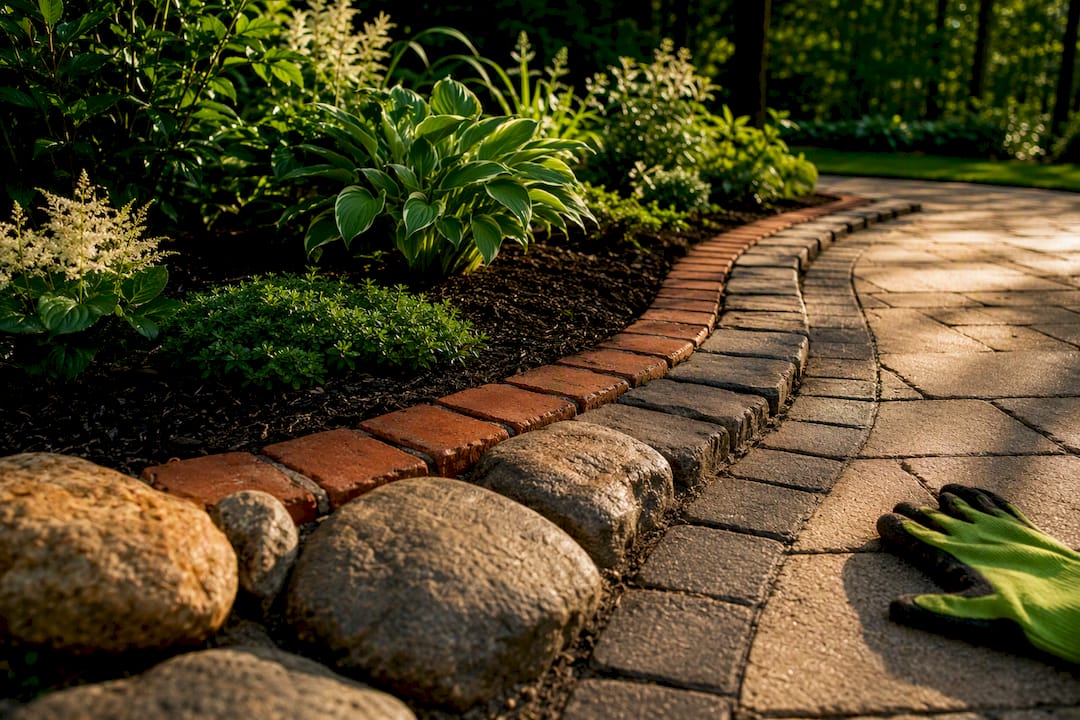
The best approach to a shade garden in Missouri is matching native species to your specific shade depth and soil moisture before you buy a single plant. Get that pairing right and you’ll spend far less time fighting your site.
Top picks by use case:
- Deep/full shade: Wild ginger (Asarum canadense), Christmas fern (Polystichum acrostichoides)
- Partial shade: Wild blue phlox (Phlox divaricata), crested iris (Iris cristata), wild columbine (Aquilegia canadensis)
- Dry shade: Pennsylvania sedge (Carex pensylvanica), native coral bells (Heuchera americana)
Before you shop, do three quick things:
- Run a light test: observe your site at 10 AM, noon, and 3 PM on a clear day and count hours of direct sun
- Squeeze a handful of moist soil — if it ribbons between your fingers, you have clay; if it crumbles, you have loam or sandy loam
- Check the Missouri Department of Conservation’s native shade plant list to confirm species availability in your county
Key Takeaways
Native Missouri shade plants succeed when you match species to shade depth and soil moisture before planting, then commit to consistent establishment care through the first two seasons.
| Point | Details |
|---|---|
| Match plants to shade depth first | Full shade needs wild ginger or Christmas fern; partial shade opens up columbine, phlox, and crested iris. |
| Dry shade is a soil problem, not just a light problem | Pennsylvania sedge and coral bells succeed in dry shade when drainage and soil type are right. |
| Layer plant types for season-long interest | Combine ephemerals, mid-height perennials, sedges, and shrubs to maintain structure from March through December. |
| Establishment care is non-negotiable | Water consistently for the first 1–2 seasons; mark dormant ephemerals so you don’t pull them in summer. |
| Precision outdoor Solutions serves St. Charles County | Local landscape design and installation with site assessment, drainage evaluation, and native plant sourcing available. |
Table of Contents
- What are the best shade plants for Missouri yards?
- How do you choose the right shade plants for your Missouri site?
- How do you plant and care for a Missouri shade garden?
- Three plant combination recipes for Missouri shady conditions
- Where can you source native Missouri shade plants?
- When is it worth hiring a landscape professional for a shade garden?
- Precision outdoor Solutions can design and install your shade garden
- Sources
What are the best shade plants for Missouri yards?
Missouri’s native woodland flora is genuinely one of the most practical resources a home gardener has. These plants evolved under the oak-hickory and bottomland forest canopies that define the state’s natural landscape, so they already know how to handle St. Charles County clay, summer drought, and late spring frosts. The ten species below cover the full range of shady conditions you’re likely to encounter.
Groundcovers
Wild ginger (Asarum canadense)
Best for deep to partial shade. This rhizomatous groundcover forms a dense, weed-suppressing mat in medium to moist soils, reaching a modest height and spreading steadily once established. Small brownish-red flowers hide under the foliage in spring — not showy, but ecologically useful. Deer tend to leave it alone in the St. Louis metro area. Amend planting soil with compost and water consistently through the first season; it’s slow to establish but reliably drought-tolerant afterward.

Crested iris (Iris cristata)
Best for partial shade with well-drained soil. At just 5–10 inches tall with a 12–16 inch spread, it’s one of the most elegant low groundcovers you can plant under a deciduous canopy. Lavender-blue flowers appear in April and May. It spreads by rhizomes into loose colonies and tolerates dry periods once settled, though it performs best where it gets some morning sun.
Native coral bells (Heuchera americana)
Best for partial to dry shade. Growing 1–2 feet tall, this species offers year-round foliage interest with scalloped, bronze-tinged leaves and airy white flower spikes in late spring. It handles the dry, root-competitive soil under mature trees better than most perennials, making it a reliable choice for dry-shade planting under oaks and maples. Pollinators, especially hummingbirds, visit the flowers regularly.
Perennials and ephemerals
Wild columbine (Aquilegia canadensis)
Best for partial shade. This is one of the most versatile Missouri natives you can grow, blooming April through July with red-and-yellow nodding flowers that hummingbirds actively seek out. It reaches about 24 inches tall and self-seeds freely in disturbed soil, so one plant becomes a colony within a few years. It tolerates rocky, lean soil and handles the dappled shade under open canopies well.
Celandine poppy (Stylophorum diphyllum)
Best for moist partial to full shade. Growing to roughly 16 inches tall in humus-rich soil, it produces bright yellow flowers from March through May — one of the earliest bold-color natives to bloom in a Missouri shade garden. It self-seeds reliably and naturalizes under trees where the soil stays consistently moist. Pairs well with wild ginger as a layered groundcover-plus-perennial combination.
Golden ragwort (Packera aurea)
Best for moist partial shade. Height ranges from 0.5 to 2.5 feet depending on moisture. It blooms in April and May with clusters of bright yellow daisy-like flowers, then forms a semi-evergreen basal mat of heart-shaped leaves that suppresses weeds through summer. Goldfinches and native bees both use it. It spreads aggressively in moist soils, so give it room or use it as a large-scale groundcover on slopes.
Wild blue phlox (Phlox divaricata)
Best for partial shade with consistent moisture. Blooming April through May at about 10–15 inches tall, this is one of the most fragrant Missouri natives. The pale blue to lavender flowers attract early-season butterflies and sphinx moths. It spreads slowly by stolons and works well as a filler between larger perennials. It goes semi-dormant in summer heat, so interplant it with later-season species to fill the gap.
Sedges and ferns
Pennsylvania sedge (Carex pensylvanica)
Best for dry to medium shade. This fine-textured, grass-like sedge stays low (6–10 inches) and forms a soft, lawn-like carpet under trees where turf grass fails. It’s one of the few plants that genuinely thrives in the lean, dry soil under mature oaks, and the Missouri Botanical Garden’s dry-shade guide specifically highlights it for sites where drainage and soil type are the limiting factors. Low maintenance once established; mow once in late winter if you want a tidy look.

Christmas fern (Polystichum acrostichoides)
Best for part to full shade, dry to medium moisture. At 1–2 feet tall, it’s one of the few evergreen plants that holds its structure through a Missouri winter, providing visual interest when everything else has died back. It tolerates considerable drought and competes well with tree roots. Use it as a structural anchor in deep-shade beds where flowering plants struggle.
Shrubs
Oakleaf hydrangea (Hydrangea quercifolia)
Best for partial shade with moderate moisture. This is the most architecturally impressive native shrub for a Missouri shade garden, growing 4–6 feet tall and wide with large white flower panicles in June and July, exfoliating bark for winter interest, and burgundy fall foliage. It handles clay soils reasonably well once established. Birds use the dense branching for cover, and the dried flower heads persist through winter.
Spicebush (Lindera benzoin)
Best for partial to full shade in moist to medium soils. Spicebush grows 6–12 feet tall and is one of the few native shrubs that genuinely thrives in deep shade. Early yellow flowers in March are among the first native blooms of the year. The bright red berries in fall are a critical food source for migrating birds, including wood thrush and veery. It’s also the host plant for spicebush swallowtail butterfly larvae.
How do you choose the right shade plants for your Missouri site?
Start with shade depth and soil moisture as your two primary filters. Every other decision — bloom time, height, wildlife value — comes after you’ve confirmed a plant can survive your specific conditions.
- Run a light test. Observe your planting area at 10 AM, noon, and 3 PM on a clear day. Less than 2 hours of direct sun is full or deep shade. Two to 4 hours is partial shade. More than 4 hours is part sun, and most woodland natives will struggle there in summer.
- Check your soil texture and drainage. Dig a hole 12 inches deep and fill it with water. If it drains in under an hour, you have good drainage. If water sits for several hours, you have compaction or clay that needs amendment before planting moisture-sensitive species.
- Map your microclimates. The north side of a house stays cooler and shadier than the east side. Under a shallow-rooted maple is drier and more root-competitive than under a deep-rooted oak. These differences matter more than the general shade level.
- Note deer pressure. In St. Charles County, deer browsing is a real factor. Wild ginger, Christmas fern, and Pennsylvania sedge are reliably deer-resistant. Wild columbine and phlox are more vulnerable, especially in the first season.
- Decide on maintenance tolerance. Ephemerals like celandine poppy and golden ragwort self-seed and spread; if you want a tidy bed, you’ll need to manage them. Sedges and ferns are lower-maintenance once established.
- Layer by function. The Missouri Botanical Garden recommends designing shade gardens in layers: shrubs at the back, mid-height perennials in the middle, and groundcovers or sedges at the front. This mimics woodland structure and gives you interest at multiple heights.
Pro Tip: Interplant spring ephemerals like celandine poppy or wild blue phlox with later-season perennials such as coral bells or Pennsylvania sedge. Missouri woodland ephemerals bloom while the tree canopy is still open, then go dormant by midsummer. Without a companion plant to fill the gap, you’ll be left with bare patches — and you may accidentally pull the dormant plants thinking they’ve died.
How do you plant and care for a Missouri shade garden?
Plant in the right window, prepare shallow organic-rich beds, and water consistently through the first two seasons. That combination gives native woodland plants the best chance of establishing before summer stress hits.
Best planting windows for Missouri:
- Spring (late March through early May): Ideal for most perennials and groundcovers. Soil is workable, temperatures are mild, and spring rains reduce irrigation demand. Plant before the canopy closes fully so new plants get some direct light during establishment.
- Fall (mid-September through October): Excellent for shrubs like spicebush and oakleaf hydrangea, and for sedges and ferns. Cooler temperatures reduce transplant stress, and roots establish through winter before summer heat arrives.
Soil preparation steps:
- Remove existing turf or weeds by smothering with cardboard and 3–4 inches of compost (no tilling needed under mature trees — tilling damages surface roots).
- Add 2–3 inches of leaf mold or aged compost to the top of the bed. Most Missouri woodland natives prefer slightly acidic, humus-rich soil that mimics the forest floor.
- Avoid adding fertilizer at planting. High-nitrogen fertilizer pushes leafy growth at the expense of root development, which is the opposite of what you need in year one.
Establishment care checklist:
- Water new plantings deeply (1 inch per week) for the first 8–10 weeks after planting, then taper off as plants show new growth
- Mulch with 2–3 inches of shredded hardwood or leaf litter, keeping mulch away from plant crowns
- Pull weeds by hand for the first two seasons; avoid hoeing near shallow-rooted species like wild ginger
- Do not cut back dormant ephemerals in summer — mark their locations with a small stake so you don’t disturb the roots
- Check for slug damage on hostas and phlox in wet springs; hand-pick or use iron phosphate bait if needed
Years 1–3 maintenance watch list:
- Shade competition: As shrubs fill in, groundcovers beneath them may thin. Divide and replant every 3–4 years to maintain density.
- Drought stress: Even drought-tolerant natives need supplemental water in their first summer during extended dry spells (more than 2 weeks without rain).
- Mistaken removal of ephemerals: The most common mistake in new shade gardens. Label your spring ephemerals at planting so you don’t pull them when they go dormant in July.
The Missouri Department of Conservation notes that native gardens need active care during establishment — the “set-and-forget” assumption is the single biggest reason new plantings fail in the first season.
Three plant combination recipes for Missouri shady conditions
These three combinations are practical starting points. Each uses species from the list above and is sized for a typical residential bed of 100–200 square feet.
Deep-shade woodland carpet (under mature oaks or north-facing beds)
This combination works where you get fewer than 2 hours of direct sun and the soil is dry to medium moisture.
- Spicebush (back, 6–12 ft): provides height, early spring flowers, and fall berries for birds
- Christmas fern (mid-layer, 1–2 ft): evergreen structure through winter; plant in clusters of 3–5
- Wild ginger (front, 6–8 in): dense mat that suppresses weeds and tolerates root competition
- Pennsylvania sedge (edges and transitions, 6–10 in): fills gaps between fern clumps; handles dry soil well
Place spicebush at the back or center if the bed is viewed from multiple sides. Ferns go in the middle zone. Wild ginger and sedge fill the front and edges. This combination provides year-round structure with minimal maintenance after year two.
Moist partial-shade pollinator mix (east-facing beds or near downspouts)
Best where soil stays consistently moist and the site gets 2–4 hours of morning sun.
- Oakleaf hydrangea (back, 4–6 ft): bold summer flowers, fall color, winter bark interest
- Golden ragwort (mid-layer, 0.5–2.5 ft): aggressive spreader in moist soil; use it intentionally as a weed-suppressing mass
- Wild columbine (mid-layer, 24 in): self-seeds into gaps; hummingbird magnet from April through July
- Wild blue phlox (front, 10–15 in): fragrant spring bloom; goes semi-dormant in summer
- Native coral bells (front edges, 1–2 ft): foliage interest year-round; bridges the gap when phlox retreats
This combination peaks in April and May, with a second wave of interest from the hydrangea in June and July. The coral bells and ragwort keep the bed looking full through summer.
Dry-shade low-maintenance bed (under shallow-rooted maples or along south-facing walls)
The hardest condition to plant. Success depends on soil drainage and lean, gritty soil rather than shade level alone, as the Missouri Botanical Garden’s PlantFinder data confirms.
- Crested iris (front, 5–10 in): spreads slowly into a colony; blooms April–May with minimal care
- Native coral bells (mid-layer, 1–2 ft): the most reliable dry-shade perennial in this list
- Pennsylvania sedge (mass planting, 6–10 in): the backbone of this combination; plant densely (6 inches apart) to crowd out weeds
- Christmas fern (accent, 1–2 ft): adds vertical structure and winter interest
Skip the shrub layer in true dry shade under maples — most shrubs struggle there. Keep mulch thin (1–2 inches) in dry-shade beds to avoid moisture retention that can cause crown rot in lean-soil species.
Where can you source native Missouri shade plants?
The best sources are native-plant nurseries, botanic-garden plant sales, and Missouri Native Plant Society events. Buying locally grown stock matters: plants propagated in the St. Louis metro area are already acclimated to local soils and climate, which gives them a real advantage over plants shipped from out of state.
Where to look:
- Missouri Native Plant Society plant sales: Held in spring and fall in the St. Louis area; typically the best selection of true Missouri-ecotype natives at reasonable prices. Check their website for current dates.
- Missouri Botanical Garden plant sales: Annual sales feature vetted native species with accurate labeling. The Garden’s native plants for shade resource is also a reliable reference for confirming species suitability.
- Local native-plant nurseries: Sugar Creek Gardens in the St. Louis metro area carries Missouri-specific natives including wild ginger and other woodland species with local performance notes.
- Reputable local nurseries: Ask specifically for Missouri-ecotype stock. Many general nurseries carry cultivars of native species (like Heuchera hybrids) that look similar but behave differently than straight species.
Bareroot vs. potted stock: Bareroot plants (typically available in early spring or fall) are less expensive and establish quickly when planted at the right time. Potted stock gives you more flexibility on timing but costs more. For groundcovers like wild ginger and Pennsylvania sedge, buying bareroot in quantity is the most practical approach for covering a large area.
If plants arrive before you’re ready to plant: Heel them into a shaded spot in the ground or keep potted plants in a sheltered location and water daily. Never let bareroot stock dry out.
Planting calendar at a glance:
- March through early May: Plant perennials, groundcovers, and ephemerals
- Mid-September through October: Plant shrubs, ferns, and sedges
- November through February: Order bareroot stock for spring delivery; plan and amend beds
When is it worth hiring a landscape professional for a shade garden?
DIY shade gardening works well for small beds with straightforward conditions. Hire a professional when the site has drainage problems, significant slope, or when you want a multi-layered design that needs to look right from day one.
Practical triggers to call a pro:
- Standing water in the planting area after rain (compaction or drainage issues that need grading or a drainage solution before planting)
- A slope that needs a retaining wall or terracing to create stable planting beds
- A large area (over 500 square feet) where phased installation and a planting plan will save money long-term
- Persistent deer or erosion pressure that requires a structural solution, not just plant selection
- You want a design that layers shrubs, perennials, and groundcovers cohesively rather than a collection of individual plants
Questions to ask before hiring:
- Do you have experience with native Missouri species, or primarily ornamental plantings?
- Can you provide a phased planting plan so I can spread the cost over two or three seasons?
- How do you handle soil preparation under mature trees without damaging surface roots?
- What’s included in a site assessment, and do you provide a written planting recommendation?
- Do you source locally grown native stock, or do you use wholesale nursery material?
Pro Tip: Ask for a phased installation plan. A professional who designs the full bed in year one but plants only the shrubs and structural elements can return in year two to add perennials and groundcovers. This approach spreads cost, lets you see how the site performs through one full season, and reduces the risk of replacing plants that don’t establish well in your specific microclimate.
A local perspective on working with Missouri natives
Working with homeowners in Wentzville and St. Charles County, the most common mistake I see is treating native plants like conventional nursery stock: planting them in amended, fertilized beds and then watering on a regular schedule regardless of what the plant actually needs. Missouri woodland natives want lean, organic soil and consistent moisture during establishment, then they largely want to be left alone. The second most common mistake is pulling spring ephemerals in July when they go dormant. Mark them, leave them, and they’ll be back next March.
The reassuring truth about native shade plants is that once they’re past year two, they genuinely require less intervention than most ornamental plantings. Wild ginger spreads on its own. Pennsylvania sedge fills gaps without reseeding. Spicebush handles drought that would kill a conventional shrub. The work is front-loaded: good site prep, consistent first-season watering, and patience. After that, the plants do most of the work.
Precision outdoor Solutions can design and install your shade garden
Precision outdoor Solutions offers landscape design and installation tailored specifically to Wentzville and St. Charles County properties, including native shade garden planning for the exact soil types and microclimates common in this area. With over 25 years of local experience, the team knows which species establish reliably in St. Charles County clay and which sites need drainage work before any planting begins.

Here’s what a typical shade garden consultation includes:
- On-site assessment of shade depth, soil type, and drainage conditions
- A written planting plan with species recommendations matched to your specific site
- Drainage evaluation and recommendations if standing water is a concern
- Phased installation options so you can spread the project over one or two seasons
- Plant sourcing from reputable local nurseries with Missouri-ecotype stock
To get started, have a few things ready before your first call: photos of the planting area at different times of day, a rough measurement of the space, and any notes on existing drainage issues or deer pressure. Request your consultation through the full services overview or call directly to schedule a site visit.
Sources
The sources below are the primary references used for species culture details, planting guidance, and local availability in this article.
- Native Plants For Shade | Missouri Department of Conservation
- 10 Best Plants for a Dry Shade Garden with Shrubs | Missouri Botanical Garden
- Asarum canadense – Wild Ginger – Sugar Creek Gardens Sugar Creek Gardens | Plant Nursery for Missouri & Illinois