The fastest path to a private backyard combines a living screen with one or two structural elements, not one or the other. Plant a fast grower like ligustrum or a columnar arborvitae where it blocks the exact sightline you sit in every evening, then back it up with a modular panel, trellis, or tall planters for coverage while the plants fill in. Expect a maintenance trade-off either way. Below is the shortlist to help you pick a starting point.
TL;DR:
- Using a combination of fast-growing plants like ligustrum or arborvitae with structural screens provides quicker privacy while allowing living screens to mature over time.
- Targeted screening at key sightlines is more cost-effective and faster than installing full perimeter hedges or fences, often reducing costs and waiting periods significantly.
- Structural options such as modular panels, pergolas, and lattice can offer immediate privacy and are especially useful for renters or temporary projects, but require permits for height restrictions.
- Plant choices should be layered and spaced properly to avoid disease and allow natural growth; mixing species reduces the risk of total loss from pests or blight.
- Focusing on a single problematic sightline first streamlines planning, avoids unnecessary costs, and supports layered, natural-looking privacy solutions that blend with existing landscaping.
Table of Contents
- Backyard Privacy Landscaping Tactics Ranked By Speed And Effort
- Living Screens: Hedges, Trees, Grasses, And Bamboo
- Fences, Panels, Pergolas, And Other Structural Screens
- Finding Your Sightline Before You Plant Anything
- Weekend Privacy Fixes While Your Plantings Establish
- What Privacy Landscaping Actually Costs, Season By Season
- Three Layouts You Can Copy This Weekend
- Integrating Privacy Into Your Whole Backyard Design
- What 25 Years Of Yard Projects Taught Us About Privacy
- How Precision Outdoor Solutions Builds Privacy That Lasts
- Sources
Backyard Privacy Landscaping Tactics Ranked By Speed And Effort
Not every yard needs the same fix. A narrow side yard calls for something different than a wide-open patio facing a two-story neighbor. Here are seven tactics worth comparing before you buy anything.
- Modular fence panels — Instant privacy, low maintenance, works for rentals or staged installs, but higher upfront cost per linear foot.
- Arborvitae hedge — Long-term, evergreen, low-to-medium maintenance once established, needs 3 to 5 feet of depth to mature properly.
- Columnar trees (like Italian cypress or Sky Pencil holly) — Long-term, narrow footprint, medium maintenance, ideal for tight side yards.
- Clumping bamboo in planters — Short-term to long-term, medium maintenance, contained roots make it safe near property lines.
- Trellis with a fast vine — Short-term for coverage, low-to-medium maintenance, needs a season to fill in but costs little.
- Tall planters and containers — Instant, low-to-medium maintenance, fully portable, great for renters or phased plans.
- Pergola with curtains — Instant overhead and partial-side privacy, low maintenance, doubles as a shade structure for seating areas.
Mix at least one instant option with one long-term living option, and you get coverage now without giving up on a screen that actually improves with age.
Living Screens: Hedges, Trees, Grasses, And Bamboo

Plant-based screens fall into four practical categories for most American yards, and each solves a slightly different problem. Arborvitae, particularly the ‘Green Giant’ or ‘Emerald Green’ varieties, gives you a dense, cold-hardy evergreen wall that holds its shape without heavy pruning. Ligustrum grows faster and tolerates hard shearing, which makes it a solid pick if you want a formal hedge line sooner rather than later. Clumping bamboo, such as Fargesia species, offers a tall, airy screen with contained roots, unlike running bamboo, which can spread aggressively into a neighbor’s yard. Ornamental grasses like Calamagrostis ‘Karl Foerster’ round out the mix with movement and texture at around six feet tall, screening a yard from prying eyes without the bulk of a shrub.
Fast-growing shrubs like ligustrum can add roughly two feet of height per year, while moderate growers such as barberry average closer to one foot annually — a difference that matters if you’re trying to hit eye-level screening before next summer.
- Arborvitae or ligustrum for a solid evergreen backbone along a property line.
- Clumping bamboo in a bordered bed or large planter for height with minimal spread.
- Ornamental grasses in front of or between shrubs for seasonal texture and movement.
- Flowering shrubs or small trees mixed in for color and pollinator support.
Space shrubs at roughly 60 to 80 percent of their mature width so they knit into a dense screen without crowding each other into disease and dieback. A single-species hedge also carries real risk. One pest or blight can wipe out your entire screen in a season, so mixing two or three species along the same line gives you a backup if one struggles.
Fences, Panels, Pergolas, And Other Structural Screens

Living screens take time. When you need privacy now, or you’re dealing with a spot where nothing will grow well, structural options fill the gap immediately. Solid panels block the most light and airflow, which matters in a small yard where a full wall can feel like standing in a box, as designers who favor filtered views over hard barriers often point out. Slatted or louvered panels cut visibility while still letting breeze and dappled light through, and patterned screens (laser-cut metal, decorative lattice) add style without going fully opaque.
A few structural approaches worth knowing:
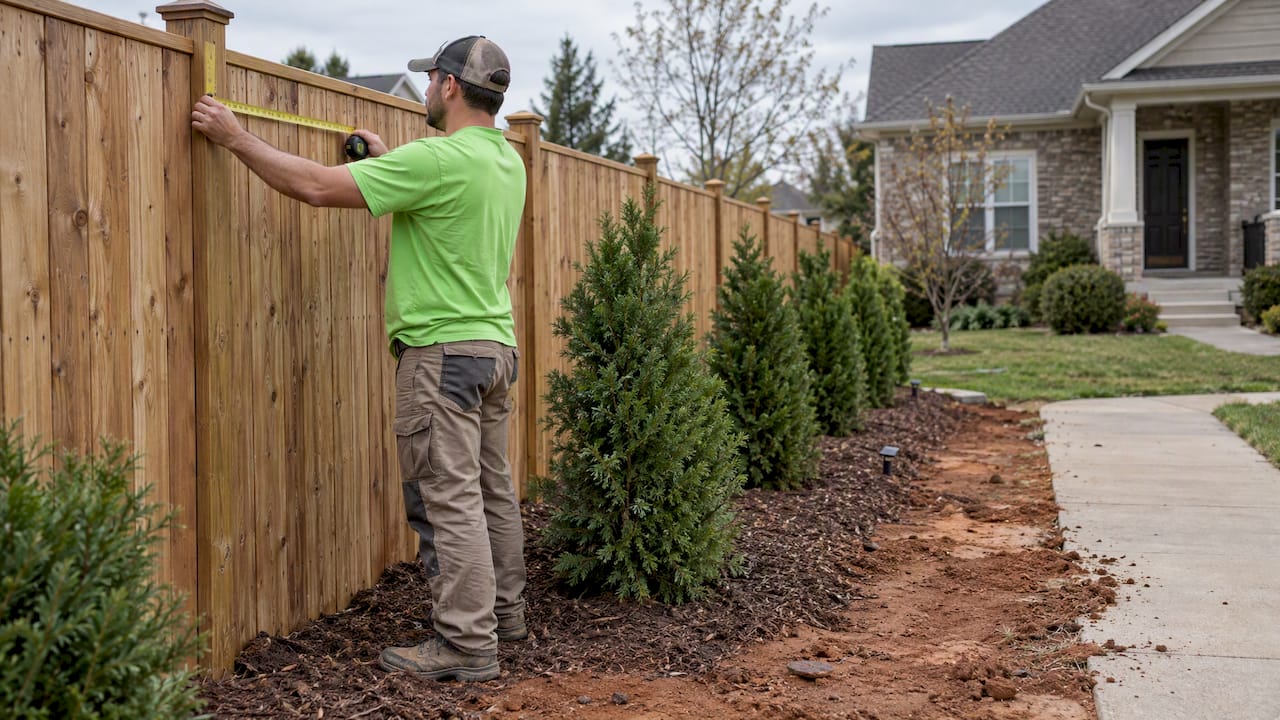
- Lattice toppers added to an existing fence gain height without a full rebuild.
- Pergola curtains turn an overhead structure into a side screen you can open or close.
- Modular prefab screens work well for renters or anyone staging a project over a few seasons.
- Slatted horizontal panels give a modern look while preserving some airflow.
Pro Tip: Before you build anything taller than a standard fence, call your city or HOA. Height limits, setback distances, and material restrictions vary block to block, and a permit issue after installation costs far more than the phone call.
Finding Your Sightline Before You Plant Anything
The single biggest mistake homeowners make is screening the whole property line instead of the specific view that bothers them. A full perimeter hedge takes years and costs more than most budgets allow. A targeted screen placed at the right spot can solve the problem in one planting season.
- Stand where the viewer stands. Walk to your neighbor’s deck, upstairs window, or the sidewalk, and look back at your own yard.
- Sit where you sit. Go to your patio chair, hot tub, or grill station and trace the direct line back to that vantage point.
- Mark the overlap. Where those two lines cross is where height actually needs to go, not along the entire fence line.
- Decide interior vs. boundary planting. Placing a screen a few feet inside your property line, rather than directly on it, often blocks the same sightline with a smaller, cheaper planting.
- Layer back to front. Put tall evergreens or trees at the back, mid-height shrubs in the middle, and grasses or low perennials up front. A three-tier layering approach interrupts the view without turning your yard into a walled-in box.
Weekend Privacy Fixes While Your Plantings Establish
Young plants take a season or more to do real work, so bridge the gap with something you can set up in a weekend.
- Group tall planters in clusters of three or five at varying heights near the problem sightline for instant visual blocking.
- Plant fast annual vines like moonflower or morning glory on a trellis or obelisk for a full season of coverage at low cost.
- Water container plants more often than in-ground beds since pots dry out faster, especially through summer heat.
- Keep everything portable if you’re renting or still finalizing a permanent design, then transition to in-ground plantings once you’re sure of placement.
Combining temporary fixes with young plantings gives you visible privacy in the first season while the permanent screen matures over the next two to five.
What Privacy Landscaping Actually Costs, Season By Season
Matching your expectations to real timelines saves you from ripping out a hedge you got impatient with. Fast growers like ligustrum grow faster than moderate growers like barberry, and structural options provide immediate privacy upon installation.
- DIY planters and trellis vines: roughly $50 to $300 depending on pot size and plant choice.
- Planting 5 to 10 shrubs (arborvitae, ligustrum, or similar): typically several hundred to a couple of thousand dollars depending on size at planting and site prep.
- Installed fence or panel system with labor: generally the highest upfront cost, but it delivers privacy on day one with little ongoing work beyond occasional repairs.
- Maintenance workload: hedges need seasonal shearing once or twice a year; columnar trees need occasional shaping; structural screens mostly need periodic cleaning and hardware checks.
A living screen bought as a small shrub can take two to five full seasons to reach a mature privacy height, which is the trade-off for its lower long-term cost and softer look compared to a fence installed in a single weekend.
Three Layouts You Can Copy This Weekend
- Small yard: A single container grouping paired with a trellis and one focal columnar tree (like a Sky Pencil holly) covers a narrow sightline without eating your whole yard. Check our small backyard landscaping ideas for more compact-space tricks.
- Mid-size yard: Stagger three or four columnar trees along the problem boundary, add a low wall or short fence beneath them, and cap the seating area with a pergola for overhead coverage.
- Patio corner: Build an L-shaped planting bed hugging two sides of the patio, then set tall planters at the open corner for privacy while the bed fills in.
Integrating Privacy Into Your Whole Backyard Design
Privacy landscaping works best when it supports the yard’s overall layout instead of getting bolted on as an afterthought. Before you plant a single shrub, think about how the space actually gets used. A screen placed to block a neighbor’s window might also end up shading your vegetable garden or blocking the path to your grill, so map out your functional zones first: dining, lounging, play space, garden beds.
Height and texture choices should echo the rest of your landscaping, too. If your existing beds lean toward soft, informal plantings, a rigid clipped hedge can look out of place next to them. Ornamental grasses and mixed shrub borders tend to blend more naturally into a relaxed garden style, while columnar evergreens read as more architectural and suit a formal layout. A privacy solution that preserves openness rather than boxing in a space keeps a small backyard from feeling closed off, a principle that applies just as much outdoors as it does to interior rooms.
Color and bloom timing matter beyond function, too. A hedge that flowers in spring, then shifts to solid green screening by summer, gives you both seasonal interest and privacy exactly when you’re spending the most time outside. Pair screening plants with deer-resistant species if wildlife pressure is an issue in your area. Our guide to deer-resistant plants for Missouri yards covers options that hold up under browsing pressure while still doing screening work.
What 25 Years Of Yard Projects Taught Us About Privacy
The biggest misconception we run into is that more screening always means better privacy. It doesn’t. A hedge that runs your entire back fence line costs more, takes longer to mature, and often blocks views you never cared about in the first place. Interrupting the exact sightline that bothers you, then layering plants and structure around that single point, gets you real privacy faster and for less money than a full-perimeter approach.
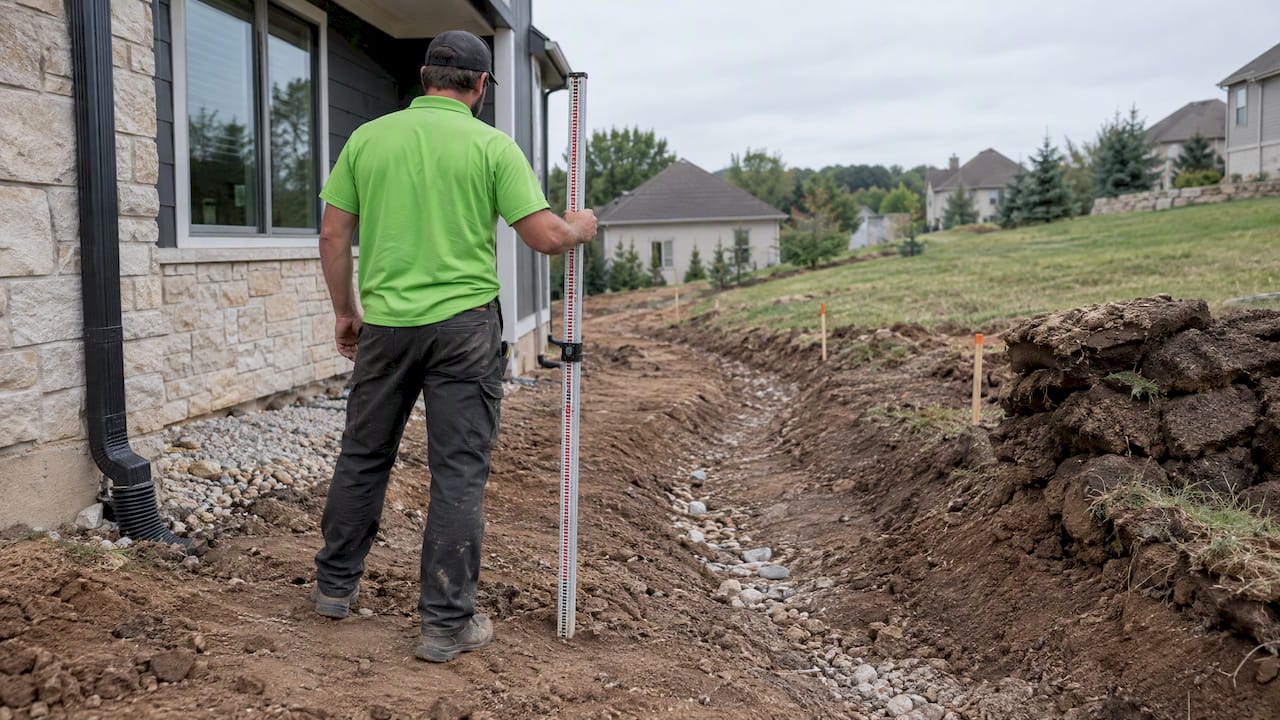
Start by finding that one sightline before you buy a single plant or panel. Everything else follows from there, and if the site has drainage issues, slope, or utility lines in the way, that’s worth a second set of eyes before you dig.

How Precision Outdoor Solutions Builds Privacy That Lasts
If you’ve read this far, you already know the trade-off: living screens look better over time but take seasons to mature, and structural options solve the problem immediately but cost more upfront. Precision Outdoor Solutions builds both, and we design them to work together instead of picking one at the expense of the other.

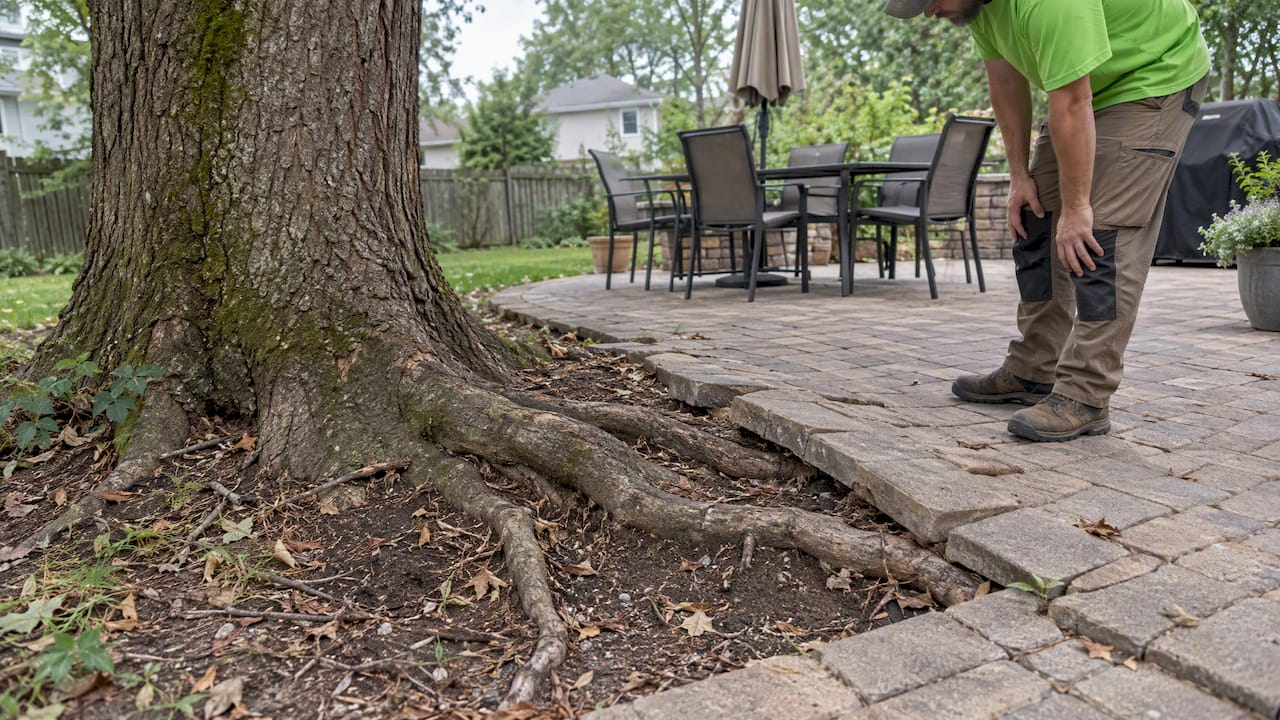
A consultation with our team starts with a site review and a simple sightline sketch, the same method we walked through above, so you’re not guessing where height actually belongs before you spend a dollar. We’ll flag site issues like drainage, root conflicts with existing trees, or fence post depth before they become expensive problems later, and give you a phased estimate that separates what you need now from what can wait a season. Our landscape design services cover the planting side, and our fence installation work handles the structural half, all serving homeowners in Wentzville, MO and St. Charles County. Reach out through our contact page to schedule a site visit and get a real timeline for your yard.
Sources
- HGIC: Barberry
- Good Housekeeping: How to create privacy in a small backyard, according to garden pros
- Privacy landscaping design ideas (Harmony Landscape Design)
- The Spruce: Cheap ways to block neighbors’ view
Recommended
- Small Backyard Landscaping: Weekend Wins And 25+ Years Contractor Tips
- Terraced Yard Ideas That Turn A Slope Into Usable Space
- 15 Family Friendly Backyard Ideas That Actually Work
This article was prepared with AI assistance for general information. For recommendations specific to your property, contact Precision Outdoor Solutions. Call or text us at (636) 358-8644.