Missouri yards face real deer pressure, and the most reliable defense combines aromatic, spiny, or fuzzy-textured plants with at least one physical barrier for anything you truly cannot afford to lose. The Missouri Department of Conservation is direct about it: no plant is completely deer-proof, but the right species choices dramatically cut your losses.
Here are the top picks that hold up well across Missouri landscapes:
- Eastern red cedar (Juniperus virginiana) — native, spiny, and almost never browsed; ideal for screens and windbreaks
- American holly (Ilex opaca) — spiny leaves deter browsing; excellent as a specimen or hedge
- Lavender (Lavandula spp.) — strongly aromatic; reliable in sunny borders
- Catmint (Nepeta x faassenii) — fragrant and low-maintenance; great as a bed edger
- Liriope (Liriope spp.) — tough groundcover that deer rarely touch in established plantings
- Sedum ‘Autumn Joy’ — fleshy, bitter foliage; thrives in Missouri’s clay-prone soils
Three things you can do today: trial one or two new species in pots before committing to a full bed, install temporary wire netting around any new plantings, and start rotating repellent products so deer don’t habituate to a single scent.
Pro Tip: Before buying in bulk, plant two or three specimens of any new species in a spot where deer already browse. Watch for four to six weeks. Local deer populations in St. Charles County can behave differently from statewide lists, so your own yard is the best test. Ask staff at a local Missouri nursery whether they’ve seen that species browsed in your area.
Key Takeaways
Missouri deer-resistant landscaping works best when plant selection, physical barriers, and repellent rotation are combined rather than used in isolation.
| Point | Details |
|---|---|
| No plant is deer-proof | Even reliable species get browsed during droughts, rut season, and late-winter food scarcity. |
| Best Missouri picks | Eastern red cedar, American holly, lavender, catmint, liriope, and butterfly weed hold up well under typical local pressure. |
| 8-foot fence for high-value areas | MU Extension recommends an 8-foot solid barrier as the most reliable protection for gardens you cannot afford to lose. |
| Missouri invasive plant ban | Senate Bill 105 phases out six species by 2027–2029; choose native alternatives like serviceberry, fothergilla, and coral honeysuckle instead. |
| Precision outdoor Solutions | Serves Wentzville and St. Charles County with fence installation, deer-resistant landscape design, and drainage solutions tailored to local conditions. |
Table of Contents
- What are the best deer-resistant trees and shrubs for Missouri?
- Perennials, bulbs, and groundcovers deer usually avoid
- Annuals, herbs, and vines that help protect beds
- Why no plant is completely deer-proof
- How to protect plantings with fencing, repellents, and barriers
- Missouri’s invasive plant sale ban and safe alternatives
- Planting and maintenance practices that reduce browsing
- How to pick deer-resistant plants for your Missouri yard
- What working in Wentzville taught me about deer and landscapes
- Precision outdoor Solutions helps Missouri homeowners protect their landscapes
- Sources
What are the best deer-resistant trees and shrubs for Missouri?
MU Extension’s woody ornamental resistance tables put Eastern red cedar and American holly near the top for a reason: both carry physical deterrents deer dislike year-round.
Eastern red cedar (Juniperus virginiana) is Missouri’s most reliable native screen plant. Its dense, prickly foliage makes browsing uncomfortable, and it tolerates the clay soils common across St. Charles County. Plant it as a hedge row or windbreak along property lines where deer enter. It grows 40–50 feet at maturity but responds well to shearing if you want a tighter form.

American holly (Ilex opaca) brings year-round glossy foliage and red winter berries. The spiny leaf margins are a genuine deterrent. Use it as a specimen tree or anchor plant in a mixed shrub border. It prefers moist, well-drained soil and part shade, making it a good fit for the shadier corners of a Missouri yard.
Beyond those two, kousa dogwood (Cornus kousa) is a non-native but non-invasive choice that deer browse less frequently than native flowering dogwood. Common boxwood (Buxus sempervirens) has a bitter, aromatic quality deer generally avoid, though it can suffer in Missouri’s wet winters. Viburnum species, particularly native arrowwood viburnum (Viburnum dentatum), offer multi-season interest and moderate deer resistance.
A quick note on barberry (Berberis thunbergii): it has been widely sold as deer-resistant, and the spines do deter browsing. However, Japanese barberry is invasive in many Midwestern states. Check current Missouri nursery guidance before planting it, and consider native alternatives like native spicebush (Lindera benzoin) instead.
The Missouri Botanical Garden’s deer guidance reinforces matching species to your specific microclimate, not just a statewide list.
Perennials, bulbs, and groundcovers deer usually avoid
Deer tend to skip plants with strong scents, fuzzy textures, or bitter compounds. That preference gives Missouri gardeners a solid palette of perennials and groundcovers to work with.
Perennials worth planting:
- Lavender (Lavandula spp.) — aromatic oils make it unappealing; plant in full sun with good drainage, which means raised beds or amended soil in clay-heavy yards
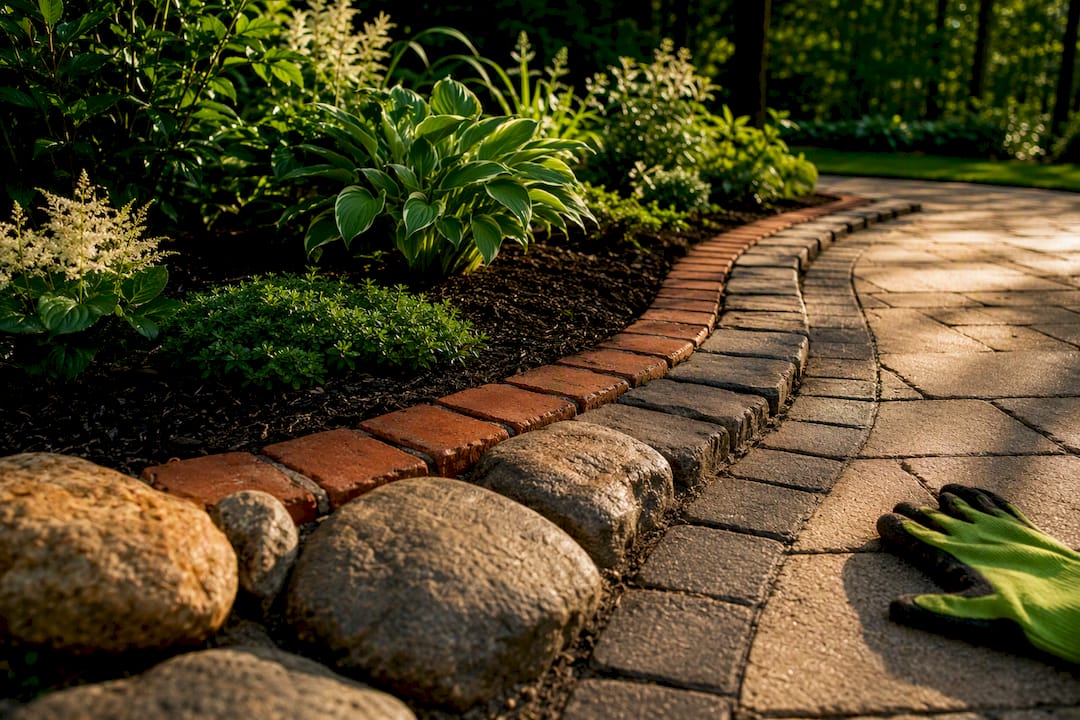
- Catmint (Nepeta x faassenii) — long bloom season, strongly scented; use it as a front-of-border edger
- Sedum ‘Autumn Joy’ — fleshy, slightly bitter foliage; tolerates Missouri’s summer heat and clay soils well
- Yarrow (Achillea millefolium) — ferny, aromatic foliage; native varieties available and drought-tolerant once established
- Butterfly weed (Asclepias tuberosa) — a Missouri native milkweed that deer rarely browse; supports monarchs and thrives in dry, sunny spots with poor soil
Bulbs:
- Daffodils (Narcissus spp.) — toxic alkaloids make them one of the most reliably avoided bulbs; plant them freely along borders
- Ornamental alliums (Allium spp.) — the sulfurous scent deters browsing; tall drumstick varieties add late-spring interest
Groundcovers:
- Liriope (Liriope spp.) — tough, adaptable, and rarely browsed once established; works well under trees where grass won’t grow
- Creeping juniper (Juniperus horizontalis) — spiny and aromatic; good for slopes and erosion-prone areas
- Creeping thyme (Thymus serpyllum) — aromatic and low-growing; useful between stepping stones or as a lawn alternative in sunny spots
Seasonal caveats matter. During late summer droughts, deer will sample plants they normally skip. Fawns in spring and early summer explore widely and may nibble things adult deer ignore. When natural food is scarce in late fall and winter, even daffodil foliage can get nipped. Missouri’s deer density varies by county, and peer-reviewed research confirms that resistance ratings break down when local food availability drops.
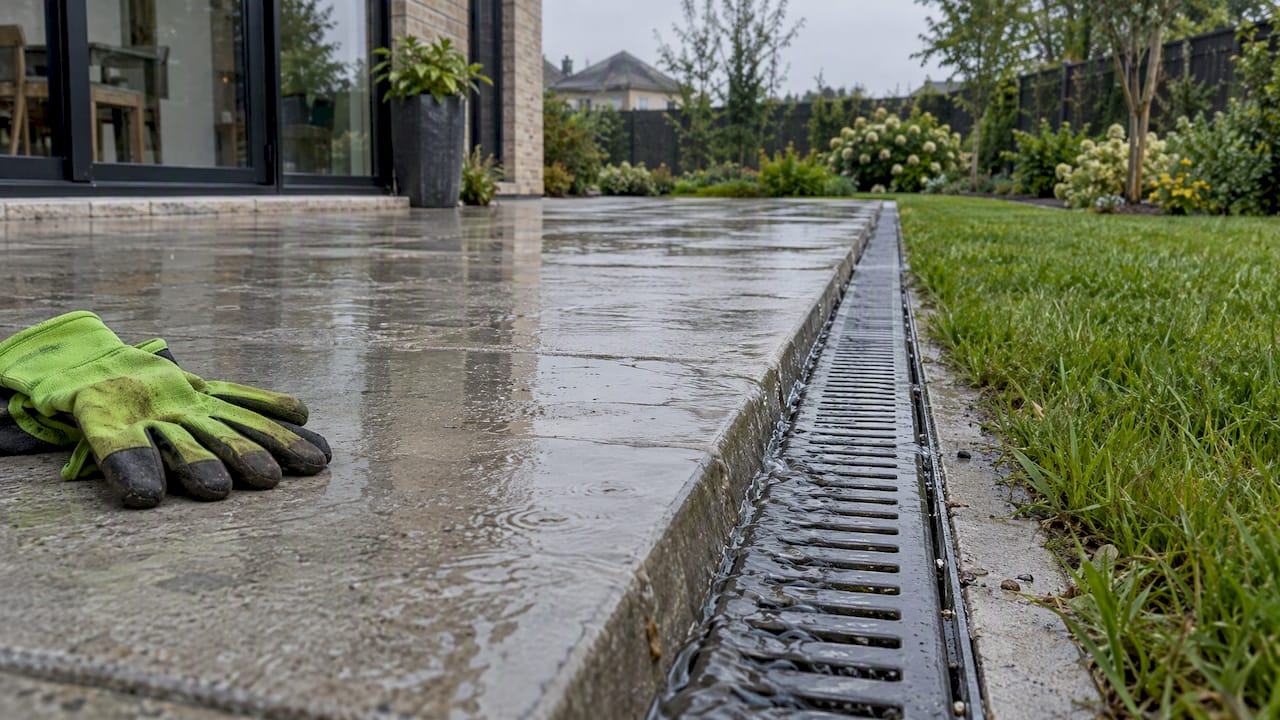
For Missouri’s clay soils, lavender and creeping thyme both need amended, well-draining beds. If your yard has drainage issues, address them before planting. A drainage solution can make the difference between lavender that thrives and one that rots over winter.
Pro Tip: Plant a row of lavender, catmint, or creeping thyme along the outer edge of any bed you want to protect. The aromatic foliage creates a scent barrier that makes deer less likely to step into the bed to reach plants behind it. This works especially well when combined with a low wire fence during the first growing season.

Annuals, herbs, and vines that help protect beds
Annuals and herbs won’t replace structural plantings, but they add a useful layer of scent deterrence and can protect more vulnerable plants nearby.
Practical picks:
- Marigolds (Tagetes spp.) — pungent foliage; plant as a border around vegetable beds or annual flower beds
- Lantana (Lantana camara) — strong scent and slightly toxic; thrives in Missouri heat; treat as an annual since it’s not reliably hardy here
- Rosemary (Salvia rosmarinus) — intensely aromatic; use in containers near entry points or along paths deer travel
- Sage (Salvia officinalis) — fuzzy, aromatic leaves; deer almost always skip it
- Creeping thyme — doubles as a groundcover and an aromatic deterrent along bed edges
For vines, trumpet vine (Campsis radicans) is a Missouri native that deer rarely browse, though it spreads aggressively and needs a sturdy trellis. Crossvine (Bignonia capreolata) is a less aggressive native alternative with similar deterrent value.
Invasiveness warnings are real here. Two vines commonly sold at garden centers deserve a hard pass: Japanese honeysuckle (Lonicera japonica) and perilla mint (Perilla frutescens) are both on Missouri’s invasive plant list and are now subject to the state’s new sale restrictions under Senate Bill 105 (covered in detail below). Neither belongs in a Missouri yard regardless of deer resistance. Safer alternatives include native coral honeysuckle (Lonicera sempervirens) for trellises and native basil varieties for herb beds.
For smaller yards or patios, container planting of rosemary, sage, and lavender near seating areas or garden beds creates a portable scent barrier you can reposition as needed. Containers also let you trial plants before committing them to ground.
Why no plant is completely deer-proof
“Deer-resistant” describes a tendency, not a guarantee. Deer are opportunistic browsers whose feeding patterns shift with local food availability, herd density, and season. A plant that goes untouched for three years can get stripped in a single hard winter.
The timing of highest risk follows a predictable pattern in Missouri:
- Late summer into fall — natural food sources thin out; deer expand their diet
- Rut season (October through December) — bucks rub antlers on young tree trunks, damaging bark regardless of species
- Late winter — food scarcity peaks; deer will eat plants they normally avoid
- Spring — fawns sample widely; young, fertilized nursery stock is especially attractive
Repellent effectiveness: Field trials summarized by the USDA Forest Service show that fear-inducing, sulfurous repellents (putrescent egg solids) tend to outperform bittering agents and typically protect treated plants for roughly 4–12 weeks, depending on weather and rainfall.
The practical takeaway is to layer your defenses. Resistant plants reduce browsing pressure, but they work best when combined with repellents and at least some physical protection for high-value specimens. Relying on plant selection alone is a reasonable strategy for low deer-pressure yards. In high-density areas like parts of St. Charles County, it’s rarely enough on its own.
How to protect plantings with fencing, repellents, and barriers
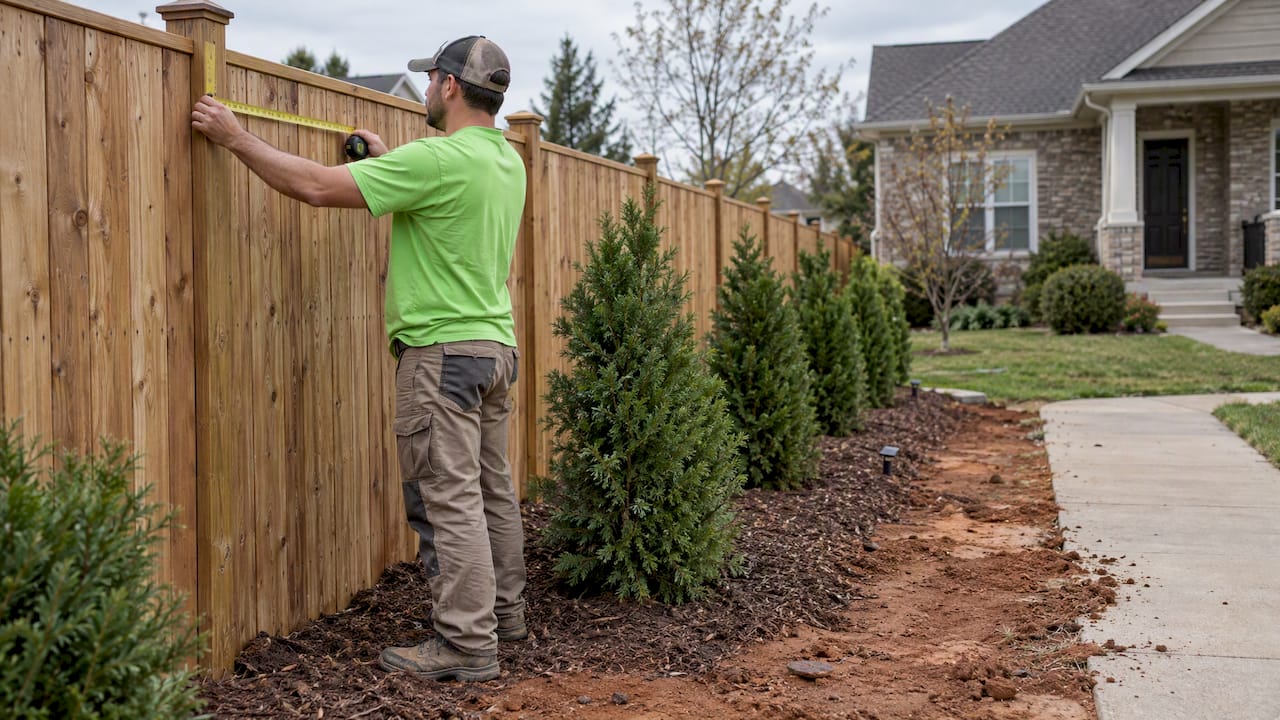
Physical barriers remain the most reliable protection available. MU Extension is clear: an 8-foot solid fence is the gold standard for high-value plantings where deer pressure is serious. Anything shorter can fail when deer are hungry enough or when they learn a fence is jumpable.
Fencing options by situation:
- 8-foot solid fence — most reliable; use for vegetable gardens, young orchards, or any planting you cannot afford to lose
- Shorter fences with top rollers or angled extensions — can work in moderate-pressure yards; deer are reluctant to jump when they can’t see a clear landing zone
- Double-run electric fence — two parallel strands baited with peanut butter; effective for large areas where a solid fence isn’t practical
Repellent strategy:
Egg-based repellents (products containing putrescent egg solids) consistently outperform bittering agents in field tests. Apply them every 4–12 weeks and after heavy rain. The key mistake most homeowners make is sticking with one product. Deer habituate to a fixed scent over time, so rotating between two or three repellent types maintains effectiveness. Combine repellents with physical barriers for the best results.
Individual plant protection:
- Tree tubes — protect young tree trunks from both browsing and buck rub; leave in place until the trunk reaches a diameter deer cannot damage
- Wire cages — cylinder of hardware cloth or welded wire around individual shrubs or perennials; effective for the first one to two growing seasons
- Temporary deer netting — lightweight, inexpensive; good for protecting new plantings through their first fall and winter
| Protection method | Recommended spec | Typical effectiveness window | Notes |
|---|---|---|---|
| Solid fence | 8 ft minimum height | Long-term | Gold standard per MU Extension |
| Egg-based repellent | Apply per label; reapply after rain | 4–12 weeks per application | Rotate products to prevent habituation |
| Wire cage / tree tube | 4–5 ft tall, secured to stake | 1–3 growing seasons | Remove once plant reaches browse-resistant size |
Steps to implement this season:
- Walk your yard and identify the three to five plantings deer have already damaged or are most likely to target.
- Install wire cages or temporary netting around any new plantings before deer pressure increases in late summer.
- Apply an egg-based repellent to existing vulnerable plants and set a calendar reminder to reapply every four to six weeks.
- Rotate to a different repellent type on the next application cycle.
- Plan a permanent fence for any area where deer damage is recurring and costly.
Pro Tip: Check the weather before applying repellents. Rain within 24 hours of application washes off most products and cuts the protection window significantly. Apply on a dry stretch and reapply sooner after any heavy rain event.
Missouri’s invasive plant sale ban and safe alternatives
Missouri’s Senate Bill 105, signed July 14, 2025, restricts the future sale of six invasive plants in the state. The law does not penalize homeowners for plants already in the ground, but it does affect what nurseries can sell going forward.
The six banned species and their phase-out dates:
- Sericea lespedeza (Lespedeza cuneata) — sale ends January 1, 2027; replace with native bush clover (Lespedeza capitata)
- Burning bush ‘Compactus’ (Euonymus alatus ‘Compactus’) — sale ends January 1, 2029; replace with native fothergilla (Fothergilla spp.) or native highbush blueberry for fall color
- Callery pear (Pyrus calleryana) — sale ends January 1, 2029; replace with native serviceberry (Amelanchier spp.) or native hawthorn (Crataegus spp.)
- Japanese honeysuckle (Lonicera japonica) — sale ends January 1, 2027; replace with native coral honeysuckle (Lonicera sempervirens)
- Perilla mint (Perilla frutescens) — sale ends January 1, 2027; replace with native basil or native mountain mint (Pycnanthemum spp.)
- Wintercreeper ‘Coloratus’ (Euonymus fortunei ‘Coloratus’) — sale ends January 1, 2027; replace with native wild ginger (Asarum canadense) or native pachysandra alternatives
Legal note: If you see any of these species still on nursery shelves before their phase-out date, they are currently legal to purchase. After the applicable date, sales are prohibited. Ask your nursery about current stock and whether they carry native alternatives. The Missouri Invasive Plant Council maintains updated guidance on implementation.
Several of these species have been marketed as deer-resistant, which is part of why they spread so widely. Burning bush and wintercreeper in particular show up on many deer-resistant plant lists. The native alternatives above offer comparable landscape function without the ecological risk.
Planting and maintenance practices that reduce browsing
How and when you plant matters as much as what you plant. New nursery stock that’s been heavily irrigated and fertilized is disproportionately attractive to deer. Young, tender growth is easier to browse and more palatable than mature, toughened tissue.
- Choose the right site first. Place high-value or deer-vulnerable plants closer to the house, where human activity and lighting naturally deter deer. Reserve the yard’s perimeter for your most resistant species.
- Amend Missouri clay soils before planting. Poor drainage stresses plants and keeps them in a vulnerable, soft-growth state longer. Incorporate compost and, for lavender or thyme, coarse grit to improve drainage.
- Trial sensitive specimens in containers. Before planting a dozen lavender plants in a new bed, grow two or three in pots near the intended location for one season. If deer ignore them, proceed with confidence.
- Protect new plantings for at least two growing seasons. Tree tubes or wire cages should stay in place until plants develop tougher tissue and reach a height deer can’t easily browse (typically 4–5 feet for shrubs).
- Water and fertilize conservatively. Heavily fertilized plants push soft, palatable new growth. Reduce nitrogen inputs once plants are established, and water deeply but infrequently to encourage deep roots over lush top growth.
- Use sacrificial plantings strategically. A row of plants deer do like (hostas, for example) placed away from your prized specimens can redirect browsing pressure. It’s not a perfect solution, but it buys time.
Pro Tip: Talk to your neighbors. Deer move across property lines, and a coordinated approach to repellents and planting choices across two or three adjacent yards is far more effective than one yard acting alone. Your local MU Extension office can connect you with master gardener groups in St. Charles County who track local deer pressure and share what’s working.
How to pick deer-resistant plants for your Missouri yard
Use this checklist at the nursery or when planning a new bed:
- Assess your local deer pressure honestly. Have you seen deer in your yard or on your street? How often? High-pressure yards in suburban St. Charles County need a different strategy than a low-pressure rural property.
- Check sun, soil, and drainage first. A plant that’s deer-resistant but wrong for your conditions will struggle and become more vulnerable. Match the plant to the site before worrying about deer.
- Prioritize natives and non-invasives. Native species like Eastern red cedar, butterfly weed, arrowwood viburnum, and serviceberry are adapted to Missouri conditions and support local wildlife beyond just deterring deer.
- Ask nursery staff specifically about local browsing. “Is this species browsed heavily in this area?” is a better question than “Is this deer-resistant?” Staff at local Missouri nurseries often track what comes back damaged.
- Check the Missouri invasive plant list before buying. The Wildwood, MO deer-resistant plant brochure and similar municipal resources are free, locally tested references worth downloading before a nursery trip.
- Plan for seasonal gaps. Choose species with staggered bloom and interest seasons so your yard isn’t left with bare, vulnerable ground in late summer or fall when deer pressure peaks.
- Red flags to avoid: anything on Missouri’s invasive list, species your local extension flags as frequently severely damaged under high deer pressure, and plants that require heavy fertilization to establish.
For native plant sourcing, the Missouri Botanical Garden’s plant finder and local native plant societies are reliable starting points. Many MU Extension offices also maintain lists of local nurseries that stock Missouri-native species.
What working in Wentzville taught me about deer and landscapes
Deer damage in St. Charles County follows a pattern I’ve seen repeat itself across dozens of yards: homeowners plant something beautiful, skip the protection step because the plant is “supposed to be deer-resistant,” and find it stripped by November. The statewide lists are a starting point, not a promise.
What actually works here is layering. A row of Eastern red cedar along the back fence line, aromatic perennials in the mid-border, and wire cages on anything newly planted for the first two seasons. That combination holds up even in years when deer pressure spikes. The yards that struggle are the ones that rely on a single tactic, whether that’s one repellent product or one “deer-proof” shrub.
The 2025 invasive plant sale ban is good news for Missouri landscapes. Burning bush and Callery pear were commonly planted partly because they were promoted as low-maintenance and deer-resistant. Native alternatives, such as fothergilla and serviceberry, provide better suitability for Missouri conditions and tend to perform well under deer pressure.
If you’re planning a new bed or replacing damaged plantings, a site consultation before you buy saves real money. Getting the plant palette and placement right the first time is far less expensive than replanting after a bad winter of browsing.
Precision outdoor Solutions helps Missouri homeowners protect their landscapes
Deer damage is a landscaping problem with a design solution. Precision outdoor Solutions works with homeowners across Wentzville and St. Charles County to build landscapes that hold up under real local conditions, including the deer pressure that comes with suburban Missouri living.

The team handles custom fence installation, from 8-foot deer-exclusion fences around vegetable gardens to decorative fencing that protects ornamental beds without sacrificing curb appeal. The landscape design process includes plant palette selection built around deer-resistant natives and proven performers for local soil and light conditions. For yards with drainage issues that keep plants stressed and vulnerable, drainage solutions are part of the same integrated approach.
With over 25 years of experience serving St. Charles County, Precision outdoor Solutions brings local knowledge to every project. Get a free estimate and a straightforward conversation about what your yard actually needs.
Sources
- Deer Gardening | Missouri Department of Conservation
- USDA Forest Service repellent guidance and field-trial summaries
- Controlling Deer Damage in Missouri | MU Extension (MP685)
- Study on deer browse behavior and variability by local food availability
- Missouri Botanical Garden — Deer resource and plant suggestions