A channel drain installed across the garage threshold is the single most reliable fix for water entering your garage. For yard runoff pooling along the driveway edges, a French drain intercepts the flow before it reaches pavement. If your driveway slopes toward the house, regrading corrects the root cause. And if you’re planning a new install or major renovation, permeable pavers handle runoff at the source so downstream infrastructure stays minimal.
Here’s what to check or do right now:
- Check your driveway slope. Water should shed away from the garage at a slight slope typically recommended for proper drainage. If it runs toward the door, slope is your primary problem.
- Clear gutters and downspouts. A clogged downspout discharging near the driveway can overwhelm any drain system during a storm.
- Walk the driveway after rain. Mark low spots, standing water, and where flow enters the garage or yard.
- Measure how fast water enters the garage. A trickle suggests a surface fix; a wave suggests a grading or subsurface issue.
Call a licensed contractor or Professional Engineer when the fix involves major regrading, connecting to a public storm system, or any project that requires a permit in your municipality.
Key Takeaways
The most reliable first step for a wet garage is a channel drain at the threshold, but every effective drainage system needs a complete path from collection to a legal discharge point.
| Point | Details |
|---|---|
| Start with a site diagnosis | Walk your property after rain to identify all water sources before choosing any fix. |
| Channel drain for garage flooding | A 4" channel drain at the garage threshold handles roughly 94 GPM at a 1% slope for most residential driveways. |
| French drain for edge runoff | Perforated pipe with filter fabric and cleanout risers intercepts yard and subsurface flow along driveway edges. |
| Budget $800–$6,000 for most projects | PE-stamped engineering adds $2,000–$5,000 when required for major regrading or public storm connections. |
| Precision outdoor Solutions | Serves Wentzville and St. Charles County with full drainage services from site evaluation through permitted installation. |
Table of Contents
- How do you figure out where driveway water is actually coming from?
- What are the best driveway drainage ideas for common water problems?
- How do channel and trench drains work, and what do they cost?
- When does a French drain make more sense than a surface drain?
- Can permeable paving actually solve a runoff problem long-term?
- What about regrading, catch basins, dry wells, and where water goes after collection?
- How do you choose the right drainage solution for your driveway?
- What do driveway drainage projects typically cost in the U.S.?
- What does a year-round maintenance schedule look like for driveway drains?
- What does a local contractor like Precision outdoor Solutions evaluate on your property?
- What are slot drains and hidden drains, and when should you use them?
- A local installer’s perspective on what actually goes wrong
- Precision outdoor Solutions handles driveway drainage from diagnosis to installation
- Sources
How do you figure out where driveway water is actually coming from?
Getting the diagnosis right saves you from installing the wrong fix. A French drain won’t help if the real problem is a driveway that pitches toward the garage. A channel drain won’t stop water that’s welling up from saturated soil underneath.
Run through this checklist after the next heavy rain:
- Surface runoff direction. Stand at the garage and watch where water flows. Does it sheet off the lawn onto the driveway? Does it run down from the street?
- Downspout discharge points. Are gutters routing water onto or near the driveway? A single downspout can dump hundreds of gallons per hour during a Missouri storm.
- Low spots and puddles. Puddles that persist more than 30 minutes after rain stops usually indicate a grading problem or compacted base.
- Adjacent landscaping. Mulched beds and turf areas that slope toward the driveway funnel runoff onto the surface.
- Visible subsurface saturation. Wet soil along the driveway edge that stays damp long after rain stops points to a high water table or clay-heavy soil with poor infiltration.
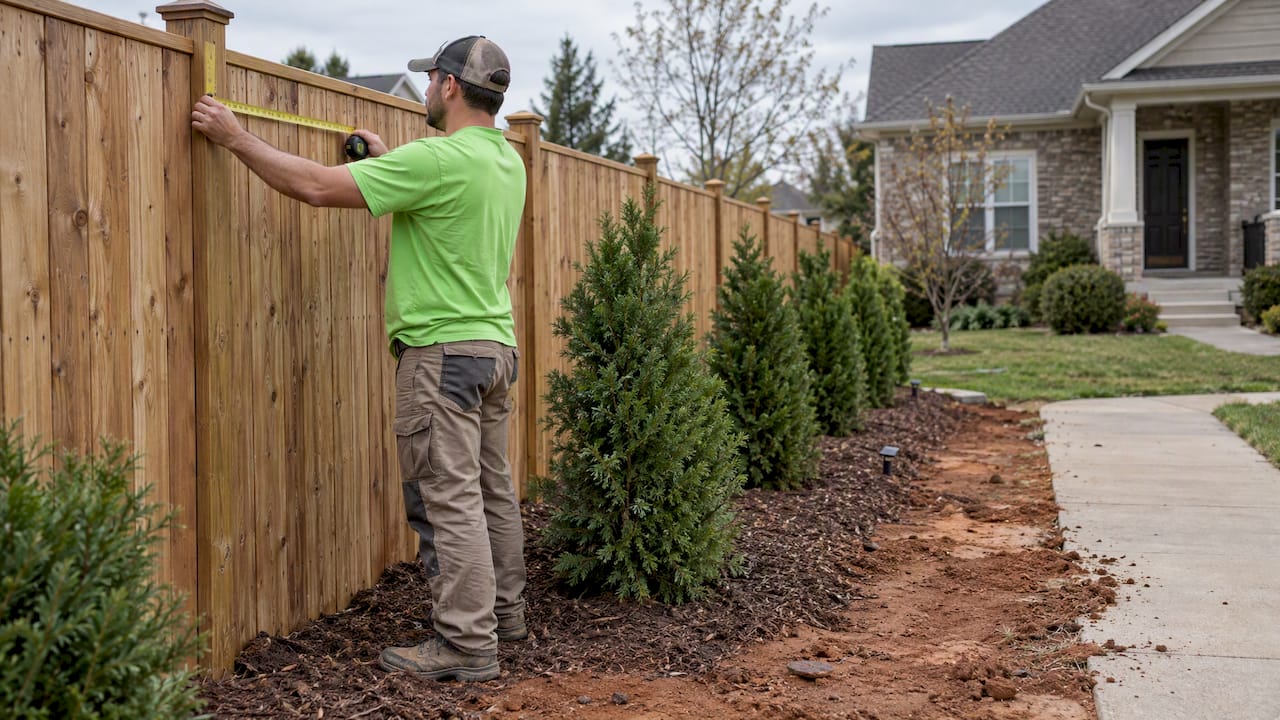
A quick slope check: measure the rise and run across a 10-foot section using a level and tape measure. Proper drainage guidance recommends a finished slope away from the house of 1/8 to 1/4 inch per foot. Less than that, and water stalls. More than 1/2 inch per foot on a long run, and you need velocity controls to prevent erosion at the outlet.
When multiple sources combine, a phased approach usually makes sense: fix the easiest interception point first, then reassess.
Pro Tip: A wet edge along the driveway that stays damp for 24 hours after rain stops, even when the surface is dry, almost always signals subsurface flow rather than surface sheet flow. That distinction matters for your fix: surface drains won’t solve a subsurface problem.
What are the best driveway drainage ideas for common water problems?
Most driveway drainage solutions fall into a handful of categories. The right one depends on where water is coming from, what your driveway is made of, and how much disruption you’re willing to accept.
Here’s a quick map:
- Channel/trench drains at the garage threshold stop surface water from entering the garage. Best for: garage flooding, steep driveways.
- French drains along the driveway edge intercept yard runoff and subsurface flow. Best for: saturated edges, lawn-sourced runoff.
- Apron drains and catch basins collect water at a single low point. Best for: flat driveways with one obvious pooling spot.
- Regrading corrects the slope so water sheds away from structures. Best for: driveways that pitch toward the garage.
- Permeable pavers or porous concrete let water infiltrate through the surface. Best for: new installs, environmentally sensitive sites, stormwater credit programs.
- Dry wells/soakaways receive collected water and disperse it underground. Best for: sites without a practical daylight outlet.
- Slot/hidden drains provide the same function as a channel drain with a narrower, less visible profile. Best for: decorative driveways where aesthetics matter.
- Swales and rain gardens route or absorb collected water at the property edge. Best for: large volumes, sites with space for landscaping integration.
| Solution | Best For | DIY Friendly? | Typical Cost Shape | Maintenance |
|---|---|---|---|---|
| Channel/trench drain | Garage flooding, steep grades | Moderate | $800–$6,000 installed | Clear grates seasonally |
| French drain | Edge runoff, saturated soil | Moderate to pro | Per linear foot | Flush annually |
| Permeable pavers | New installs, runoff reduction | Pro recommended | Higher upfront | Low ongoing |
| Regrading | Slope correction | Pro required | Varies by scope | Minimal after |
| Catch basin/apron drain | Single low spot | Moderate | Lower end | Clear debris |
| Dry well | No daylight outlet | Pro recommended | Mid-range | Inspect annually |
Combined systems are common and often necessary. A channel drain at the garage threshold paired with a French drain along the driveway edge handles both surface and edge flow. Permeable pavers over a gravel reservoir layer paired with a dry well handles infiltration overflow during heavy rain.
How do channel and trench drains work, and what do they cost?
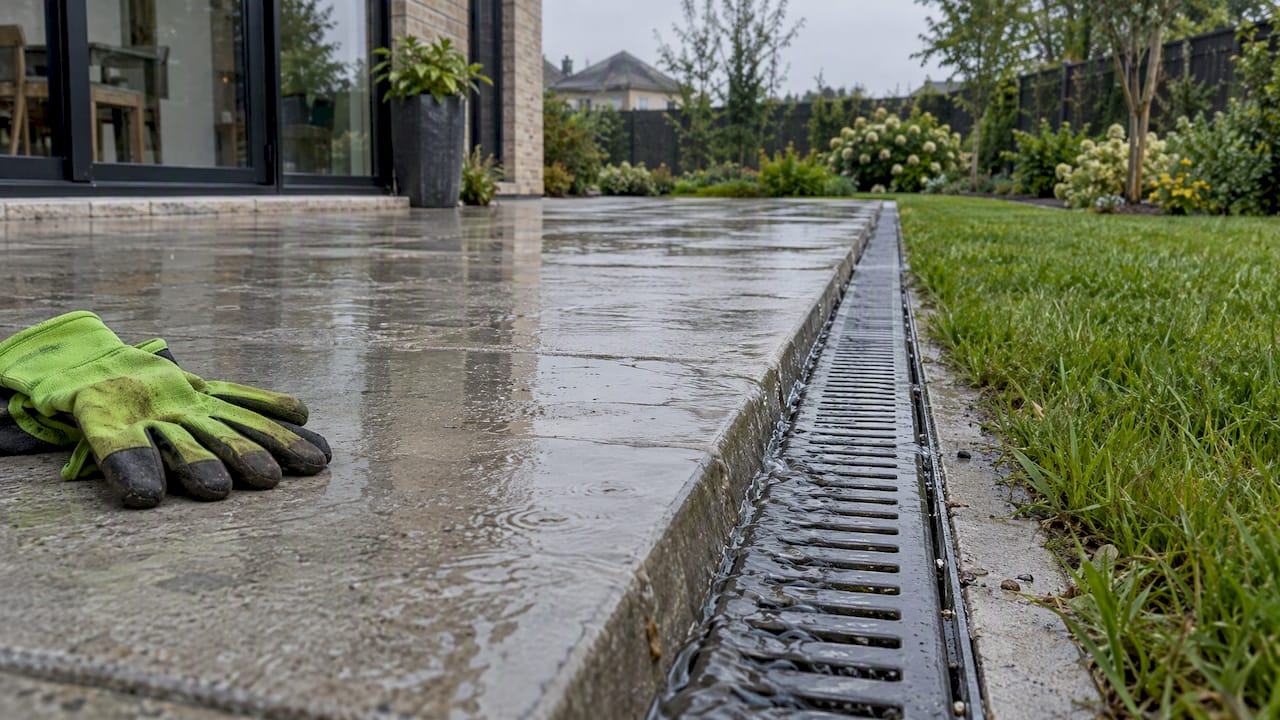
A channel drain is a linear trench set flush with the driveway surface, covered by a grate, and connected to a pipe that carries collected water to a discharge point. The system intercepts surface flow across its full width rather than waiting for water to find a single low point.

According to NDS manufacturer documentation, residential channel families range from a Micro series at 1-1/4" wide up to a 6" Dura Slope. That’s enough capacity for a standard two-car garage threshold in most U.S. rainfall zones.
Sizing basics: Width and pre-sloped channel design both affect capacity. A wider channel moves more water but requires a wider trench cut. Pre-sloped channels have a built-in gradient that accelerates flow to the outlet without relying on the surrounding grade. For sizing your specific driveway, the key inputs are driveway area, local rainfall rate, slope, and surface type.
Grate material and load class determine how long the system lasts under traffic. Plastic grates handle foot traffic and light vehicles. Ductile iron grates handle heavy vehicles and last decades. For a residential driveway, a Class A or Class B grate is typically sufficient.
Pros and cons:
- Immediate, reliable protection at the garage threshold
- Visible trench line, which some homeowners find unattractive
- Grates collect debris and need seasonal clearing
- Lifespan varies: plastic bodies 20–30 years, ductile iron grates 50+ years
For a DIY-friendly option, the NDS 3 in. Pro Series Channel Drain Kit is modular, can be cut to length, and connects directly to standard 3 in. sewer and drain fittings, making it a practical choice for moderate flows and homeowners comfortable with basic concrete work.
Installation checklist for vetting a contractor or a DIY prep:
- Confirm the trench depth and width match the channel body dimensions plus bedding.
- Verify the outlet pipe has a clear path to a legal discharge point.
- Check that the channel sits flush with or slightly below the finished driveway surface.
- Confirm the grate load class matches expected vehicle weight.
- Ask how the contractor will seal the channel-to-concrete joint to prevent undermining.
When does a French drain make more sense than a surface drain?
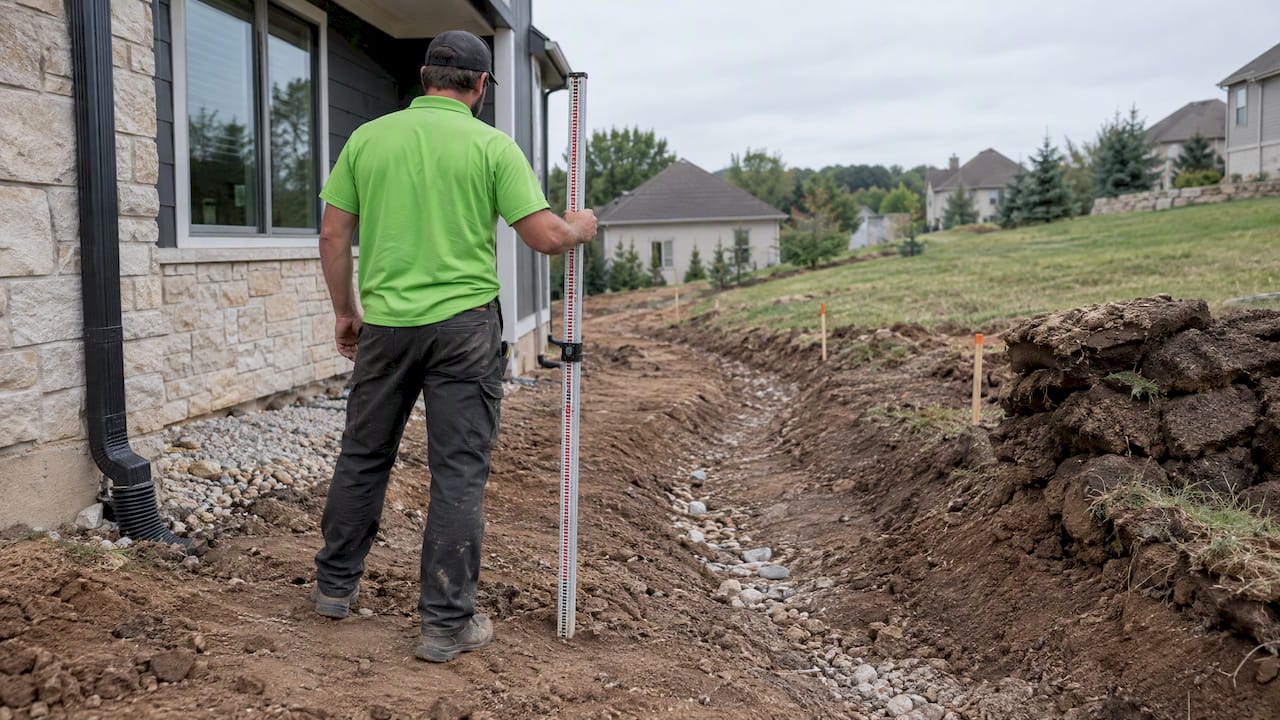
A French drain works underground. A perforated pipe sits in a gravel-filled trench, wrapped in filter fabric, and collects water that either seeps through the soil or flows along the surface into the trench. The pipe carries that water to a daylight outlet, a dry well, or a storm connection.
French drains are the right call when:
- Yard runoff from adjacent lawn or beds consistently flows onto the driveway edge
- Soil along the driveway stays saturated for days after rain, indicating subsurface flow
- A channel drain at the threshold would only address part of the problem
- The driveway edge is lower than surrounding grade
They pair naturally with channel drains: the channel handles surface flow at the garage, and the French drain intercepts edge and subsurface flow before it reaches the channel.
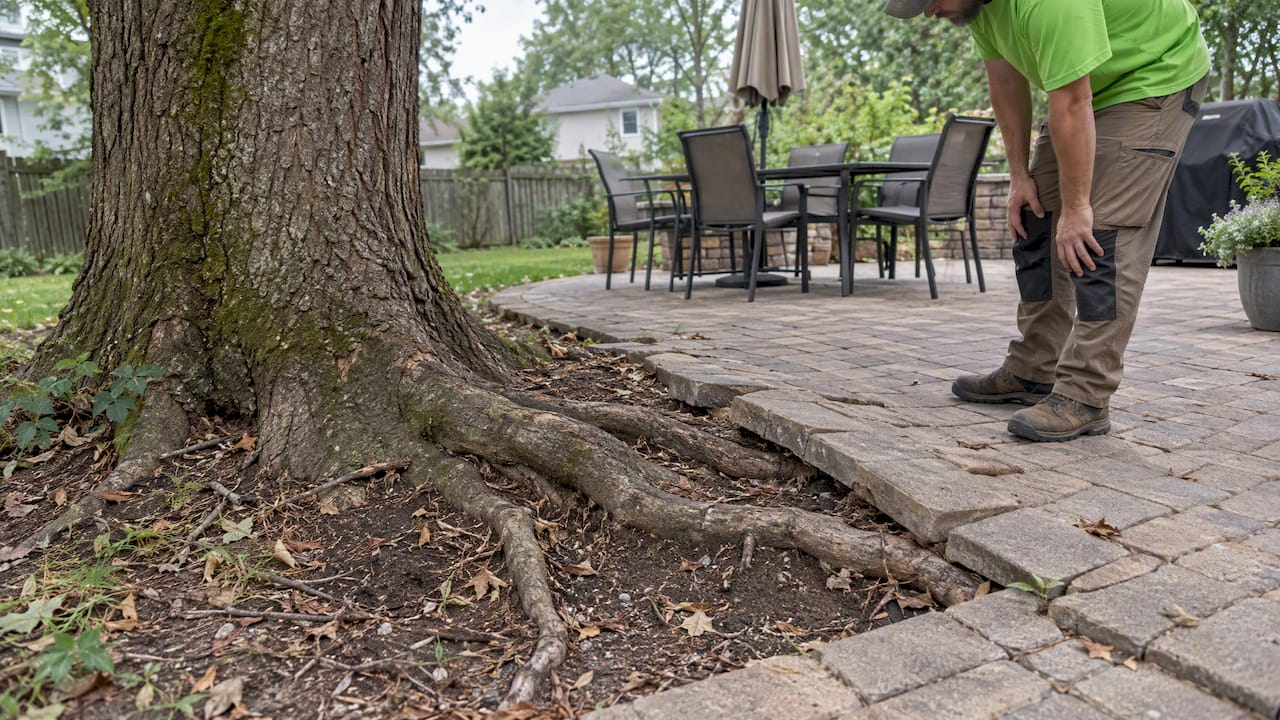
Maintenance realities: Sediment and fine particles gradually migrate into the gravel bed and perforated pipe, reducing capacity over time. Root intrusion from nearby trees accelerates this. A well-built French drain with proper filter fabric overlap and cleanout risers at each end can last 20–30 years before needing rehabilitation. One without cleanouts is nearly impossible to flush or inspect.
Pro Tip: Install a cleanout riser at both the inlet and outlet ends of every French drain run. A 4-inch PVC riser with a screw cap costs almost nothing to add during installation and makes annual flushing with a garden hose straightforward. Skipping it means excavating the entire trench when sediment eventually blocks the pipe.
Can permeable paving actually solve a runoff problem long-term?
Permeable pavers, porous concrete, and open-grid systems take a fundamentally different approach: instead of collecting and routing water away, they let it pass through the surface into a reservoir layer of clean crushed stone, where it infiltrates into the soil or drains slowly to an outlet.
Permeable paving is a proactive, source-control strategy that can achieve near-total infiltration for normal rainfall events and may qualify homeowners for stormwater credits in municipalities that offer them. The higher upfront cost often offsets later infrastructure needs because there’s less water to route, collect, and discharge.
When it works well:
- New driveway installs where the base can be designed for infiltration from the start
- Sites with sandy or loamy soil that accepts water at a reasonable rate
- Homeowners who want to reduce runoff without adding visible drain hardware
- Properties in areas with stormwater fee structures or credit programs
When it’s limited:
- Retrofit over an existing concrete or asphalt driveway is rarely practical without full removal
- Clay-heavy soils common in parts of Missouri slow infiltration significantly, requiring an underdrain to prevent the reservoir layer from saturating
- Heavy vehicle traffic can dislodge or crack permeable pavers over time without proper edge restraints
A landscaping contractor resource notes that permeable pavers can eliminate the need for downstream detention in many residential situations and may protect property value by reducing visible drainage infrastructure. The tradeoff is a higher initial investment and a need for periodic joint sand replenishment to maintain permeability.
What about regrading, catch basins, dry wells, and where water goes after collection?
Regrading is the only fix that corrects the root cause of a slope problem. Every other solution intercepts water after it’s already moving in the wrong direction. If your driveway pitches toward the garage, a channel drain at the threshold is a practical interception fix, but regrading the driveway surface or surrounding grade is the permanent correction.
Apron drains and catch basins collect water at a single point, typically at the base of a driveway apron or at a low spot in the middle of a run. They connect to a pipe that routes water to a discharge point. They’re simpler to install than a full channel drain and work well when pooling is concentrated in one location rather than spread across the full width.
Dry wells and soakaways receive collected water from a drain, catch basin, or downspout and disperse it underground through a perforated chamber or gravel pit. Key siting rules:
- Keep dry wells at least 10 feet from the foundation and property lines (check local codes, as setbacks vary by municipality)
- Size the chamber based on the contributing drainage area and local soil infiltration rate
- Avoid placing them in areas with high groundwater or clay-dominated soil profiles
Routing options for collected water:
- Daylight to a swale or yard low point: simplest and cheapest, but requires a clear path and a receiving area that won’t cause neighbor disputes
- Tie into the municipal storm system: usually requires a permit and sometimes a PE-stamped connection design
- Route to a rain garden or bioswale: handles moderate volumes, adds landscaping value, and slows water before it reaches the storm system
Pro Tip: Before choosing a discharge point, walk your property line and your neighbor’s yard after a heavy rain. Water you route to a swale or yard outlet must not pond on neighboring property or increase flow onto their land. Many local drainage ordinances prohibit redirecting runoff onto adjacent properties, and a neighbor complaint can be more expensive to resolve than a proper outlet design.
How do you choose the right drainage solution for your driveway?
The decision comes down to five questions: Where is the water coming from? What is your driveway made of? How steep is the grade? What’s your budget? And how much maintenance are you willing to do each year?
Decision flow:
- Water enters the garage from the driveway surface → start with a channel drain at the threshold.
- Water pools along the driveway edge from yard runoff → add a French drain along the affected edge.
- Driveway slopes toward the house → regrade before or alongside any drain installation.
- Single low spot with no outlet → catch basin connected to a dry well or daylight pipe.
- New install or full replacement → evaluate permeable pavers or porous concrete as a long-term option.
- Multiple sources, complex site → hire a contractor for a site grading plan before committing to any single fix.
Questions to ask any contractor (numbered for your reference):
- Will this project require a permit, and will you pull it?
- Do you provide a site grading plan or drainage design drawing?
- How do you size the drain for my specific driveway area and local rainfall?
- What load class grate do you recommend, and why?
- What warranty do you offer on labor and materials?
- Can you provide references from similar drainage projects?
- Do you have before-and-after photos from comparable jobs?
Red flags in bids: No site visit before quoting. No grading plan or drainage sketch. Blanket guarantees (“we’ll fix your drainage problem”) without specifics on how. No references or photos. A bid that’s dramatically lower than others without a clear explanation of what’s excluded.
What do driveway drainage projects typically cost in the U.S.?
An engineering guide puts the typical U.S. cost range for driveway drainage systems at $800–$6,000, with PE-stamped engineering design adding $2,000–$5,000 when required. Those ranges reflect real variation driven by excavation depth, pipe run length, rock import, and local labor rates.
A Licensed Professional Engineer is typically required when the project involves major regrading that affects adjacent properties, a connection to a public storm system, or a dry well above a certain size threshold. Local permit requirements vary by municipality. In St. Charles County, Missouri, drainage work that connects to public infrastructure or alters grading near property lines generally requires a permit. Check with your local building department before starting any project that moves more than a few cubic yards of soil.
Smaller projects like a single catch basin or a short channel drain at the garage threshold often fall below the permit threshold and can be completed in a day or two by a qualified contractor.
What does a year-round maintenance schedule look like for driveway drains?
Drainage systems fail slowly, usually from debris accumulation and sediment buildup that nobody notices until the system backs up during a storm. A simple maintenance routine prevents most failures.
Regular tasks by frequency:
- After every major storm: Check that grates are clear and water is flowing through the outlet. A backed-up grate during a storm is the first sign of a clog.
- Twice yearly (spring and fall): Clear all grates and catch basin covers. Remove accumulated debris from catch basin sumps. Flush French drain cleanout risers with a garden hose.
- Annually: Inspect pipe outlets for blockage, erosion, or animal nesting. Check dry well access covers for integrity.
- Every 2–3 years: Sealcoat asphalt driveways to maintain surface integrity and prevent cracking that can redirect water unpredictably. Proper drainage and timely surface repairs work together to extend driveway life.
Seasonal priorities:
- Fall: Leaf season is the highest-risk period for grate clogging. Check grates weekly during peak leaf drop.
- Winter: Freeze/thaw cycles can heave channel drain bodies and crack pipe joints. Inspect for movement after the first hard freeze.
- Spring: Flush all pipes after snowmelt. Look for sediment deposits at outlets.
- Summer: Check that vegetation hasn’t grown over outlets or into French drain cleanouts.
When to hire a pro for maintenance: Root intrusion into a French drain pipe requires mechanical or hydro-jetting removal. Structural cracks in channel drain bodies or catch basin walls need repair before the next heavy rain season. If a dry well stops accepting water, the chamber may need excavation and replacement of the surrounding gravel.

What does a local contractor like Precision outdoor Solutions evaluate on your property?
A qualified drainage contractor doesn’t just look at the driveway. They assess the whole site: where water originates, how soil type affects infiltration, where utilities run, what the existing driveway material allows, and what local permit requirements apply.
Here’s what a thorough site evaluation covers:
- Drainage source mapping: Identifying all contributing areas (roof, lawn, street, neighbors’ lots)
- Soil assessment: Clay-heavy soils in parts of St. Charles County limit infiltration and affect dry well and French drain sizing
- Utility locates: Drain pipes must avoid gas, water, and electric lines
- Driveway material: Concrete and asphalt have different saw-cut requirements for channel drain installation
- Local permit review: Connections to public storm infrastructure in Wentzville and surrounding municipalities require permits and sometimes PE-stamped plans
A professional estimate from Precision outdoor Solutions typically includes a site grading plan or drainage sketch, drain sizing based on your specific driveway area and local rainfall data, a materials list with load-class specifications, a project timeline, and a warranty on both labor and materials. Before-and-after photos from completed local drainage projects give you a realistic picture of what the finished work looks like.
Precision outdoor Solutions serves Wentzville, St. Peters, O’Fallon, Troy, and the broader St. Charles County area, with over 25 years of experience in residential drainage solutions and site grading.
What are slot drains and hidden drains, and when should you use them?
Slot drains are a variation of the channel drain concept designed to minimize visual impact. Instead of a wide grate sitting flush with the driveway, a slot drain uses a narrow opening, typically 1/2 to 1 inch wide, cut into the surface. Water falls through the slot into a channel body below. From a distance, the drain is nearly invisible.
They’re most commonly specified for decorative concrete driveways, natural stone aprons, and high-end hardscape installations where a standard grate would interrupt the visual design. The tradeoff is capacity: a narrow slot moves less water per linear foot than a 4" or 6" grated channel, so slot drains work best on driveways with moderate flow volumes or where they’re paired with a French drain handling the bulk of the load.
Hidden drain systems use the same principle but are sometimes integrated into the joint between two paving materials, such as the seam between a concrete driveway and a stone border. The joint itself becomes the inlet. These systems require precise installation to maintain the correct gap width and prevent joint material from blocking the opening over time.
For most standard residential driveways in St. Charles County, a conventional grated channel drain delivers better capacity and easier maintenance than a slot system. Slot drains earn their place on premium installs where aesthetics are a primary design requirement.
A local installer’s perspective on what actually goes wrong
Most drainage calls we get at Precision outdoor Solutions start the same way: a homeowner installed a channel drain at the garage threshold, the garage stayed dry for one season, and then water started coming in from a different direction. The drain did its job. The problem was that nobody mapped the full site before installation.
On a recent project in Wentzville, the homeowner had a channel drain already in place. Water was still entering the garage along the side wall. A site walk after a rain showed that a downspout on the side of the house was discharging directly onto a mulched bed that sloped toward the garage foundation. The channel drain at the threshold never saw that water because it arrived at the wall, not the driveway surface. The fix was a downspout extension routed to a catch basin, connected to a French drain that daylighted at the back of the property. Total cost was a fraction of what a second channel drain would have been, and it solved the actual problem.
The diagnostic step that changed the plan: we walked the property during a simulated rain test, running a hose at the downspout volume. That one step revealed the true flow path in 10 minutes. If you’re working with a contractor who quotes a fix without watching water move on your specific site, ask them to come back during or right after a rain before you sign anything.
Precision outdoor Solutions handles driveway drainage from diagnosis to installation
Dealing with a wet garage or a driveway that pools after every storm is a solvable problem, and you don’t have to guess at the right fix. Precision outdoor Solutions offers complete drainage solutions for Wentzville, MO homeowners, from the initial site evaluation through permit handling, installation, and final grading.

Services relevant to driveway drainage include site grading evaluation, channel and trench drain installation, French drain systems, catch basin and apron drain installation, permeable paver driveways, dry well design and installation, downspout routing, and permit coordination for St. Charles County projects. The consultation process starts with a site visit, a review of your drainage sources, and a written estimate that breaks down the work by phase so you know exactly what you’re getting and when.
With over 25 years of experience serving St. Charles County, Precision outdoor Solutions brings the kind of local knowledge that matters: soil conditions in Wentzville, permit requirements in O’Fallon, and the rainfall patterns that drive drainage design decisions across the region. Request a site visit and estimate to get a clear plan for your property.
Sources
These are the resources referenced throughout this article, each worth bookmarking for deeper research:
- Driveway Drainage Solutions for Florida Properties (Engineer’s Guide)
- 3 in. Pro Series™ Channel Drain Kit, 4-1/16 in. X 39-3/8 in. Channel, Gray Plastic Grates, End Caps/Outlet
- Driveway Drain System
- 5 tips for preventing driveway water damage