The fastest way to make a small backyard feel bigger and more usable is to build the bones first: a compact hardscape anchor, layered perimeter planting, and one clear focal moment. Follow the 3-zone rule, and everything else, from quick DIY wins to plant choices, falls into place around it. What follows moves from fast fixes you can finish this weekend to layout strategy, planting, budgets, and the maintenance that keeps it all looking good.
TL;DR:
- Prioritize building a durable hardscape with a single material and clean borders because it defines the yard and stays consistent through seasons.
- Use vertical gardening solutions like trellises, living walls, and narrow trees to maximize greenery without sacrificing ground space.
- Focus on one effective focal point such as a specimen tree, fire table, or art piece to create visual interest and avoid clutter.
- Implement the 3-zone layout with a hardscape anchor, layered planting around the perimeter, and a small open space to make the yard feel larger.
- Consider professional help for drainage, grading, and structural projects to ensure long-term durability and avoid costly fixes.
Table of Contents
- Small Backyard Landscaping Ideas You Can Try This Weekend
- Layout That Works: Apply the 3-Zone Rule to Your Yard
- Hardscape First: Build the Bones That Make the Yard Usable
- Go Vertical: Trellises, Living Walls, and Narrow Trees
- Layered Planting and Plant Choices That Keep Scale in Check
- Furniture and Built-Ins That Preserve Floor Area
- Lighting That Makes a Small Yard Feel Bigger After Dark
- Budget Tiers: Weekend DIY, Midrange Upgrades, and When to Hire a Pro
- Maintenance and Seasonal Care for Compact Landscapes
- Real-World Example and Contractor Tips From Precision Outdoor Solutions
- Eco-Friendly and Sustainable Landscaping Ideas for Small Spaces
- Small Backyard Landscaping Mistakes to Avoid
- Single Focal Point and How to Choose It
- Our Priorities When Designing for Small Yards
- Let Precision Outdoor Solutions Handle the Parts DIY Can’t Fix
- Sources
Small Backyard Landscaping Ideas You Can Try This Weekend
You don’t need a full redesign to make your yard feel bigger right now. These twelve moves cost little, take a weekend or less, and most double as space-maximizing tricks.
- Pea-gravel patio — cheap, permeable, and forgiving of uneven ground.
- String lights overhead — pull the eye up and add usable evening hours.
- Vertical planters on a fence — green without losing floor space.
- Built-in bench along a wall — seating that doesn’t eat into walking room.
- One specimen pot — a large, striking container reads as a focal point instantly.
- Narrow planter rows — soften edges without narrowing the path.
- Small fire table — heat and ambiance in a footprint smaller than a fire pit.
- Foldaway furniture — a bistro set that tucks away when you need the space.
- Trellis with a fast vine — clematis or a climbing hydrangea adds privacy fast.
- Container herb garden by the kitchen door — functional and fragrant.
- Gravel and stepping stones — a low-cost path that reads as intentional design.
- Low groundcover instead of turf — less mowing, more usable ground.
If you only tackle three, make them the string lights, vertical planters, and one bold specimen pot. Together they change how big the yard feels more than any single hardscape change can.
Layout That Works: Apply the 3-Zone Rule to Your Yard
Successful small yards divide into three parts: a hardscape anchor for sitting or cooking, a green frame of perimeter planting, and one focal moment that draws the eye, according to backyard design guidance from BackyardEdit. On a typical quarter-acre lot, that often breaks down to a majority of space for the hardscape anchor and planted frame, and a smaller portion left open around the focal point, adjusted for the yard’s actual shape.
Before you sketch anything, walk the yard and answer four questions:
- Where does the sun sit at 8 a.m., noon, and 6 p.m.?
- Where does water pool after a hard rain?
- What’s the first thing you see from your main window or door?
- How do people actually move from the house to the fence line?
Two layout patterns solve most small-yard shapes. For a square or wide rectangular lot, put the patio in one corner and run a diagonal sightline to a focal point in the opposite corner. That diagonal line makes the yard read larger than a straight, boxy layout would. For a narrow yard, a single central patio near the house with a straight axis path to the back fence keeps circulation simple and avoids wasted corners.
A backbone layout keeps seating near the house, a clear path or sightline running through the middle, and layered planting along the edges, according to Gardenia’s design guidance. That structure alone does most of the work of making a compact yard feel intentional instead of crowded.
Hardscape First: Build the Bones That Make the Yard Usable
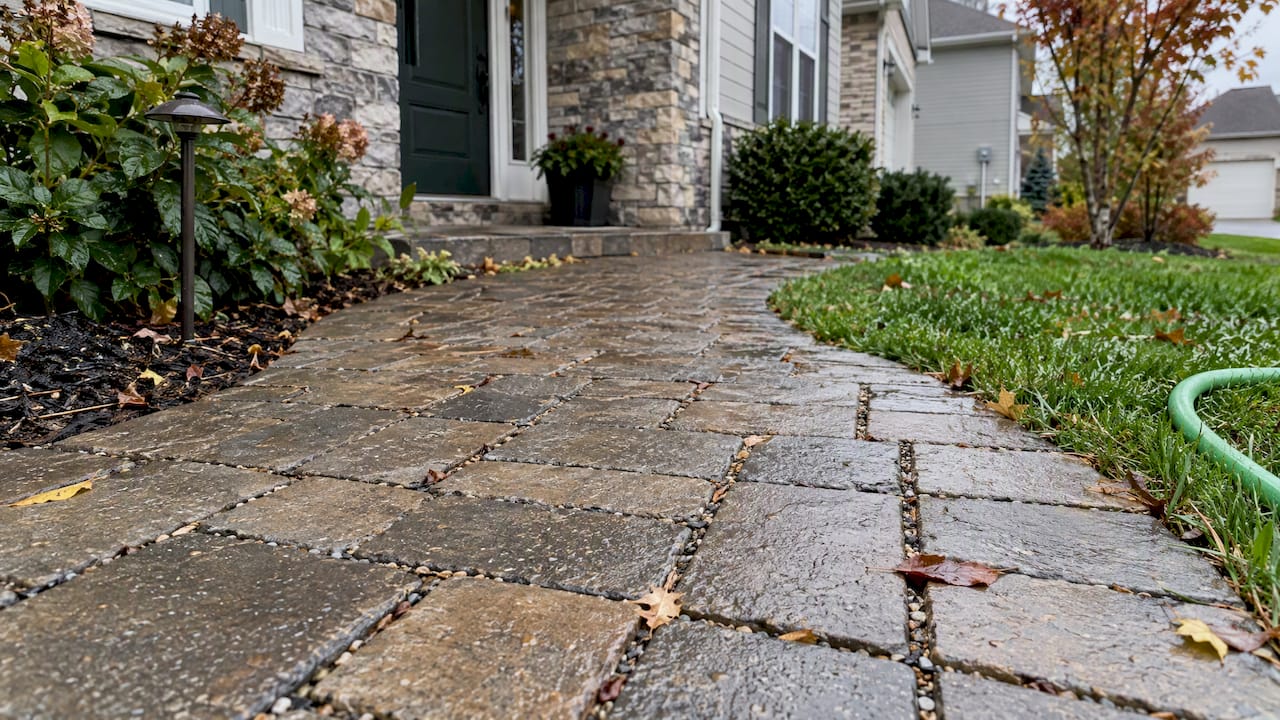
Plants change with the seasons. Hardscape doesn’t, which is why it should go in first, not last, when you’re designing a small yard. Pick one primary material, pavers, stamped concrete, or natural stone, and stick with it across the patio and any paths. Mixing three or four materials in a small footprint makes the space look busier and smaller than it is.
Keep these principles in mind as you plan the hard surfaces:
- Use one primary material for patio and path surfaces to keep the eye calm.
- Give edges clean, defined borders (steel edging, a low stone curb) rather than letting gravel or mulch bleed into planting beds.
- Keep the center of the yard open; push seating and storage to the perimeter.
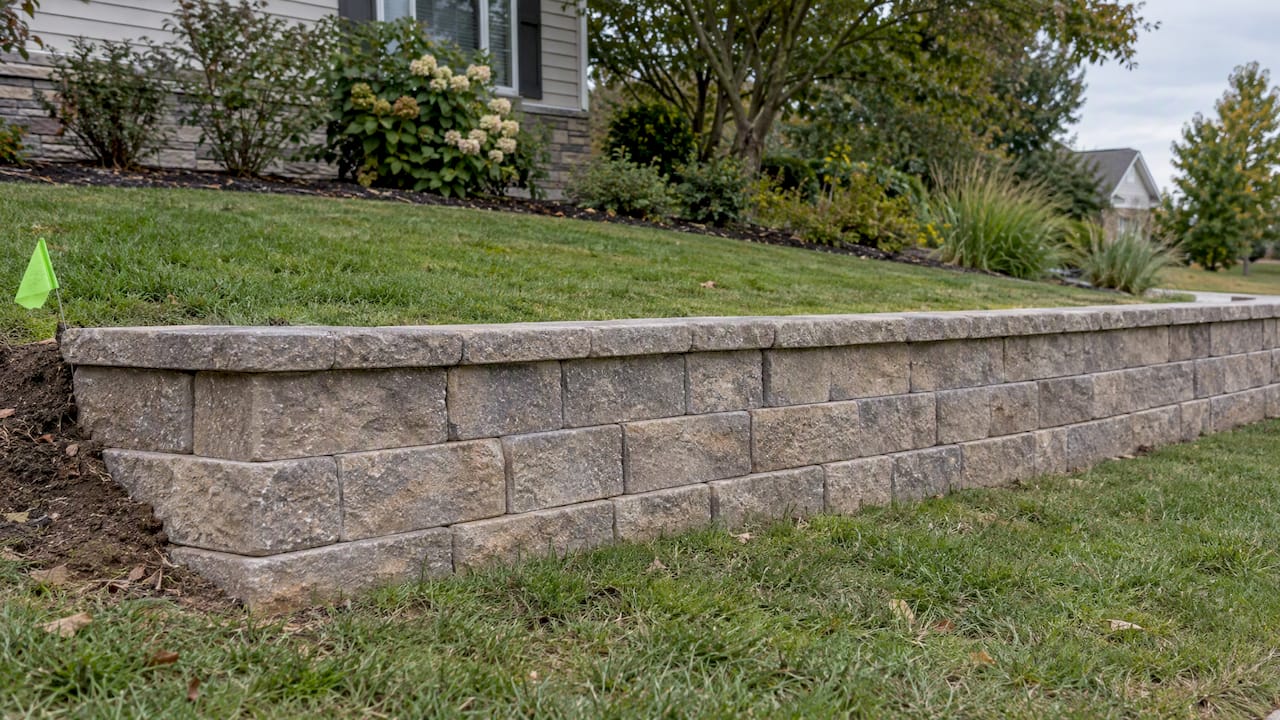
- Consider a bench-as-wall build, a low retaining wall doubling as seating, where you need both structure and a place to sit.
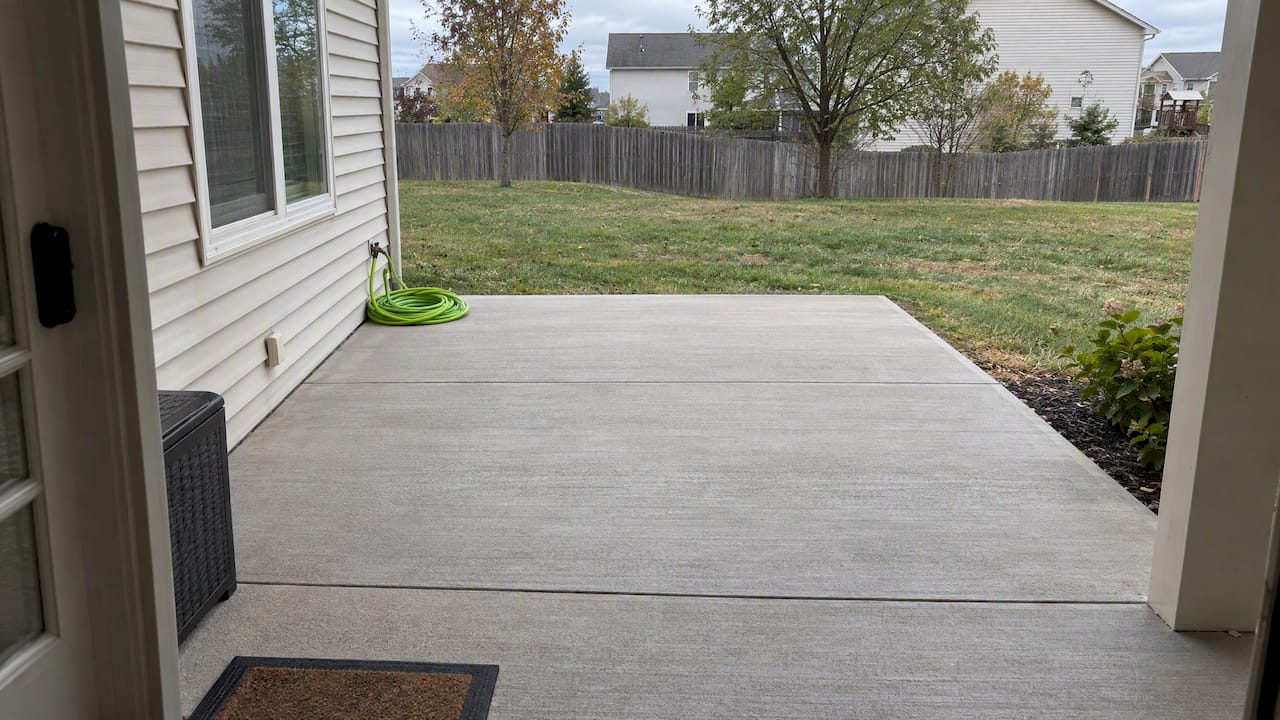
- Size a compact patio around 10×10 to 12×14 feet for a small dining or lounge set. That’s enough for a table and four chairs without swallowing the whole yard.
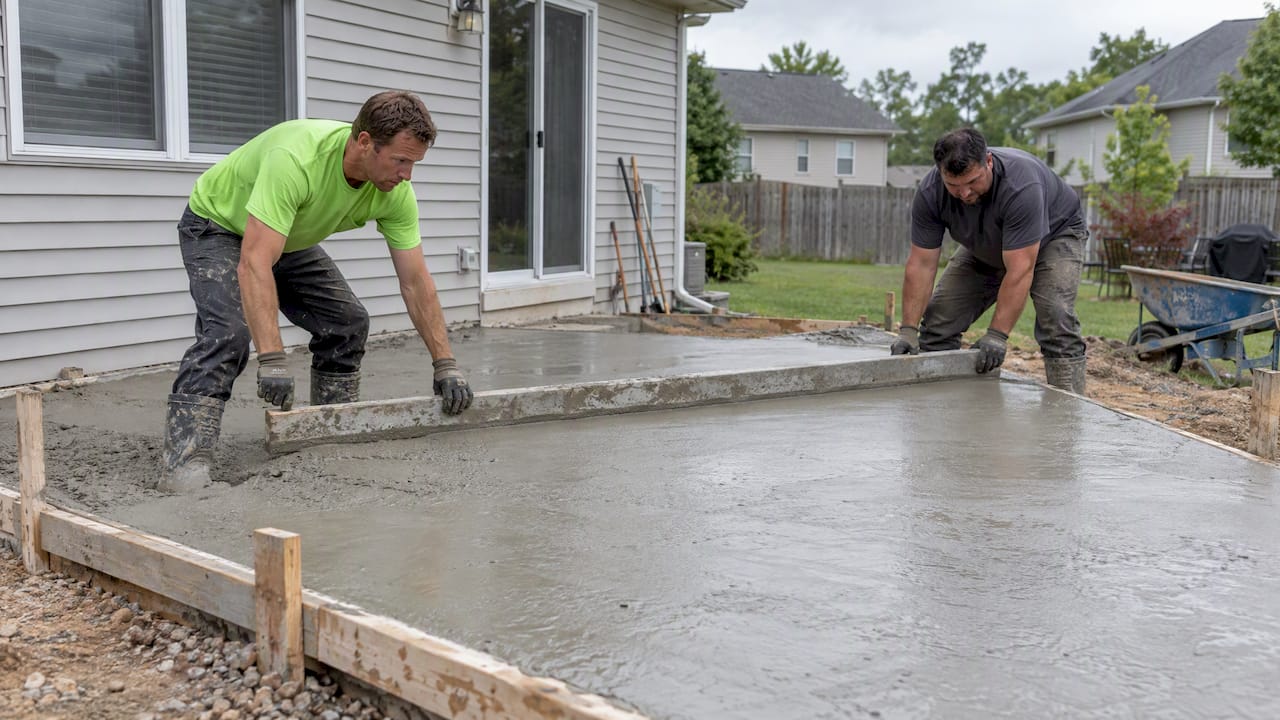
A basic pea-gravel patio runs cheap on materials, often in the range of $60 to $90 for a 10×10 footprint, which makes it a good starting point if you’re testing a layout before committing to pavers or concrete. Poured concrete, natural stone, and anything involving grading or drainage correction is where hiring a licensed contractor pays for itself. Precision Outdoor Solutions builds these kinds of hardscape and patio installations across St. Charles County, and getting the grading right the first time avoids a much more expensive fix later.
Go Vertical: Trellises, Living Walls, and Narrow Trees
Ground-level planting beds in small yards are often shallow, sometimes only 18 to 36 inches deep, which limits how much greenery you can fit at eye level, according to an Oklahoma State University Extension fact sheet. Vertical gardening solves that by adding lushness and privacy without taking up any more ground.
Choose your vertical solution based on the problem you’re solving:
- Trellis with a climbing vine for a quick, low-cost privacy screen along a fence line.
- Living wall panel when you want a dense green backdrop and have irrigation access nearby.
- Espaliered fruit trees trained flat against a sunny wall for edible landscaping in a tight footprint.
- Columnar or narrow-form trees, like columnar hornbeam or fastigiate holly, for height without a wide canopy eating into the yard.
As a rule of thumb, favor plants with a height-to-width ratio of roughly 2:1. A plant that grows 8 feet tall and only 4 feet wide gives you screening and structure without crowding a narrow bed.
Pro Tip: Living walls need a dedicated drip line, not hand watering. Skipping irrigation planning is the number one reason living walls fail within their first season.
Layered Planting and Plant Choices That Keep Scale in Check
Layering, repetition, and paying attention to a plant’s mature size rather than its nursery pot size are core principles behind gardens that look full instead of overcrowded, according to landscape design fundamentals from UF/IFAS. Build your planting palette in three layers:
- Groundcover (creeping thyme, sedum, or low sedges) to fill bare soil and suppress weeds.
- Mid layer (hydrangea, dwarf viburnum, ornamental grasses) for texture and seasonal color at eye level.
- Tall screens (arborvitae, bamboo in a contained bed, columnar trees) along the property line for privacy and structure.
Always check the plant tag for mature height and spread, not just the size of the pot on the shelf. A 1-gallon shrub that says “matures at 6 feet wide” will crowd a 4-foot bed within two or three seasons.
Repetition matters more in a small yard than a large one. Three or four plant varieties repeated throughout the beds read as designed and intentional. Ten different varieties, each represented by one plant, read as cluttered no matter how nice each individual plant is.

Furniture and Built-Ins That Preserve Floor Area
Freestanding furniture gives you flexibility to rearrange, but it also eats visual space when it’s not in use. Built-in benches and planter walls solve that by doubling as structure, and multifunctional pieces, like a bench with storage underneath or a planter that also serves as a seat wall, earn their footprint twice over.
A few sizing rules keep furniture from dominating a small patio:
- Leave at least 3 feet of walking clearance around any dining table.
- Keep a loveseat or bench to no more than one-third of the patio’s total width.
- Choose foldaway or stackable pieces for patios under 150 square feet.
- Favor built-in seating along one wall over a full freestanding sectional.
Lighting That Makes a Small Yard Feel Bigger After Dark
Layering ambient, task, and accent lighting extends usable hours and changes how large the yard feels once the sun goes down, a strategy landscape designers rely on heavily in compact spaces. Ambient light (string lights or a single lantern-style fixture) sets the overall mood. Task lighting (a spotlight over the grill or steps) handles safety and function. Accent lighting (small uplights on a specimen tree or trellis) pulls the eye toward your focal point and pushes the perceived boundary of the yard outward.
Keep fixtures low-voltage LED to cut energy use and reduce how often you’re replacing bulbs. Aim uplights away from windows and seating to avoid glare, and cluster most of your light near the focal point rather than spreading it evenly. A yard lit unevenly, with a bright focal point and softer edges, reads as deeper and larger than one lit flat and uniform from corner to corner.

Budget Tiers: Weekend DIY, Midrange Upgrades, and When to Hire a Pro
Small, simple projects like a pea-gravel patio, container plantings, and string lights deliver a lot of visual payoff for very little money, while drainage correction and retaining walls are where a contractor becomes worth the cost, according to BackyardEdit’s budget breakdown.
- Weekend DIY (roughly $150 to $400): A modest yard refresh, mulch, a few container plants, and string lights, can run around $150. Add a pea-gravel patio at $60 to $90 for a 10×10 area and you’ve upgraded the whole feel of the space for less than a night out.
- Midrange upgrades: A trellis with irrigation, a small built-in bench, or a paver walkway sits between DIY and full professional installation, often requiring one weekend plus a helper.
- Pro-level projects: Poured patios, retaining walls, drainage regrading, and fencing all involve structural or code considerations that go beyond weekend tools.
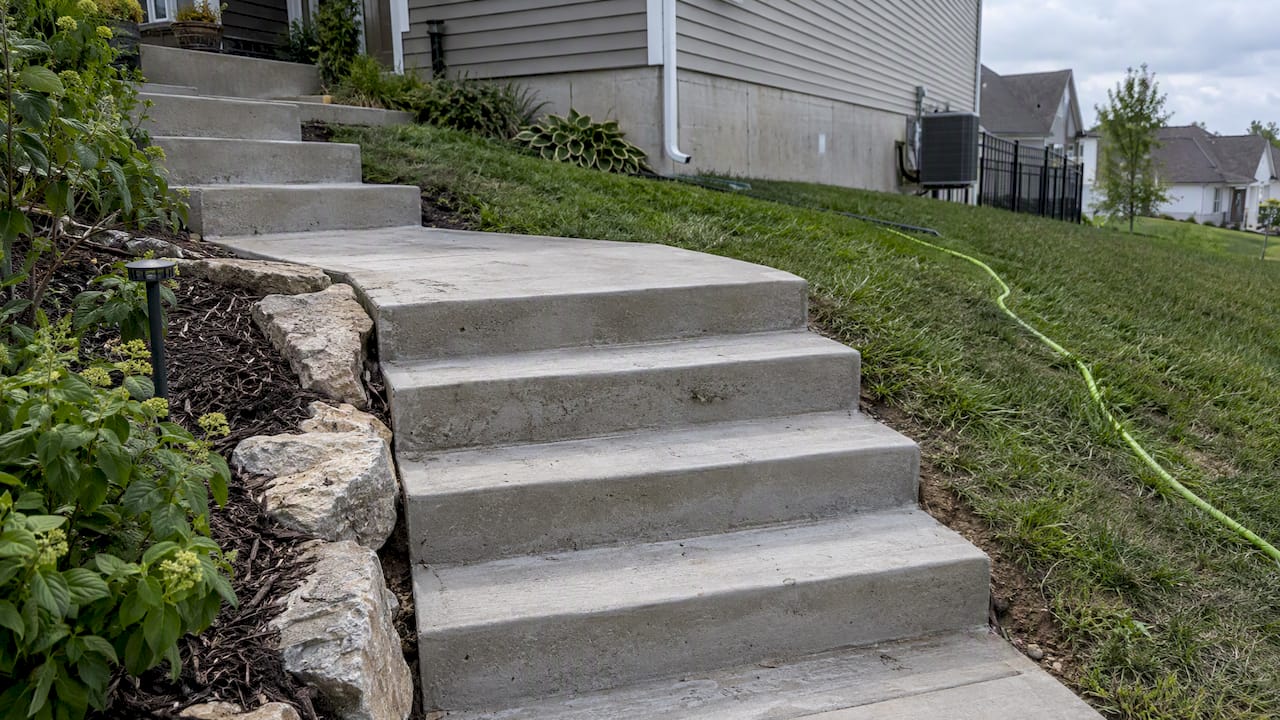
Call a contractor when you see standing water 24 hours after rain, a slope greater than a few inches over 10 feet, or any project that requires permits. Those are the situations where a mistake costs far more to fix than it would have cost to do right the first time.
Maintenance and Seasonal Care for Compact Landscapes
A small yard doesn’t take less thought than a large one, just less time per task. Build a simple quarterly rhythm and it stays manageable year-round.
- Spring: Refresh mulch, divide overcrowded perennials, and check irrigation lines for winter damage.
- Summer: Water containers and living walls more frequently than in-ground beds since they dry out faster.
- Fall: Prune spent perennials, cut back anything that’s outgrown its 2:1 height-to-width target, and clean gutters near planting beds.
- Winter: Drain and store irrigation lines in freeze-prone climates, and inspect hardscape edges for heaving.
Overcrowding is the most common failure point in small gardens. If a shrub is touching its neighbor by its second summer, move one of them rather than letting both stay stunted and tangled.
Real-World Example and Contractor Tips From Precision Outdoor Solutions
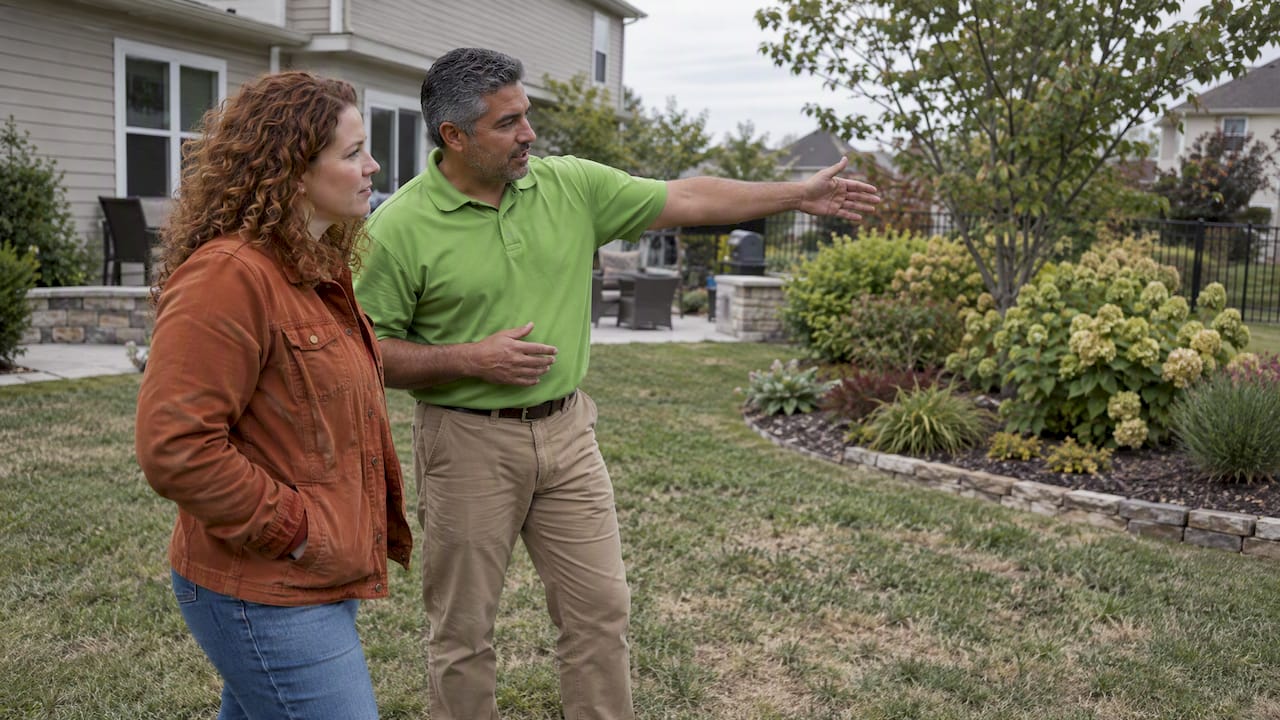
One St. Charles County homeowner came to us with a narrow side yard that flooded every spring and a backyard too small, they thought, for anything but grass. We started with a two-hour site walk to check grading and drainage before drawing a single line, since improper slope near a foundation is the most common cause of long-term pooling. From there, we built a compact paver patio against the house, added a low retaining wall that doubled as bench seating, and layered plantings along the fence line to screen the neighbor’s view.
A few things we check on every small-yard project:
- Slope and drainage, before any hardscape goes in, not after.
- Material durability for the local freeze-thaw cycle, since cheaper pavers crack faster in Missouri winters.
- Long-term maintenance load, since a design that looks great on day one but demands constant upkeep isn’t a win.
If your yard holds water, has a visible slope, or you’re unsure about property lines, that’s the point to call a professional rather than start digging.
Eco-Friendly and Sustainable Landscaping Ideas for Small Spaces
A small footprint is actually an advantage for sustainable landscaping. Replacing a small lawn patch, especially anything under roughly 300 square feet, with gravel, groundcover, or an expanded patio often delivers more usable hours and less upkeep than mowing a strip of turf too small to enjoy, based on design lessons from Classic Landscaping.
A few sustainable moves fit naturally into a compact yard:
- Native and drought-tolerant plants in the mid and tall layers cut watering needs significantly once established.
- Permeable pavers or gravel instead of solid concrete let rainwater soak in rather than run off into storm drains.
- A small rain barrel tied to a downspout can supply container and living wall irrigation for free.
- Groundcover instead of turf reduces mowing, gas use, and water demand across the whole yard.
- Compost from kitchen scraps feeds container gardens without buying bagged fertilizer.
None of these require sacrificing style. A gravel patio with permeable joints looks just as intentional as solid concrete, and native plantings, chosen well, look more textured and seasonal than a row of the same nursery annuals.
Small Backyard Landscaping Mistakes to Avoid
Most small-yard regrets trace back to a handful of repeatable mistakes.
Too many materials. Mixing pavers, gravel, mulch, and stepping stones in one small space makes the yard look chaotic rather than layered.
Ignoring mature plant size. A shrub that looks small in a 1-gallon pot can outgrow a narrow bed within two seasons, crowding paths and neighboring plants.
Skipping the drainage check. Grading mistakes made during patio installation are expensive to reverse once pavers or concrete are down.
Filling every inch. A yard with a feature in every corner has no visual rest point. One focal moment beats five competing ones.
Oversized furniture. A sectional built for a suburban great room overwhelms a 200 square foot patio and blocks circulation.
Flat, even lighting. Lighting the whole yard uniformly, rather than layering ambient, task, and accent light, flattens the space instead of adding depth.
Design restraint, choosing one primary activity zone plus one focal point, consistently outperforms cramming in many small features, according to Architectural Digest’s interviews with professional designers. That single principle prevents most of the mistakes above before they happen.
Single Focal Point and How to Choose It
Every small yard needs exactly one thing the eye lands on first. Trying to create three focal points in a 400 square foot space just means you’ve created three competing distractions.
Good focal point candidates include a specimen tree with striking bark or fall color, a small water feature, a fire table, a piece of garden art, or even a bold container planting positioned at the end of your main sightline. The best choice depends on what you already identified during your site assessment: the spot visible from your kitchen window or back door is usually the strongest location, since that’s the view you see every single day.
Once you’ve picked it, resist the urge to add a second one. Position other elements, seating, planting beds, lighting, to support that one focal point rather than compete with it. A curved path or diagonal sightline leading toward it does more to make the yard feel larger than a second showpiece ever will, since a diagonal or curved layout naturally stretches the eye’s sense of distance across a compact space.
Our Priorities When Designing for Small Yards
At Precision Outdoor Solutions, three things guide every small-yard project we take on: durability, usability, and clear communication. A patio that cracks in two winters or a retaining wall that shifts because drainage wasn’t checked first isn’t a good use of anyone’s budget, no matter how good it looks on installation day.
We’ve spent more than 25 years building outdoor spaces across Wentzville and St. Charles County, and that experience shows up most in the details homeowners don’t see, the grading under a patio, the compaction behind a retaining wall, the drip line hidden behind a living wall. You can see examples of that work in our project gallery, and we’re always glad to walk a small yard with you before you commit to a direction.
— Mario
Let Precision Outdoor Solutions Handle the Parts DIY Can’t Fix
Weekend projects like string lights, container gardens, and a pea-gravel patio go a long way, but drainage correction, retaining walls, and built-in seating are where a local contractor earns their keep. Precision Outdoor Solutions has spent over 25 years solving exactly these problems for homeowners across Wentzville and St. Charles County, which means the grading, material selection, and long-term durability get handled correctly the first time instead of needing a costly redo two years later.

Whether you need a full landscape design plan for a tricky small lot or just want a compact patio built on solid, well-drained ground, our team walks the site with you before any work starts. If your yard has standing water, a slope, or a corner you’ve never quite figured out how to use, visit our services page to request a consultation and get a plan built around your specific space.
Sources
- Small Backyard Landscaping Ideas (No Contractor Needed)
- Small backyard ideas for a beautiful outdoor space (Gardenia)
- Landscape design fundamentals (UF/IFAS)
- Maximizing small outdoor spaces — how three designers would do it (Architectural Digest)