Yes, you can put a fire pit on a patio, but only when three things line up: the surface can handle sustained heat, your clearances meet safety distances, and your fuel choice matches local code. Skip any one of those and you’re looking at cracked concrete, an angry HOA, or worse. Before you buy anything, run through this:
- Surface check: Is your patio bare concrete or pavers with no protective layer underneath a planned fire pit?
- Clearance check: Do you have at least 10 feet from structures and combustibles, per USFA guidance?
- Fuel and permit check: Are you considering gas, and if so, do you have a licensed plumber and permit lined up?
Precision Outdoor Solutions has spent over 25 years building patios across St. Charles County, and the projects that go wrong almost always skip one of these three checks.
Key Takeaways
A safe fire pit on a patio requires surface protection, code-compliant clearances, and the right fuel choice matched to your local restrictions and patio layout.
| Point | Details |
|---|---|
| Verify surface protection first | Use a heat-rated pad, liner, or separate footing before setting any pit on concrete or pavers. |
| Meet clearance minimums | Keep at least 10 feet from structures, up to 25 feet for wood pits, per NFPA and USFA guidance. |
| Match fuel to restrictions | Gas burns cleaner and suits covered patios; wood needs more space and faces burn bans. |
| Know when to hire a pro | Gas lines, footings, and drainage work require a licensed plumber or contractor. |
| Call Precision Outdoor Solutions | 25+ years coordinating patio, gas, and masonry work across St. Charles County. |
Table of Contents
- Choosing a Fire Pit on Patio That Fits Your Fuel Needs
- Will a Fire Pit Damage Your Patio Surface?
- How Far Should a Fire Pit Be From Your House?
- Do You Need a Permit for a Patio Fire Pit?
- Installing a Fire Pit on Your Patio Step by Step
- Design Ideas That Keep a Patio Fire Pit Safe and Stylish
- Keeping Your Patio Fire Pit Safe Season After Season
- When It’s Time to Call Precision Outdoor Solutions
- What Homeowners Get Wrong About Patio Fire Pits
- Get a Professional Fire Pit Consultation for Your Patio
- Sources
Choosing a Fire Pit on Patio That Fits Your Fuel Needs
Wood, gas, and portable propane units each behave differently once you put them on a hard patio surface, and the right pick depends on your local burn restrictions and how much heat and smoke you’re willing to manage near your seating.
Wood-burning pits throw the most heat and the most ambience, but they also throw embers, produce smoke that shifts with the wind, and get banned outright during dry-season burn restrictions. Gas fire pits burn cleaner, and that clean combustion often lets homeowners install them where a wood pit would be restricted or require larger setbacks. The catch: natural gas requires a licensed plumber for the line work, while propane skips the plumbing but means hauling and refilling tanks.

Portable units, whether propane bowls or steel wood-burning rings, cost less and need no permanent installation, which makes them the low-commitment entry point for a lot of homeowners.
Here’s how the tradeoffs usually shake out:
- Wood pits: best ambience, most restrictions, requires the largest clearances.
- Natural gas: cleanest burn, permanent gas line, needs a plumber and permit.
- Propane (portable or fixed): flexible placement, no trenching, ongoing tank costs.
- Portable kits: lowest upfront cost, easiest to move if your plans change.
If your patio sits under a pergola or covered structure, gas is almost always the safer call, since it produces far less airborne ember risk than an open wood flame.
Will a Fire Pit Damage Your Patio Surface?
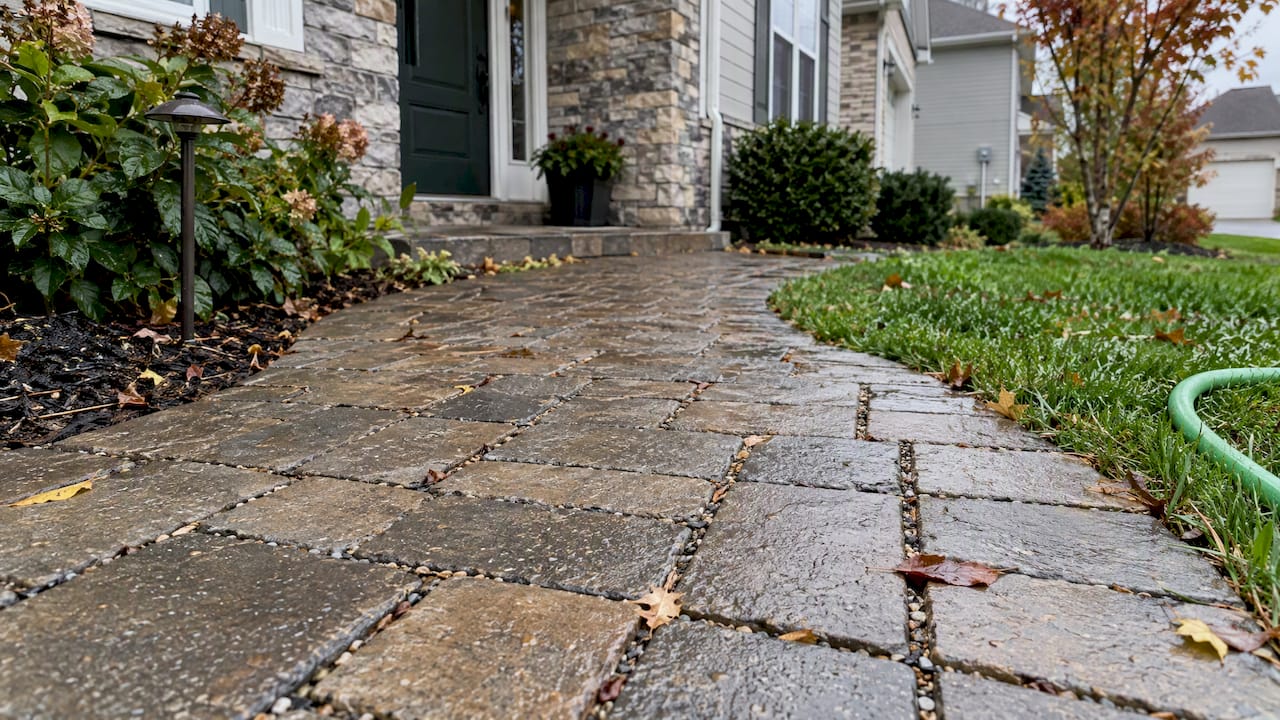
It can, and concrete is more vulnerable than most homeowners assume. Sustained, direct heat causes trapped moisture inside a concrete slab to expand, and that expansion is what leads to spalling: the pitted, flaking surface damage you’ve probably seen on older patios. Pavers handle heat a bit better because of the gaps between units, but they’re not immune, especially if a metal fire bowl sits flush against them for hours at a time.
The fix isn’t complicated. You just need a buffer between the fire and the finished surface:
- Fire pit pad or paver base rated for high heat, placed under any portable unit.
- Metal heat shield on the underside of elevated bowls to redirect heat away from the surface below.
- Firebrick or steel liner inside any built-in pit to isolate flame from the surrounding masonry.
- Gravel bed or separate footing for permanent installations, rather than pouring directly onto the existing slab.
That last point matters more than people realize. A masonry fire pit built right on top of a finished patio slab risks heat transfer that cracks or spalls the concrete underneath, and once that damage starts, there’s no patching it invisibly. Professionals typically pour a dedicated footing or use a heat-rated liner specifically to keep that from happening.
Pro Tip: If you’re set on a built-in pit, ask your contractor about an inset (incut) design. Recessing the pit into the patio, rather than stacking it on top, spreads heat load more evenly and cuts long-term cracking risk.
Never let anyone talk you into setting a heavy masonry pit directly on your existing slab “to save time.” That shortcut is exactly what causes the spalling homeowners call us about years later.
How Far Should a Fire Pit Be From Your House?
Clearance is the one area where cutting corners is genuinely dangerous, not just cosmetically risky. The USFA recommends a minimum of 10 feet from structures and combustible materials, and that’s a floor, not a target. NFPA guidance commonly cites a broader range of 10 to 25 feet depending on fuel type, overhead cover, and local fire code. Many installation guides settle on 25 feet as the conservative distance for wood-burning pits specifically, since sparks travel farther than most people expect.

Overhead clearance matters just as much as horizontal distance. If your patio sits under a pergola, covered porch, or roofline overhang, you need enough vertical space that rising heat and embers don’t scorch the structure above. Gas units with lower flame profiles are usually the safer choice under any kind of roof.
If your patio is too small to hit these numbers with a full-size pit, you’re not out of options:
- Swap to a propane fire table, which throws less heat and needs a smaller footprint.
- Consider a small tabletop propane bowl sized for tight seating areas.
- Relocate the fire feature to a separate area of the yard entirely, away from the patio’s tighter dimensions.
Before you finalize placement, watch how wind moves across your yard over a few evenings. Positioning seating upwind keeps smoke and embers drifting away from your guests instead of into their faces.
Do You Need a Permit for a Patio Fire Pit?
In most areas, the answer depends entirely on what you’re installing. A portable propane bowl you bought at a home store generally needs no permit at all. A built-in gas fire pit connected to your home’s gas line is a different story.
Here’s the general breakdown:
- Gas line work almost always requires a licensed plumber and a permit, since you’re tapping into your home’s fuel supply.
- Trenching and backfill for that gas line often falls under the same permit, especially if it crosses a property line or utility easement.
- Masonry footings, seat walls, or incut pits that involve structural work or drainage changes typically call for a contractor familiar with local code.
- Simple portable kits placed on an existing patio usually need nothing beyond checking your HOA rules.
Pro Tip: Call your municipal permit office before you buy materials, not after. A five-minute phone call can save you from ripping out work that doesn’t meet code.
The decision grid is simple: if it’s a box you set down and light, DIY is fine. If it involves a gas line, a footing, or moving earth, hire a licensed plumber or contractor. Coordinating those trades together, rather than sequentially, cuts down on rework and permit delays.
Installing a Fire Pit on Your Patio Step by Step
Whether you’re setting up a portable unit or building something permanent, the sequence matters. Skipping steps is how homeowners end up redoing work.
Before you start:
- Locate underground utilities and existing gas or electrical lines.
- Measure clearances from your house, fence line, and any overhead structures.
- Confirm HOA rules and pull any required permits.
Surface prep:
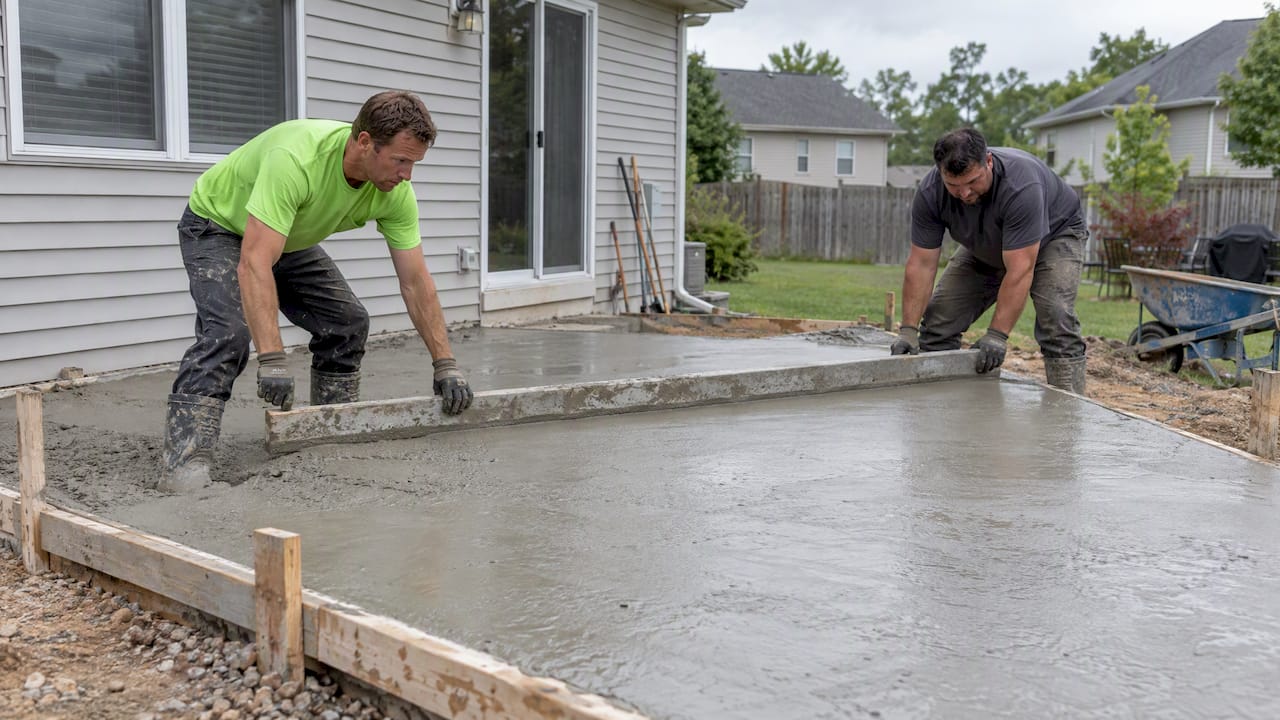
4. For built-in units, excavate and lay a compacted gravel base or a minimum 4-inch concrete pad.
5. Install a firebrick or steel liner to separate flame from surrounding masonry.
6. Set burner placement, and if you’re running gas, hand this step to a licensed plumber rather than DIYing the connection.
Before the first fire:
- Confirm a spark screen is in place for any wood-burning unit.
- Keep a hose or fire extinguisher within reach, not stored in the garage.
- Check that seating is positioned at least a few feet back from the rim.
- Do a slow first burn to check for uneven heating or smoke pooling near seating.
Stop and call a professional the moment you hit a gas line you didn’t expect, standing water in your excavation, or drainage that doesn’t match your patio’s existing slope. Those are structural issues, not weekend fixes.
Design Ideas That Keep a Patio Fire Pit Safe and Stylish
Good fire pit design and good fire pit safety aren’t separate goals. A well-planned layout usually solves both at once. Pairing pavers with a gravel apron around the pit gives you a noncombustible buffer zone that also looks intentional, rather than like an afterthought. Noncombustible seat walls built from stone or block do double duty as both seating and a heat-safe boundary.

For sizing, most homeowners find a 36 to 44-inch inner diameter comfortable for group seating without crowding anyone too close to the flame.
A few layout guidelines worth following:
- Arrange seating in a loose radius rather than a tight square, so heat distributes evenly.
- Leave one or two walk-in gaps in your seating arrangement for easy access without stepping over furniture.
- Keep bench or chair seat height low enough that faces sit below rising heat, not directly in it.
- Under a covered patio or pergola, choose gas over wood and confirm several feet of vertical clearance above the flame.
Keeping Your Patio Fire Pit Safe Season After Season
A fire pit that’s installed correctly still needs consistent care to stay safe. Load fuel in modest amounts rather than piling it high, keep flame height reasonable, and never leave a burning pit unattended, even for a few minutes.
On the maintenance side, a simple seasonal routine covers most of it:
- Clear ash after each use, especially before winter storage.
- Check gas burners and hose connections for wear or leaks before each season.
- Inspect surrounding masonry for hairline cracks or early spalling.
- Use a fire-pit-safe base or pad if your patio includes any wood decking sections.
- Cover or store portable units during heavy rain or snow.
Pro Tip: Rust on a steel fire ring almost always starts from underneath, where moisture collects. Lift and check the base every few months, not just the visible top edge.
Clogged gas burners usually mean debris or spider nests in the line, an easy fix if you catch it early. Hairline cracks in masonry, on the other hand, are worth a professional look before they spread.
When It’s Time to Call Precision Outdoor Solutions
Some fire pit projects are genuinely weekend-friendly. Others involve gas hookups, drainage complications, or masonry footings that go sideways fast without the right experience. If your project includes any of these, it’s worth a professional consult:
- A natural gas line connection requiring permit coordination.
- An incut masonry pit built into an existing patio slab.
- Drainage issues around your patio that a new footing could make worse.
- Any project where HOA or municipal permitting feels confusing.
Precision Outdoor Solutions has built patios and hardscape features across St. Charles County for over 25 years, and our project gallery shows how those installations hold up over time. A consult typically includes a site visit, a clearance and drainage checklist, permit guidance, and coordination with any trades your project needs.
| Scenario | Best Approach |
|---|---|
| Portable propane bowl on existing pavers | DIY, no permit typically needed |
| Built-in gas fire pit | Hire a licensed plumber and contractor |
| Incut masonry pit | Contractor for footing and drainage |
| Uncertain about local code | Call your municipal permit office first |
What Homeowners Get Wrong About Patio Fire Pits
Most of the advice out there treats fire pit placement like a one-size-fits-all rulebook: keep it 10 feet away, buy a spark screen, done. That’s not wrong, exactly, but it undersells how much your specific patio, your specific fuel choice, and your specific local code actually change the calculus.
The bigger blind spot is the surface itself. Homeowners spend hours researching clearance distances and almost no time thinking about what’s happening six inches below the fire pit, where heat is quietly working on their concrete. I’d argue surface protection deserves equal billing with clearance in every guide on this topic, because slab damage is the failure mode nobody warns you about until it’s already happened.
If you take one thing from this guide, let it be this: a portable kit on a protected pad is a Saturday project. Anything touching a gas line, a footing, or your patio’s drainage is not. Knowing which category your project falls into, before you buy materials, is the single decision that prevents most of the expensive mistakes homeowners make with this.
— Mario
Get a Professional Fire Pit Consultation for Your Patio
If your project involves a gas line, a masonry footing, or a patio that needs regrading to handle the added weight and heat, that’s exactly where Precision Outdoor Solutions earns its keep. Unlike piecing together a DIY build from online tutorials, we coordinate the plumber, the permit, and the masonry work as one project instead of three separate headaches.

Our hardscape and patio installation services cover exactly this kind of work: gas line coordination, drainage correction, and built-in fire feature design, all handled by a team that’s been doing it across St. Charles County for over 25 years. A consult starts with a site evaluation, includes a permit review where applicable, and ends with a clear estimate and project timeline before any work begins. If you’re ready to move past the planning stage, request a consultation through our services page and let’s map out what your patio actually needs.
Sources
- USFA: Outdoor fire safety guidance
- NFPA: Wildfire prevention tips for fire pits and outdoor fires
- Gas vs Wood fire pits: fuel types, construction costs, and design choices
- Concrete fire pit: DIY builds and kits
- HGTV: 10 fire pit safety rules every homeowner should know
Recommended
- Hardscape & Patio Installation – Precision Outdoor Solutions
- Create An Outdoor Living Space You Will Actually Use – Precision Outdoor Solutions
- Backyard Patio Ideas: How To Transform Your Backyard In Wentzville, MO – Precision Outdoor Solutions
- Project Gallery | Landscaping, Patios & Retaining Walls In Wentzville, MO